Two Mi-38-4 helicopters [a modernized version of the Mi-38, ed. note] in the "Killer Whale" livery have arrived in the Magadan Region. The aircraft covered 6500 km in the air, starting in Kazan. In total, the flight took 35 hours. Rostec called this transfer a test run before operation in the harsh and cold winter conditions, dominated by strong winds.
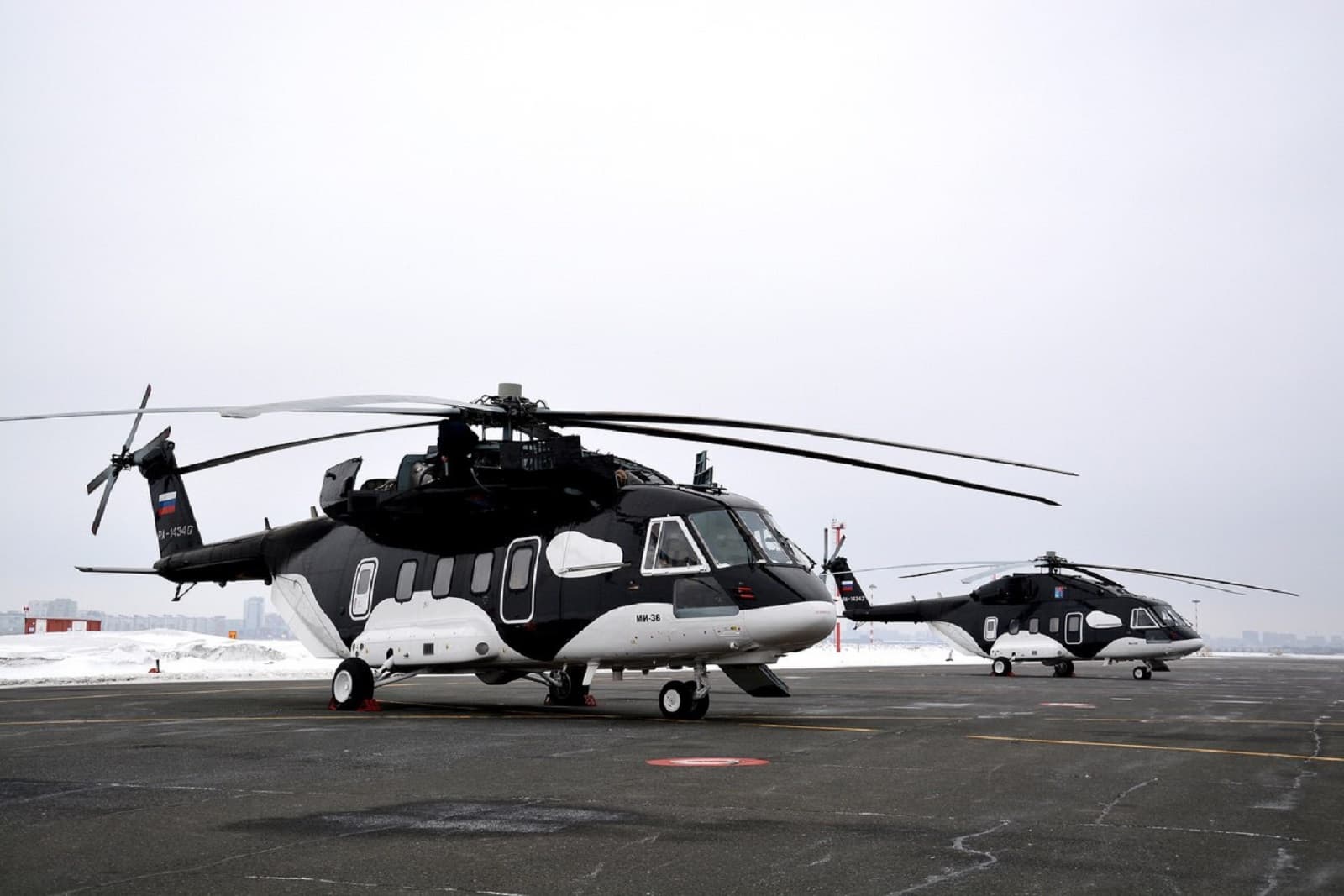
This flight became a kind of reliability test. The Mi-38 pilots who carried out the flight noted the maneuverability and stability of the helicopter during operation. They especially appreciated the "excellent autopilot." It is reported that the Mi-38 is suitable for operation in various climates, including marine, tropical, and cold. But it is worth noting that previously these machines had not flown further than Yakutsk, even in experimental aviation.
The flight went smoothly. There were no equipment failures. When we arrived in Yakutia, we thought that the low temperatures would have a negative effect, but the equipment proved to be very reliable.
The maximum payload of the Mi-38 is up to 5 tons, the maximum speed is 300 km/h, the flight range without additional fuel tanks is up to 1000 kilometers. The helicopter is equipped with two gas turbine TV7-117V engines, providing power at takeoff mode of 2800 horsepower.
As a reminder, the Mi-38 has been produced since 2015 at the Kazan Helicopter Plant. The aircraft is made according to the classic scheme with a 6-bladed X-shaped tail rotor and a controlled stabilizer. The Mi-38 can be used for passenger transportation (it can carry up to 30 people), but in the Magadan Region it is also planned to test the machine for disaster medicine, cargo transportation, and transportation of people engaged in shift work - everywhere where the Mi-8 was previously used for this. After arriving in Magadan, passenger seats were installed and the first transportation of people was carried out.











