A revolutionary moment has occurred in the Russian medical and technological industry, opening new horizons in surgery - the world's first bioprinting surgery directly on the patient, performed at the N.N. Burdenko Main Military Clinical Hospital in Moscow. This step forward was made possible through the collaboration of doctors and specialists from the Institute of Biomedical Engineering at NUST MISIS.
We have taken the first step into a future where surgeons will not just manipulate robotic systems, but robots will be full-fledged autonomous participants in operations. A crucial precedent has been set for using a bioprinter to atraumatically close extensive acquired defects directly on the patient without prior preparation of 3D models and without the need to implant pre-printed tissue equivalents.
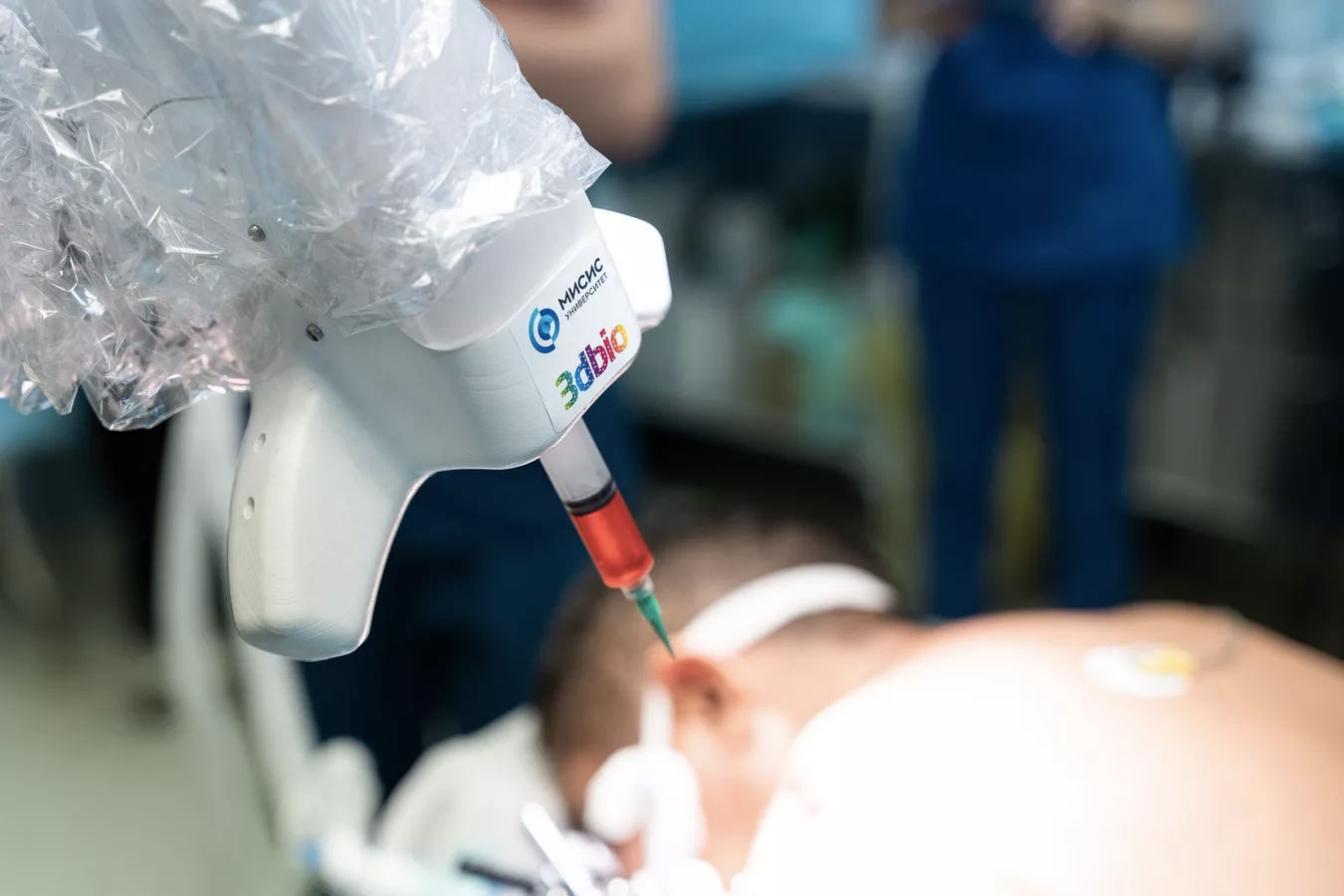
The surgery was performed using a unique bioprinter that combines a robotic manipulator - a "robotic arm", a bioprinting system, and computer vision. Institute Director Fedor Senatov shared details in an interview with RIA Novosti:
The patient had an extensive wound in the shoulder and scapula area. The wound was deep, with a variable relief, which added particular complexity. The surgeon took the patient's own cells from the bone marrow. These cells were then mixed with a special collagen-based hydrogel that promotes tissue regeneration.
The peculiarity of this technology is that the scanning system allows taking into account the patient's movements and breathing. Scanning the wound surface, building a 3D model of the wound, and direct bioprinting take place without human intervention, which heralds the future of full robotization in operating rooms. "In situ" printing is a bioprinting method in which the process of creating three-dimensional structures from biological materials occurs directly at the intended site of use, for example, in the patient's body during a surgical procedure.
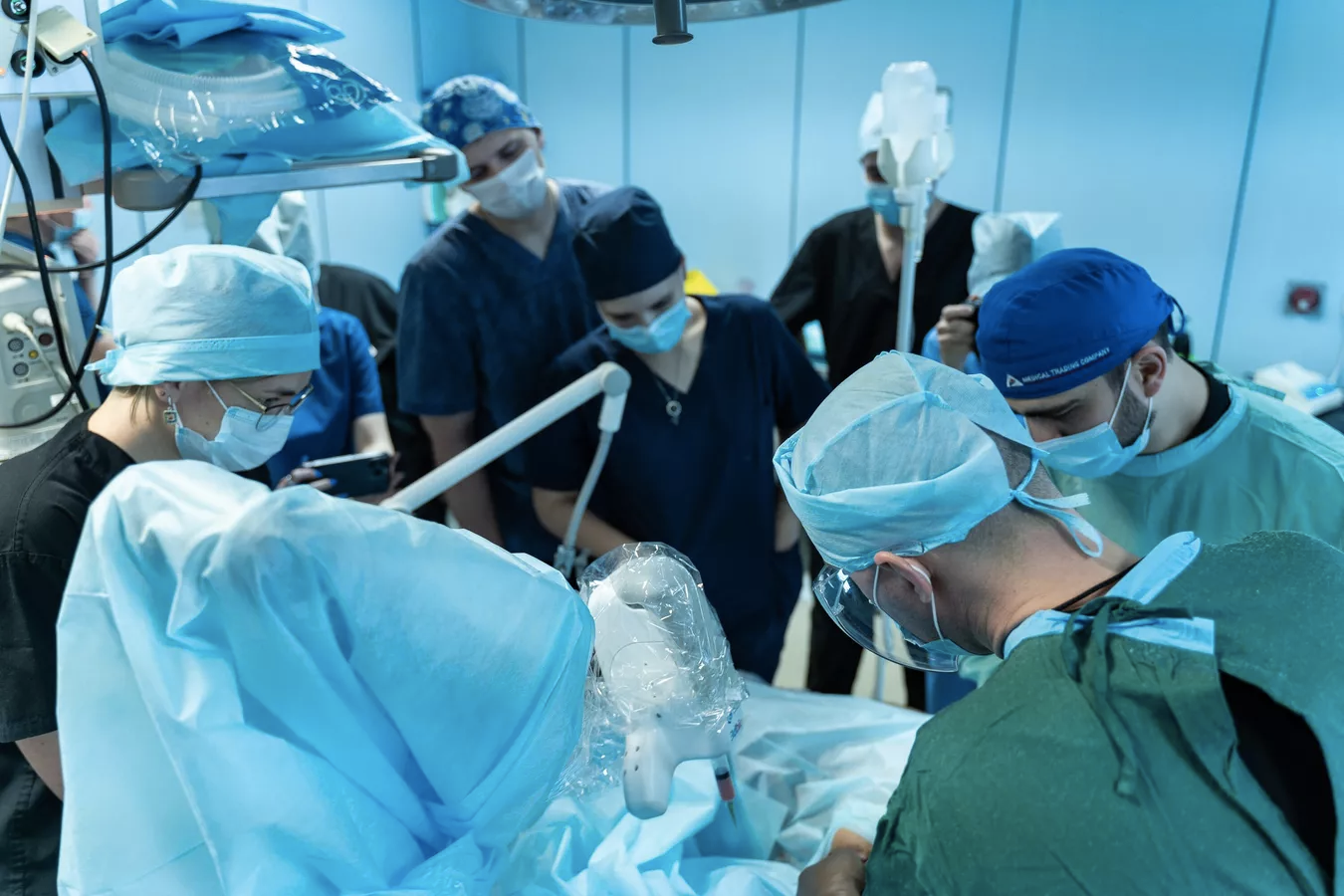
Engineers and doctors consider this step an important progress in the direction of bioprinting, and, possibly, in the future, bioprinters will be able to perform operations without the participation of surgeons at all, now the presence of doctors and robotics engineers is still required to monitor the entire process and intervene if necessary. Despite the lack of an official commercial name, the technology is already called "Arm" among employees.
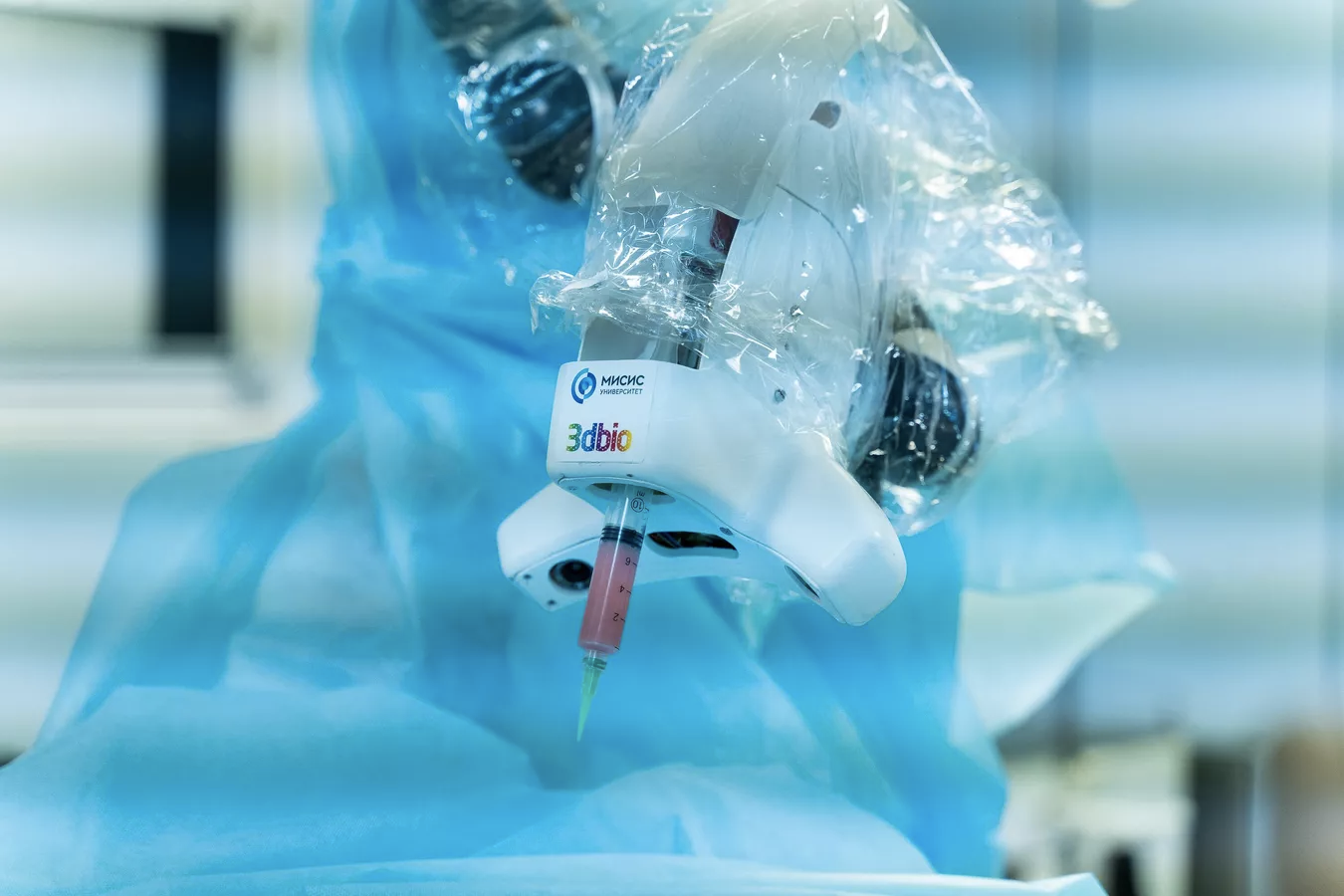
This breakthrough in bioprinting opens new opportunities for medicine. If such technologies become commonplace, it could reduce recovery time after injuries and surgeries, reducing risks. It is important to note that Russia has become the first country to implement such solutions in clinical practice.
The innovative approach to bioprinting in Russia has its roots in NUST MISIS. Since 2003, when Vladimir Mironov, scientific director of the biotechnological research laboratory 3D Bioprinting Solutions and professor at NUST MISIS, published the first article on three-dimensional bioprinting, the university has been actively developing this field. In 2014, "Fabion" was presented - the first Russian bioprinter, which is still among the top five bioprinters in the world.
Since 2015, unique experiments have been carried out on "Fabion", including the world's first printing of a functional thyroid gland. The development of bioprinting has found a new branch - work on space magnetic bioprinting. Here, Russia is a monopolist in the industry.
There are only four space magnetic bioprinters in the world - one on the ISS, one in the Museum of Cosmonautics at VDNH, and two at MISIS.
Experts say that the future of bioprinting in Russia will be closely linked to the development of "in situ" robotics. This trend not only brings the technology closer to patients, but also opens the way to printing more complex organs.
Never miss our newsAdd this site to your preferred sources to see us more oftenAdd on Google