FollowingRussian Foreign Minister Sergei Lavrov and a number of other employees of ministries and departments, employees of the Ministry of Emergency Situations may also abandon Apple smartphones as corporate devices. According to the Mash Telegram channel, the ban on using iPhones as official phones for rescuers will take effect on January 10.
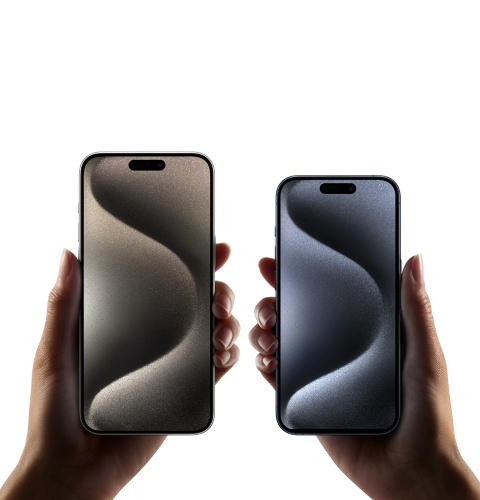
The order does not recommend any specific phone brand or operating system for the transition, for example, Android or the domestic "Aurora". But - they insist on abandoning "apples" on duty, so that possible state secrets or secret data do not fall into the wrong hands.
In 2023, Apple twice found itself at the center of scandals related to data security on its devices used in Russia. Thus, in June, the FSB announced that, together with the FSO, it had uncovered"an intelligence operation by American intelligence services carried out using mobile devices from Apple" - using"software vulnerabilities provided by the manufacturer."
Several thousand devices were affected by the malware, which had SIM cards registered to diplomatic missions and embassies in Russia. Diplomats from NATO and post-Soviet countries, as well as Israel, Syria and China, were affected. Russian intelligence agencies concluded that Apple may be cooperating with American intelligence and does not always follow its declared policy of ensuring the confidentiality of its users' personal data.
After that, a number of officials and politicians of various levels, up to the cabinet and the presidential administration, abandoned "apples" - but not completely. For example, in November, presidential press secretary Dmitry Peskovstated that iOS is a "wonderful invention" that he still uses.
The second major scandal surrounding Apple products in Russia in 2023 also occurred in June. Kaspersky Lab discovered a technical attack on its corporate iPhones, which was dubbed "Operation Triangulation."
Unlike the FSB, the interested parties in the attack were not explicitly named. But the company published five zero-days[0-day, also known as a zero-day vulnerability - an operating system vulnerability that has not been discovered by its developers, has no security updates or protective mechanisms for the user - ed.], Apple acknowledged these vulnerabilities and closed them. Four of the five vulnerabilities had not been discovered by anyone before.
However, the weaknesses of iOS didnot end there - hacker and fraudster technologies are moving forward, along with the release of new versions of the OS. As are suspicions against the company regarding the number of vulnerabilities and the security of using its products.
At the recent November RuStore Mobile Conf., Dmitry Galov, head of the Russian research center at Kaspersky Lab, explained during a session why the iOS operating system is so vulnerable to attacks.
According to him, it is impossible to combine or integrate any external protection into this OS that would monitor the security of files, applications and the system itself, as in the case of, for example, the Android OS.
In simple terms, an "apple" user cannot track whether his data is safe, what suspicious files he could download or open, and what hacking attempts have been neutralized. An iPhone user cannot install any antivirus software and track threats with it, updating its versions - the protection of his devices unconditionally depends only on Apple and its iOS operating system, and only on them.
Large companies and government agencies are abandoning the use of iOS not because the Android OS is more secure. But because they want to have more technical capabilities in their hands in order to be responsible for their own security. And we, as a security vendor, also want the same.
The latest major vulnerability in iOS up to version 16.6 from Apple was found before the New Year. Itallowed hackers to bypass the Apple SoC and control protected areas of the smartphone's memory. Thus, they gained full access to the iPhone - and its owner was not aware of this.
Never miss our newsAdd this site to your preferred sources to see us more oftenAdd on Google

















