The Russian private company "Byuro 1440" has successfully placed new satellites of the "Rassvet" system into low Earth orbit. The launch took place on March 23, 2026, from the Plesetsk Cosmodrome, and information about it appeared only after the mission's routine completion. The project, which began in 2020 as MegaFon's research office, has evolved into a vertically integrated structure that independently develops and manufactures satellites, terminals, and ground infrastructure.

Unlike other long-running projects financed by the state, the "Byuro 1440" project implemented its plans quickly: as early as 2021, it received the Ku and Ka frequency bands, and in 2023 it submitted three applications to the International Telecommunication Union to create the "Rassvet", "Rassvet-1", and "Rassvet-2" satellite constellations. In the same year, the first three satellites of the "Rassvet-1" mission were launched into orbit from the Vostochny Cosmodrome.
The next batch of three "Rassvet-2" satellites was launched in the spring of 2024 from the Plesetsk Cosmodrome for the needs of the Russian Ministry of Defence. The operation on March 23, 2026 became especially secretive, when 16 spacecraft of the "Rassvet-3" mission were sent into space at once from the same cosmodrome — this became known only after the successful launch.

The system is positioned as a domestic alternative to Starlink, but it has fundamental differences. The American constellation is aimed at global coverage and operates at an altitude of about 550 kilometers with different inclinations. Russian spacecraft are placed at an altitude of 600–800 kilometers and use a high orbital inclination close to 98°. This solution makes it possible to provide stable communications in the Arctic zone and along the Northern Sea Route, where dependence on foreign technologies creates strategic risks.
The military significance of the project is difficult to overestimate. After access to Starlink was restricted for Russian units, they needed their own secure channel for transmitting video from reconnaissance drones, high-resolution maps, and targeting data.
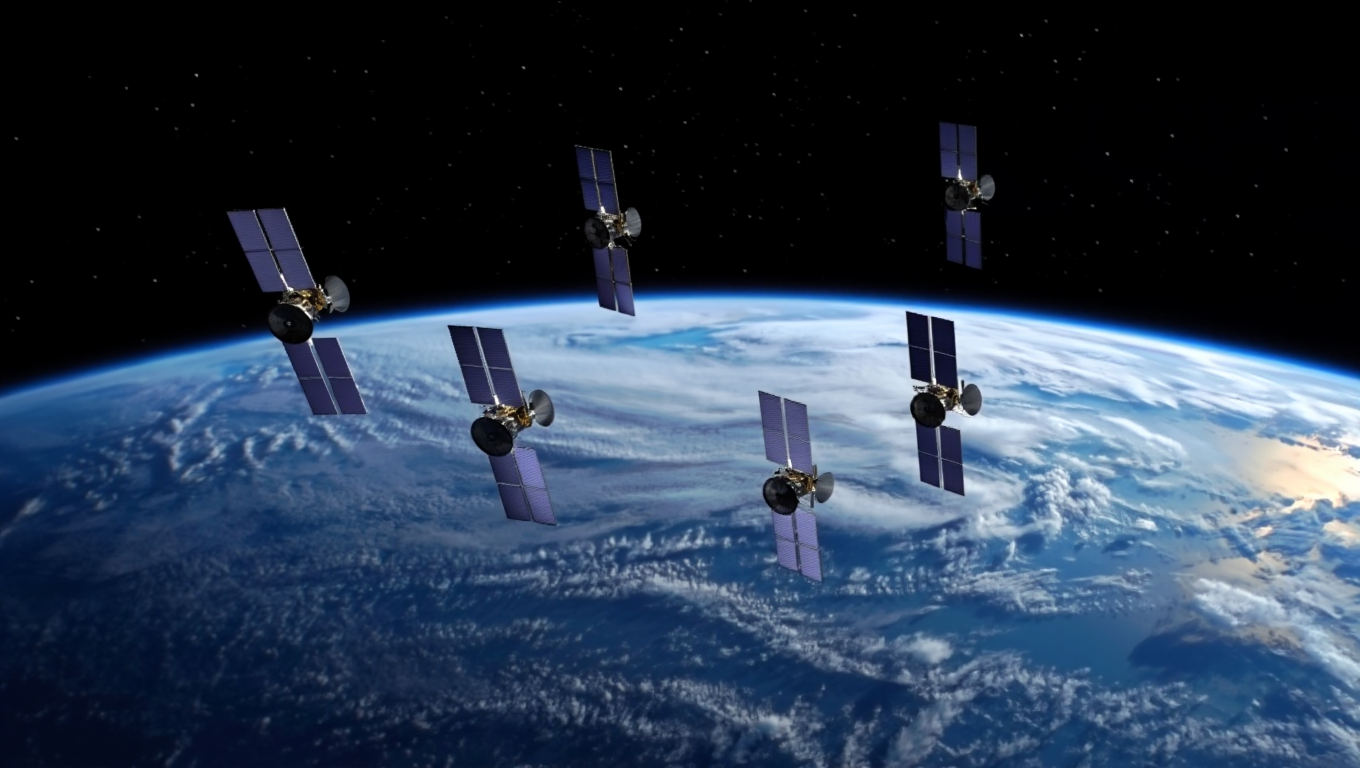
The deployment of new satellites will make it possible to organize broadband communications resistant to the effects of electronic warfare systems. This will make it possible to integrate tanks, artillery, and infantry units into a single network, as well as control fixed-wing drones over enemy territory.
In addition to the Ministry of Defence, Rosatom is interested in using the terminals to service the icebreaker fleet, while RZD and "Aeroflot" are interested in equipping rolling stock and aircraft. A separate request is coming from the administrations of Arctic and Far Eastern regions, where it is necessary to provide communications to remote settlements without the economic feasibility of laying cable lines.
Read more on the topic:
Never miss our newsAdd this site to your preferred sources to see us more oftenAdd on Google

















