Translated with AI from the Russian original.
The main problem with most agrodrones today is their short flight time. Typically, battery-powered drones can only operate in the air for 30–40 minutes, after which they must be returned to the ground for battery replacement or charging. Scientists from Altai State Agrarian University have proposed a technology that could solve this problem.
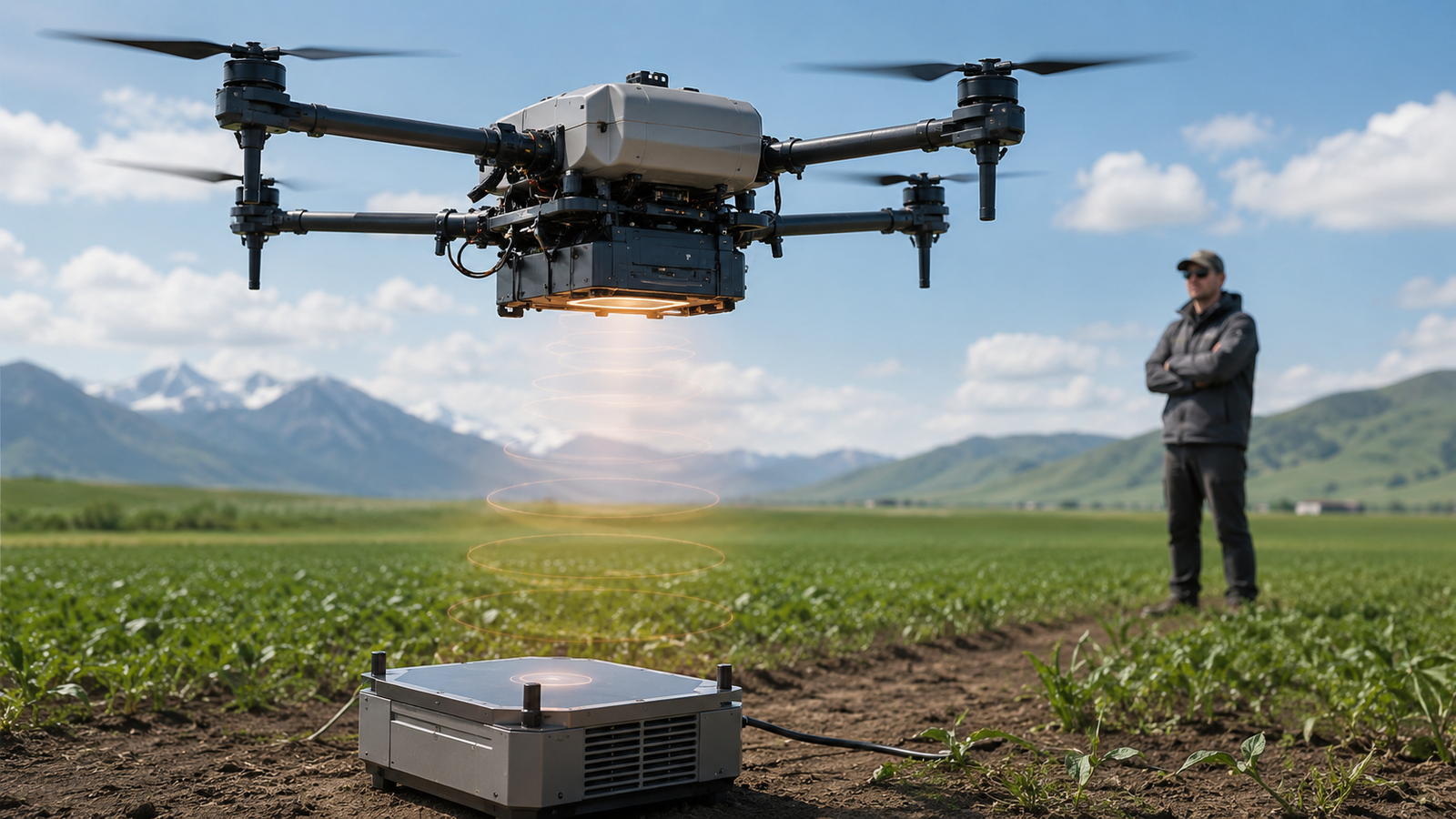
The essence of the technology is that a special battery converts thermal energy into electrical energy. The key element of the development is a graphite core. When electromagnetic waves act on it, it heats up. Built-in thermocouples convert this heat into electric current.
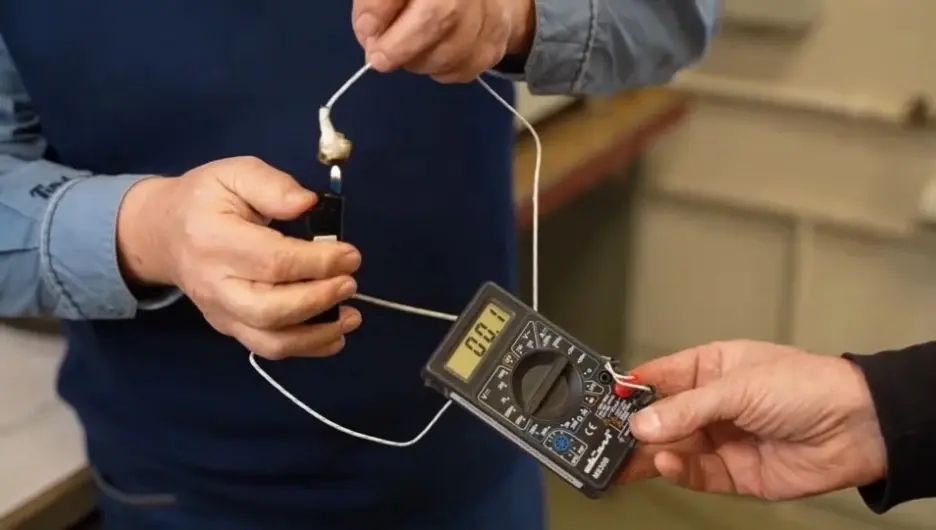
As Professor Viktor Ivanaisky explained, the principle can be seen even in a simple experiment. If a small prototype with a graphite core is heated with an ordinary lighter, the readings on the multimeter begin to rise.
In the laboratory, scientists repeat this experiment with a Russian-made induction heater. After bringing the battery closer, the charge begins to increase even faster.
The researchers emphasize that this technology allows the battery to be recharged without the drone returning to the ground. Moreover, the energy source can be not only a special emitter. According to the scientists, the battery is capable of receiving energy from almost any heat.
For example, a drone will be able to hover over power lines, heating mains, or pipes of industrial enterprises and thus replenish its charge. In addition, scientists are considering the possibility of charging with a laser in the infrared range.
Work on the technology began largely by chance. Viktor Ivanaisky has long been involved in research on high-frequency electromagnetic waves. During repairs in the laboratory, access to equipment was limited, and together with Alexey Ishkov, he began to conduct experiments with an induction heater.
Scientists selected a material that not only heats up but is also capable of transferring heat further and converting it into electricity. Ordinary lithium batteries were not suitable for such tasks, and graphite, according to the researchers, turned out to be an almost ideal option. The developers claim that the new battery can hold a charge for up to three days.
Another feature is cold resistance. Unlike standard lithium batteries, the efficiency of such a system does not decrease in cold weather, and in winter, the indicators can even be better than in summer.
The technology has already been patented. However, the scientists themselves emphasize that for now, it is about technology, not a ready-made serial device. For full implementation, it is still necessary to create compact directional emitters and establish the production of the graphite batteries themselves for drones.
Read more on the topic:
Never miss our newsAdd this site to your preferred sources to see us more oftenAdd on Google

















