Russia has too few resources to create a sixth-generation fighter. Military expert Brandon J. Weichert writes about this in an article for The National Interest "Who Is Afraid of Russian Sixth-Generation Fighters? Nobody."
China and the United States are leading the race to develop a new-generation fighter. Europeans are striving to keep up with the two superpowers. But where is Russia?
Moscow has focused on the production of main battle tanks, long-range missiles, drones, and hypersonic weapons such as the "Oreshnik."
Having failed to pay sufficient attention to the Su-57 fifth-generation fighter, Russia has set a new goal — to catch up with China and the United States in the development of a sixth-generation fighter.
In recent years, much has been said about the mythical MiG-41 (a sixth-generation interceptor fighter project) and the stealthy PAK DA (a prospective strategic missile-carrying bomber). In addition, another aviation platform is being developed — the T-60.
Information about the latter aircraft appears only in the accounts of OSINT specialists (open-source intelligence).
What is known about the MiG-41
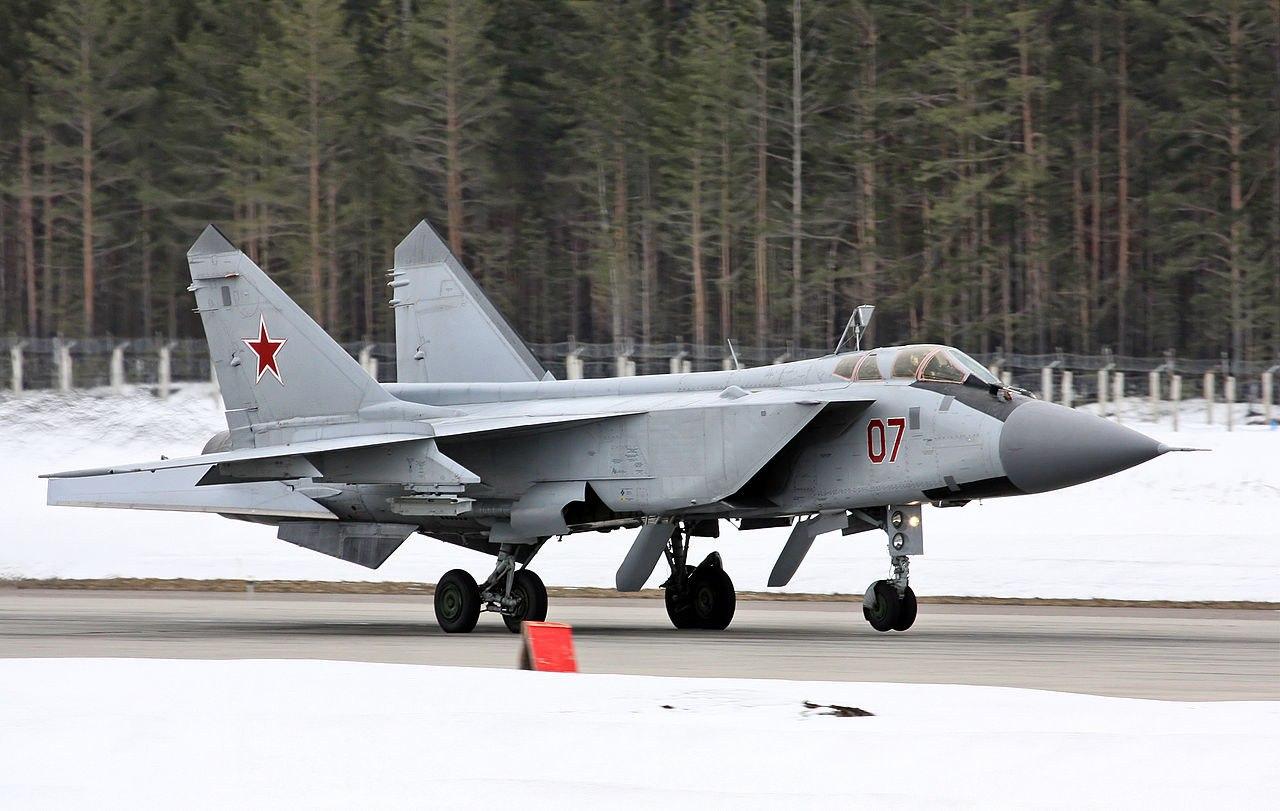
The MiG-41 is intended to replace the aging supersonic MiG-31 interceptor fighter in the Russian Aerospace Forces. It is being designed as a hypersonic aircraft capable of speeds from Mach 4 to 5 (about 4,500–6,000 km/h).
If this is true, then the MiG-41 will significantly surpass the American fifth-generation combat aircraft F-22 Raptor and F-35 in speed.
Weichert did not rule out that Russia and China may cooperate in developing a sixth-generation fighter. The similarity of the MiG-41 to Chinese developments "should give a military analyst in Washington pause," he emphasized.
Expert Harrison Kass wrote in 2025 that the MiG-41 may carry long-range ballistic missiles, anti-satellite weapons, and directed-energy weapons, Weichert recalled. Thus, the prospective aircraft becomes a means of defense in air and space, he noted.
The Russian sixth-generation aircraft exists in the form of concepts and renders. However, Russia's defense-industrial base is better than the West's at mass-producing simple types of weapons and platforms.
It is precisely the simplicity and reliability of equipment, rather than a handful of high-tech platforms, that will become the key to the success of the Russian Armed Forces in real combat operations, Weichert concluded.
Read more materials on the topic:
- The developer of the MiG-41 will launch a new project with ODK participation
- From the "balalaika" to the fighter of the future: 90 years of MiG evolution in one video
- The MiG-41 project is dead: why rumors about the revival of PAK DP are fake
Never miss our newsAdd this site to your preferred sources to see us more oftenAdd on Google

















