Exactly 65 years ago, in October 1960, the Su-9 interceptor fighter was adopted by a government decision. This event marked a new stage for the design bureau of P.O. Sukhoi, marking the first sample of new combat aviation adopted after the restoration of the Design Bureau. In addition, the Su-9 became part of the first domestic Su-9-51 interception aviation complex, which was characterized not only by the aviation component, but also by the Vozdukh-1 ground guidance system.
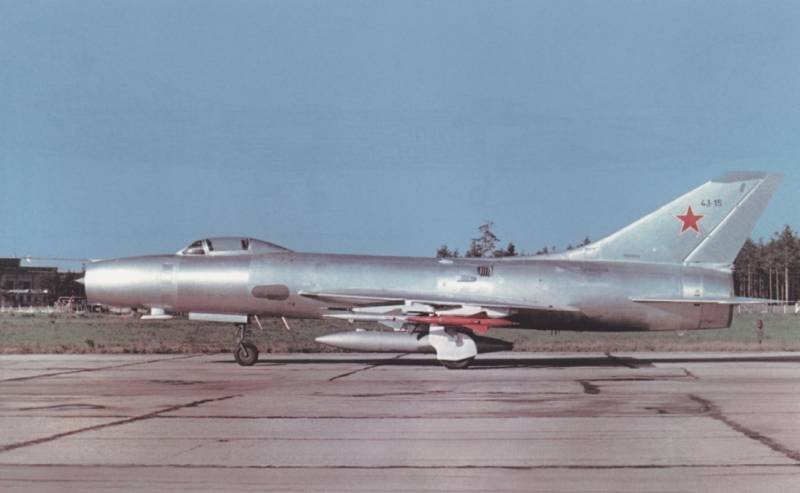
The development of this project lasted more than seven years: the task was set in August 1953, the first prototype T-3 flew in May 1956, and state tests of the interceptor modification under the designation T-43 were carried out from December 1958 to April 1960.
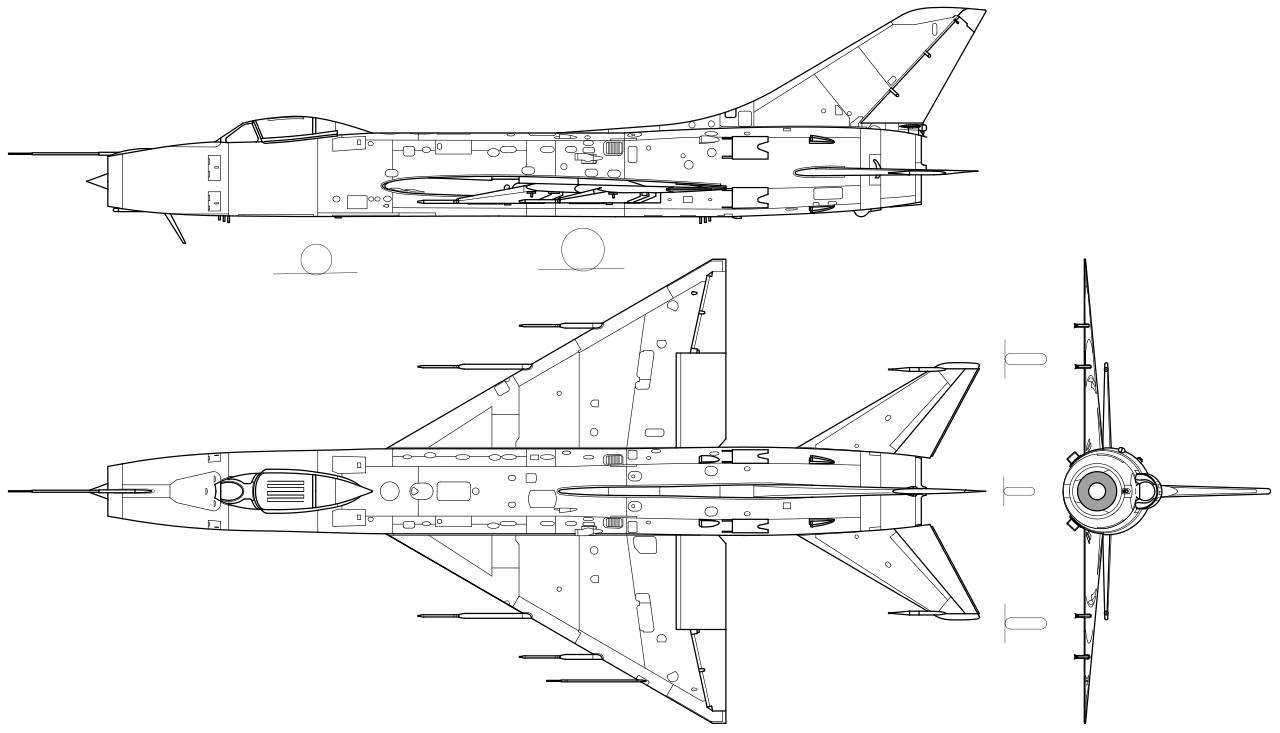
The Su-9 (originally known as the T-3) was mass-produced from 1958 to 1962 at two aircraft factories: No. 153 in Novosibirsk and No. 30 in Moscow. During this time, 1066 units were manufactured, including 50 Su-9U combat trainers.
In the initial stages, in 1959-1960, the aircraft were used both in the Air Force and in the Air Defense, but since 1960 they were transferred exclusively to the aviation of the Air Defense Forces. These aircraft were not exported, and at the peak of their deployment, in the early 60s, the Su-9 was in service with 29 fighter aviation regiments, stationed only on the territory of the Soviet Union.
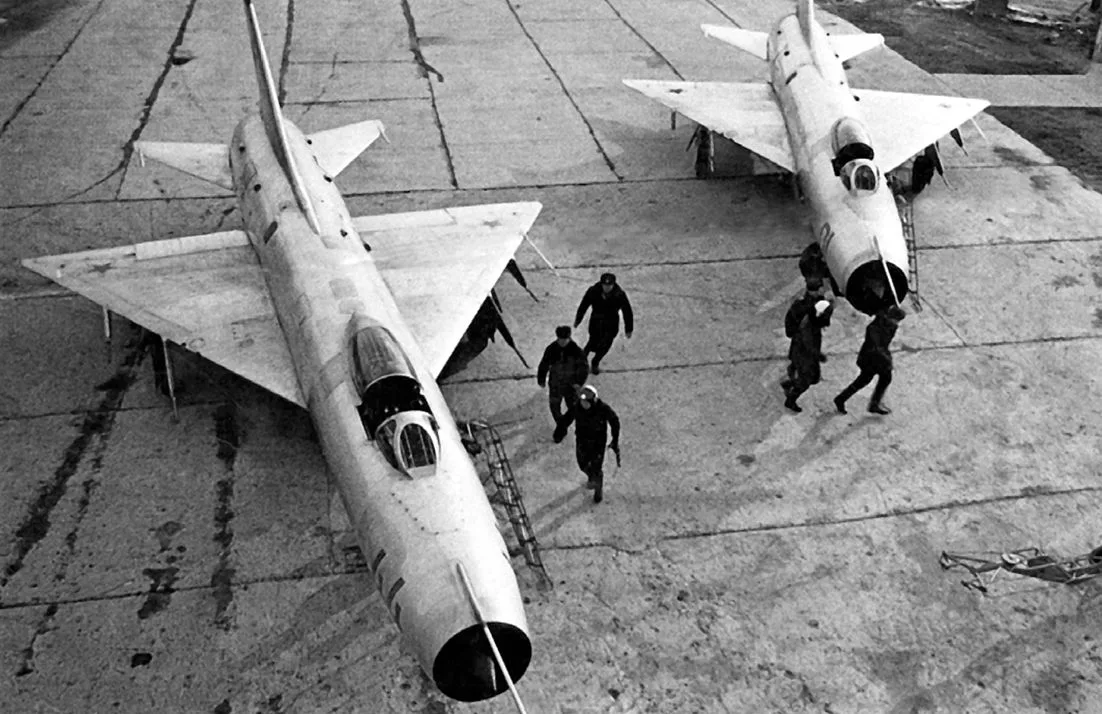
The aircraft was first demonstrated to the general public at an air parade held on July 9, 1961 in Tushino.
These aircraft remained in service in the Soviet Union until 1980, when they were finally decommissioned. Until the early 70s, when the MiG-25 began to enter the army, the Su-9 was actually the highest-altitude and fastest aircraft in the USSR. This was confirmed by world speed and altitude records set between 1959 and 1962 by test pilots V.S. Ilyushin, A.A. Koznov and B.M. Adrianov.
Su-9 (NATO codification: Fishpot) is a Soviet single-engine all-weather interceptor fighter. One of the first Soviet aircraft with a delta wing, the world's first interceptor fighter, created as an integral part of a single interception complex.
Technical characteristics:
- maximum speed: 2,230 km/h at an altitude of 12,000 m;
- practical range: without PTB - 1,350 km, with PTB - 1,800 km;
- practical ceiling: 20,000 m;
- rate of climb: 200 m/s;
- takeoff distance: 1,200 m;
- run distance: 1,250 m (without brake parachute).
Earlier www1.ru reported thatthe new modernized Yak-130M aircraft has already been dubbed the killer of the enemy's "mosquito aviation".
Read also materials:
- The new Russian fifth-generation 177S aircraft engine for combat aircraft will be shown in Dubai
- The developer of the long-range business jet based on the Tu-324 "Aurus-Aero" project will locate production in the Ulyanovsk SEZ
- "Luch" is back in the spotlight: a British Major General, following the Germans, accused the Russian group of satellites "Luch-5X" and "Olymp-K2" of spying in space
Now on home

Start of deliveries scheduled for 2027

Over 51,000 new motorcycles were sold in Russia in 2025

The car will take at least a year to assemble

The application's audience has reached 20 million users

The model will be included in the list of cars for taxis, price - from 2.25 million rubles

All parking lots of the "Administrator of the Moscow Parking Space" are connected to the service

The cars will be supplied to the Moscow Transport Service Directorate

Deliveries to India may begin in 2028

The technology provides automated search for all types of defects in power units

The plane flew 500 km, accelerating to 425 km/h

The plant stated that the information about the termination of purchases for models 6 and 8 is not true

Scientists are using the "Ekran-M" installation
Articles
-
Russian An-124 "Ruslan" Stuck in Canada for 4 Years and Accrues Millions in Fines
26 Jan 2026
-
Coaxial Propellers: How Counter-Rotation Increases Turboprop Engine Efficiency
25 Jan 2026
-
Kazan Aviation Plant Breaks Old System: Tu-214 to be Assembled Like Cars
25 Jan 2026
-
How Engineers and Technicians Are Paid Today in the Russian Aviation Industry: An Overview with Figures
24 Jan 2026