The Russian fifth-generation multirole fighter Su-57 potentially has an advantage over the American F-35 Lightning II due to powerful engines and nozzles with thrust vectoring. This gives the aircraft exceptional post-stall maneuverability (a sharp drop in lift as a result of disruption of normal airflow around the wing). This opinion was expressed in an article for The National Interest by military expert Harrison Kass.
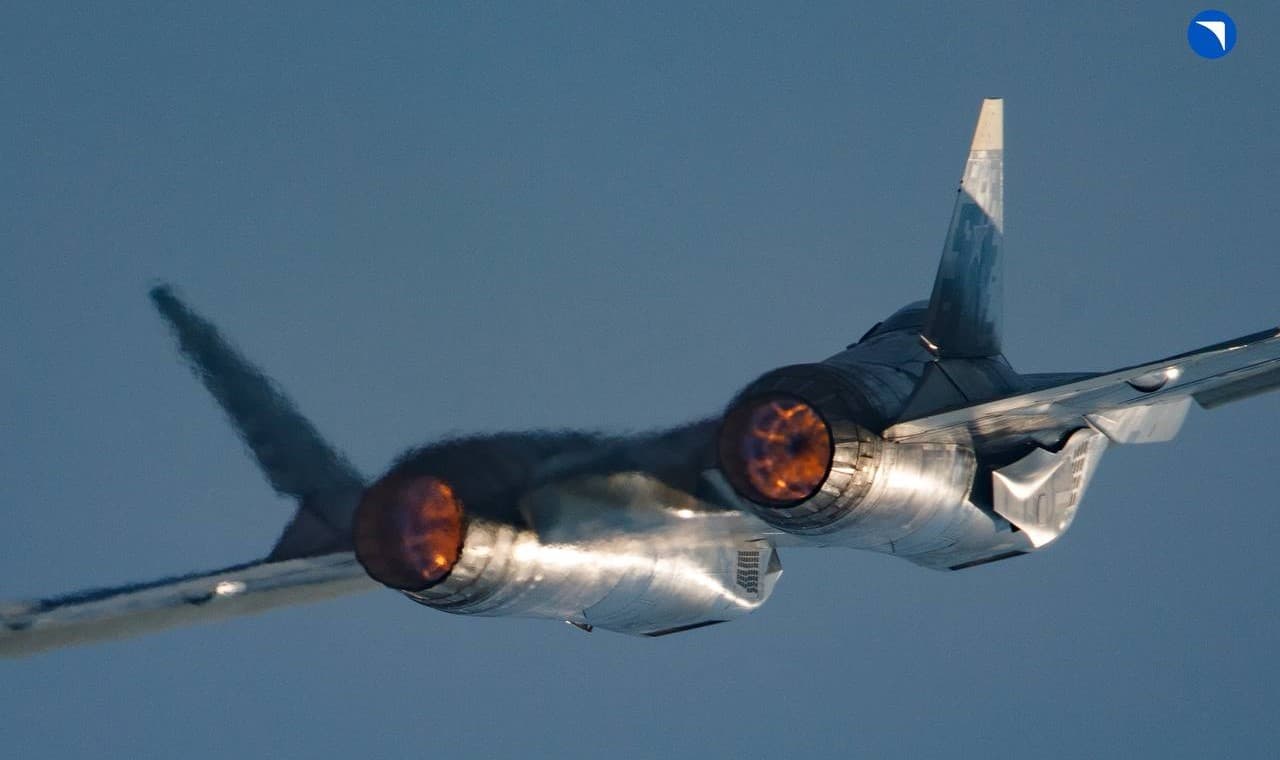
The Su-57 is called a competitor to the American F-22 Raptor and F-35 Lightning II. When comparing these aircraft, you can notice a fundamental difference in design and component base. The Su-57 looks great on paper.
In theory, the Su-57 combines stealth (stealth technology), like the F-22, and flexibility, like the F-35, while maintaining the flight capabilities of the Su-27/Su-35, Kass noted. But upon closer examination, it turns out that the Russian aircraft has vulnerabilities.
The design of the Su-57 is less sophisticated than that of its American counterparts. Engineers reduced the frontal area of the aircraft, but the gaps between the panels, external sensors, and engine nozzles increase its visibility. The Russians sought to compensate for this shortcoming through maneuverability and advanced electronic warfare systems.
Kass suggested that in an air battle beyond visual range, the Su-57 will be detected earlier than the pilot of the Russian aircraft detects the enemy.
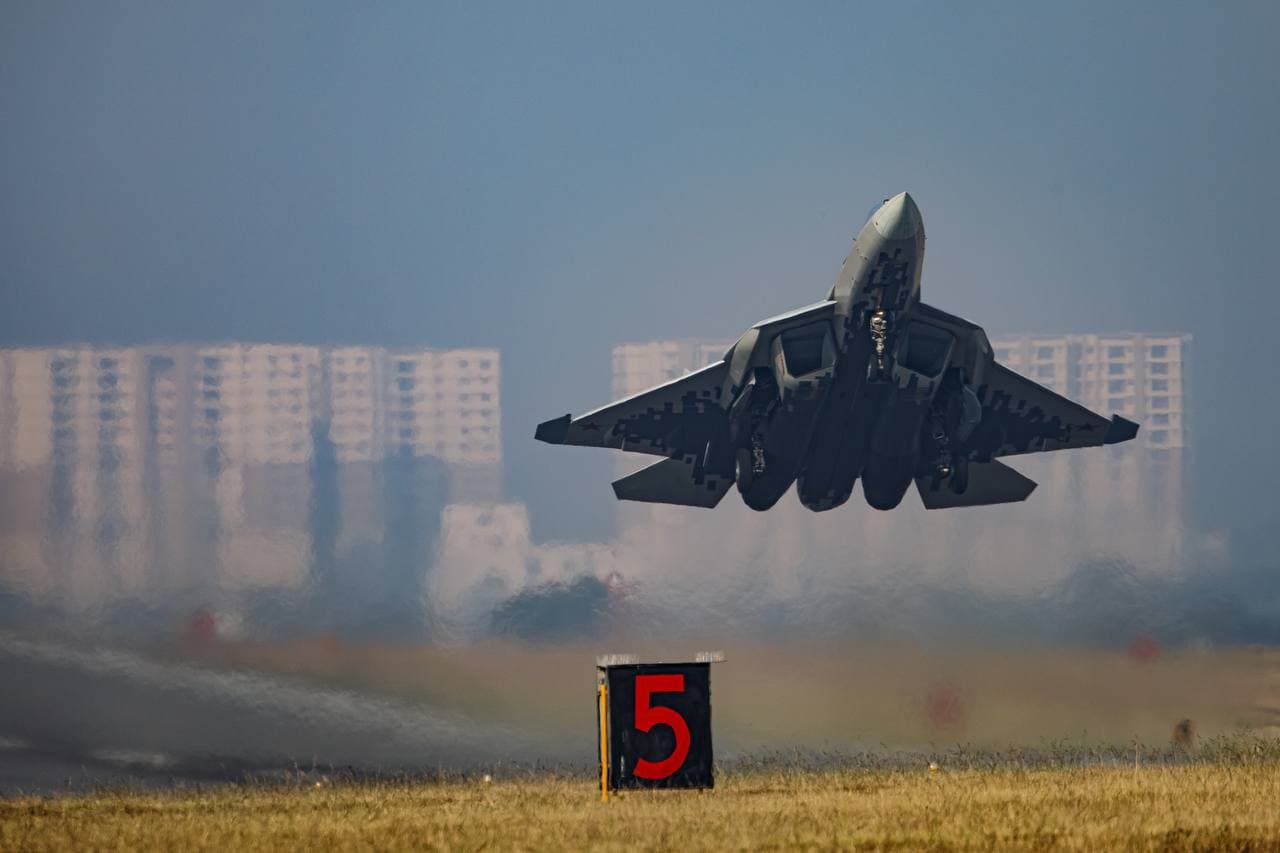
In addition, the Su-57 pilot is less aware of what is happening in the air than the pilots of the F-22 and F-35. This is because Russian avionics are inferior to Western ones.
The Russian aviation industry does not have the software and network technologies that, for example, the United States has.
Kass recalled that Russia has not yet been able to establish the production of the Su-57 in large batches. The fighters enter service with the Russian Aerospace Forces in small quantities.
Given the sanctions, supply chain problems and lack of resources, it is unlikely that the Russians will increase the production of the Su-57 in the near future. At the same time, the United States has more than 1,000 F-35s in service.
According to information from open sources, about 30 serial Su-57s were produced in the Russian Federation. In addition, a pilot batch of 10 aircraft was produced.
If we do not talk about the quantitative advantage of the F-35, the Su-57 is an ambitious project that could potentially become the basis for the development of new highly efficient aircraft, Kass summarized.
Read more materials on the topic:
Now on home

Start of deliveries scheduled for 2027

Over 51,000 new motorcycles were sold in Russia in 2025

The car will take at least a year to assemble

The application's audience has reached 20 million users

The model will be included in the list of cars for taxis, price - from 2.25 million rubles

All parking lots of the "Administrator of the Moscow Parking Space" are connected to the service

The cars will be supplied to the Moscow Transport Service Directorate

Deliveries to India may begin in 2028

The technology provides automated search for all types of defects in power units

The plane flew 500 km, accelerating to 425 km/h

The plant stated that the information about the termination of purchases for models 6 and 8 is not true

Scientists are using the "Ekran-M" installation
Articles
-
Russian An-124 "Ruslan" Stuck in Canada for 4 Years and Accrues Millions in Fines
26 Jan 2026
-
Coaxial Propellers: How Counter-Rotation Increases Turboprop Engine Efficiency
25 Jan 2026
-
Kazan Aviation Plant Breaks Old System: Tu-214 to be Assembled Like Cars
25 Jan 2026
-
How Engineers and Technicians Are Paid Today in the Russian Aviation Industry: An Overview with Figures
24 Jan 2026