On September 25, 2015, the first production Lada Vesta rolled off the assembly line of the Izhevsk Automobile Plant, marking the beginning of a new era for the domestic automotive industry. The model, developed in collaboration with the Renault-Nissan alliance, was positioned as a modern, competitive car capable of competing for buyers in the budget sedan segment. The Vesta featured a bold design, spacious interior and improved handling characteristics.

The car quickly gained popularity due to its combination of affordable price, modern appearance and practicality. The Vesta became one of the best-selling Lada models, strengthening AvtoVAZ's position in the Russian market and abroad.
Over the decade, the Vesta has been repeatedly modernized, receiving new options, engines and body styles. Versions of the Vesta SW (station wagon) and Vesta Cross, adapted for operation in difficult road conditions, appeared. The car was also used in motorsport, participating in Russian and international racing series.
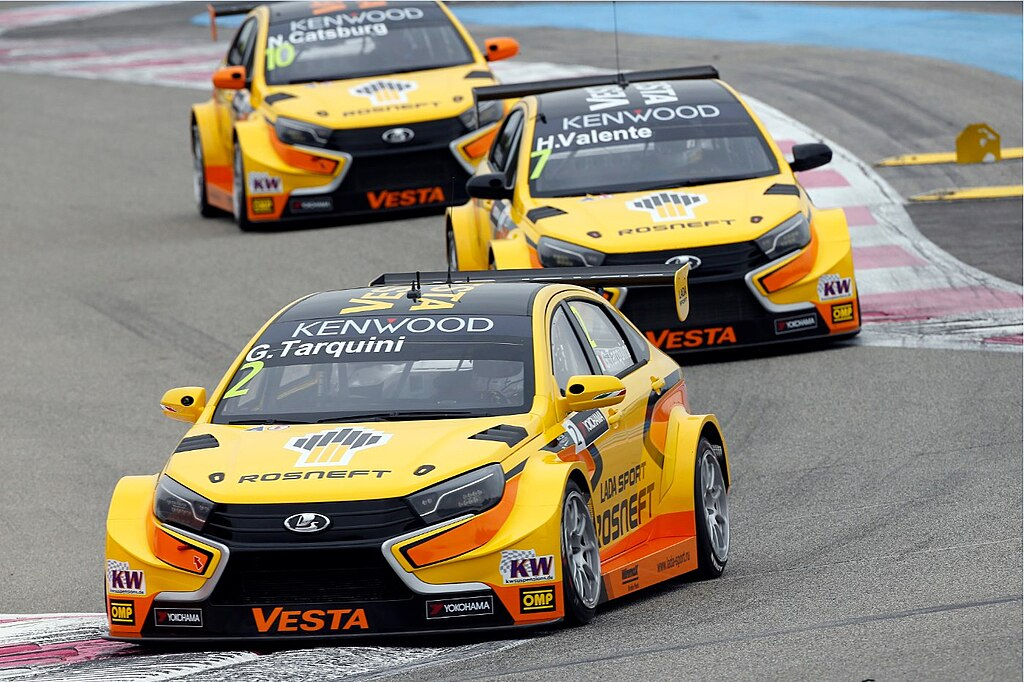
Vesta has become a symbol of the revival of AvtoVAZ and confirmation of the ability of Russian engineers to create competitive cars.
In 2025, a decade after the start of production, the Lada Vesta remains one of the most popular cars in Russia, continuing to write its history and set new standards in the budget car segment.
Earlierwww1.ru reported thatan analogue of the Geely Monjaro with a "space" design will be localized in Russia: the Avtotor plant is preparing to produce five Changan models.
Read also materials:
Now on home

Start of deliveries scheduled for 2027

Over 51,000 new motorcycles were sold in Russia in 2025

The car will take at least a year to assemble

The application's audience has reached 20 million users

The model will be included in the list of cars for taxis, price - from 2.25 million rubles

All parking lots of the "Administrator of the Moscow Parking Space" are connected to the service

The cars will be supplied to the Moscow Transport Service Directorate

Deliveries to India may begin in 2028

The technology provides automated search for all types of defects in power units

The plane flew 500 km, accelerating to 425 km/h

The plant stated that the information about the termination of purchases for models 6 and 8 is not true

Scientists are using the "Ekran-M" installation
Articles
-
Russian An-124 "Ruslan" Stuck in Canada for 4 Years and Accrues Millions in Fines
26 Jan 2026
-
Coaxial Propellers: How Counter-Rotation Increases Turboprop Engine Efficiency
25 Jan 2026
-
Kazan Aviation Plant Breaks Old System: Tu-214 to be Assembled Like Cars
25 Jan 2026
-
How Engineers and Technicians Are Paid Today in the Russian Aviation Industry: An Overview with Figures
24 Jan 2026