A historic event occurred on September 25, 1997: the Su-47 "Berkut" aircraft, whose distinctive feature was the forward-swept wing, took to the skies for the first time. At the controls was Igor Votintsev, a recognized flight test master from the Sukhoi Design Bureau.
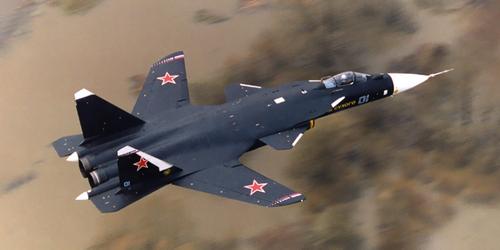
The Su-47 "Berkut" was an experimental machine created to test various design solutions, technologies, and layouts necessary for the development of new-generation fighters. Design work began at the Design Bureau back in 1983 under the code name S-22, when the testing and serial production of the Su-27, the main fighter, were practically completed. On the initiative of M.P. Simonov, the Design Bureau received a task from the Ministry of Aviation Industry to create an experimental aircraft with a forward-swept wing (FSW). This scheme promised improved lift characteristics at subsonic speeds and stall resistance at high angles of attack.
As a result of five years of joint work with TsAGI, various options for the aerodynamic configuration of the aircraft were analyzed, the Design Bureau selected the main parameters of aerodynamics, and a working project was developed for one of the options. In 1988, in agreement with the Air Force, a decision was made to create an experimental aircraft based on the selected project, which was to become a prototype of the fifth-generation aircraft.
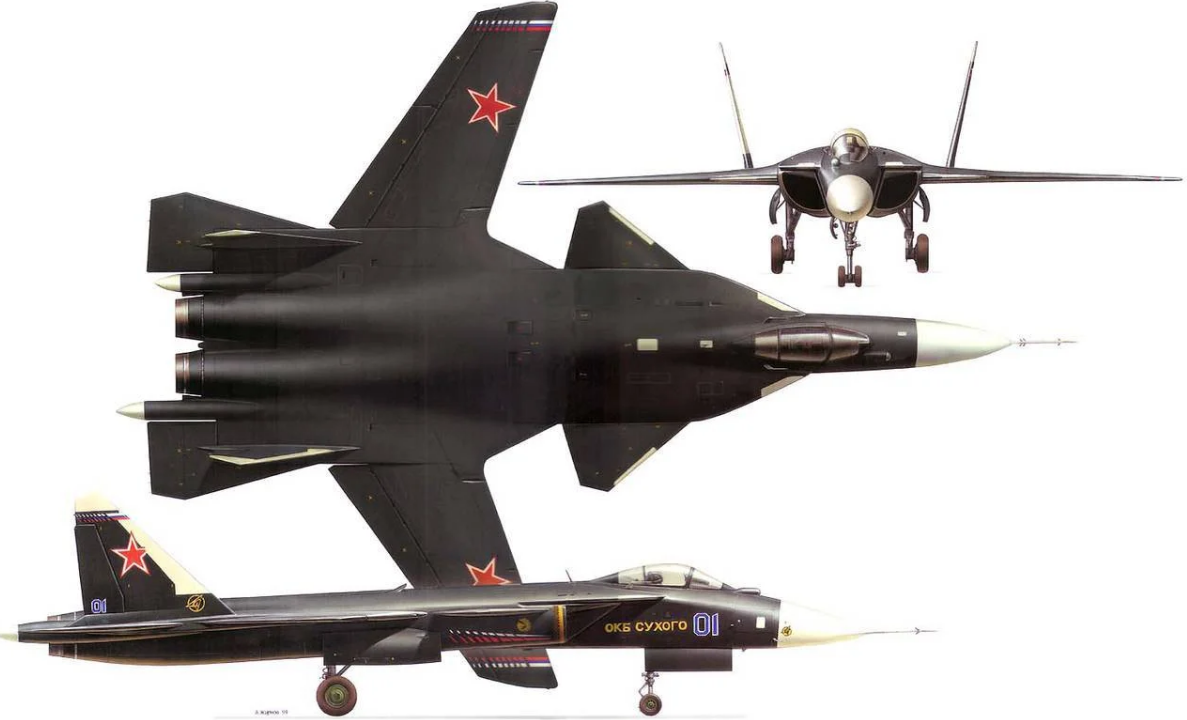
The choice fell on the "lifting triplane with FSW" scheme. The forward-swept wing has less induced drag, as the air flow moves from the wingtips to the fuselage. Reducing vortex formation improves aerodynamic quality, which improves takeoff and landing characteristics, maneuverability, lift, and flight range at subsonic speeds. In addition, the working conditions of the wing mechanization are improved, and the internal volume of the airframe is increased, which is extremely important for a fifth-generation fighter designed to accommodate weapons in internal compartments.
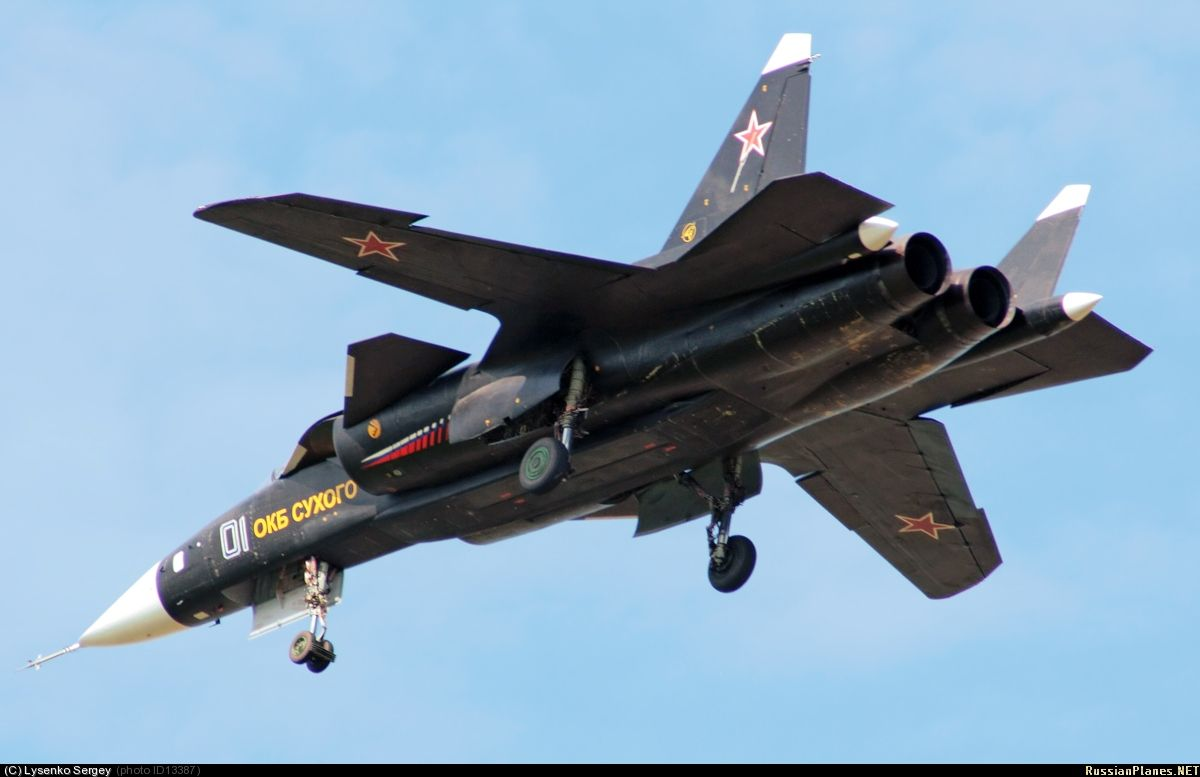
The Su-47 implemented a number of new technical and design solutions that had not previously been used on similar aircraft, such as higher longitudinal static instability, the use of large-sized milled panels of double curvature, and composite materials in critical structural elements.
Flight tests of the Su-47 were conducted until 2003, during which the aircraft was repeatedly demonstrated at the MAKS air shows. Since 2004, the Su-47 has been used for research related to the development of a promising aviation complex for front-line aviation (PAK FA), known as the Su-57 fifth-generation multirole fighter. Despite the fact that some Western sources suggested serial production of the Su-47 to counter American F-22 fighters, the "Berkut" never went beyond the experimental prototype.
Technical characteristics of the Su-47:
- Crew: 1 person.
- Length: 22.6 m.
- Wingspan: 16.7 m.
- Height: 6.4 m.
- Wing area: 56 m².
- Empty weight: 19500 kg.
- Normal takeoff weight: 26500 kg.
- Maximum takeoff weight: 38500 kg.
- Fuel weight: 12000 kg.
- Maximum speed: at altitude - 2500 km/h (limited to 900 km/h due to destructive loads on the wing and center section), near the ground - 1550 km/h.
- Flight range: ferry (with 2 external fuel tanks) - 5500 km, at subsonic speed - 4000 km, at supersonic speed - 1600 km.
- Flight duration: 6.5 hours.
- Service ceiling: 20,000 m.
- Takeoff/landing distance: 90 m (possibility of takeoff along a ballistic trajectory).
- Armament: small arms and cannon - 1 × 30 mm GSh-30-1 cannon.
Read more materials:
- "4+" generation fighter-bombers Su-34NVO began to be equipped with modernized UMPC-PD
- "Piracy and illegal seizure": technical inspection of the confiscated An-124 "Ruslan" began in Canada
- Rosaviatsia confirmed high standards of production of parts and components for PD-14
Never miss our newsAdd this site to your preferred sources to see us more oftenAdd on Google

















