The emergence of the Falcon 9 reusable launch vehicle was a real breakthrough in rocket engineering. By reducing launch costs, it opened up new horizons in space exploration and demonstrated the reality of creating reusable rocket systems. This, in turn, stimulated the emergence of many startups working on similar projects. Interestingly, the ideas of reusable rockets existed before, in particular, in the USSR in the 1980s.

In the early 1980s, an ambitious project was launched to create one of the most advanced space technologies of the time - the Energia-2 reusable transport system, also called "Uragan". The main idea was to develop a two-stage heavy launch vehicle, all components of which could return to Earth. This approach was designed to significantly reduce the cost of space launches compared to traditional disposable rockets.
Design and features
"Energia-2" included:
- four side boosters of the first stage, equipped with kerosene engines, which were planned to be returned to Earth for reuse. To do this, they had to either land on parachutes or land at an airfield, like the central block
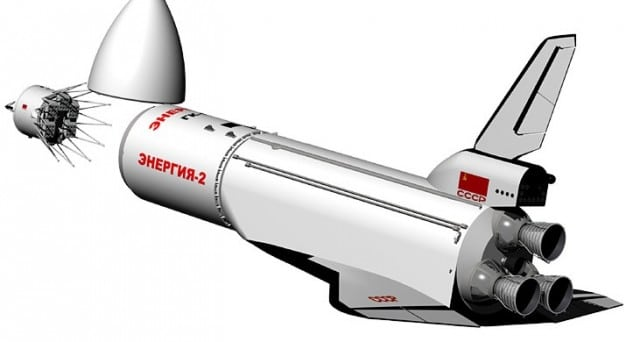
- a second stage in the form of an orbital spacecraft, outwardly resembling "Буран", but with a number of differences
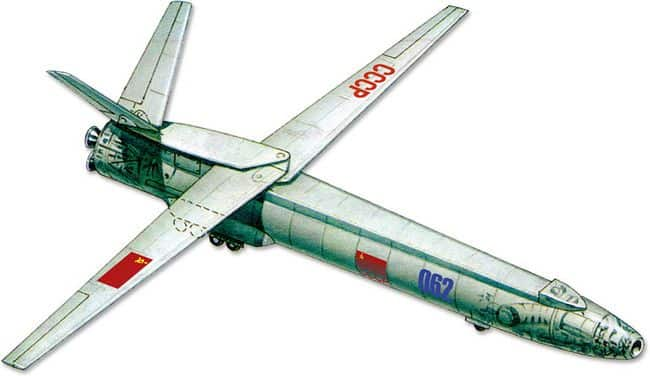
The spacecraft was planned with three main engines and an orbital stabilization system. Its design provided for a wingspan of approximately 26 meters and the ability to carry up to 40 tons of cargo. The lower part of the hull was designed with enhanced thermal protection, capable of withstanding temperatures up to 1500 °C when entering the atmosphere. Upon completion of the mission, the spacecraft was to independently return to Earth, landing at a standard airfield with a reinforced runway.
The project incorporated ideas that were subsequently reflected in other developments, in particular, in the Baikal reusable booster for the Angara rocket, created by the efforts of GKNPTs named after Khrunichev and NPO Molniya.
The fate of the project
By the end of the 1980s, the Energia-2 project was at the stage of preliminary design studies, but its further development was interrupted by the collapse of the USSR. Despite this, Energia-2 serves as evidence that Soviet cosmonautics, long before the appearance of similar systems in other countries, had already explored the possibilities of creating reusable space projects, but something went wrong.
Earlier www1.ru reported that in The US gavea negative assessment of the Russian rocket "Soyuz-5"
Read more on the topic:
The newest Russian rocket "Soyuz-5" was criticized in the USA
The future of space: Russia is discussing space cooperation with other countries after the ISS
"Baikal" on the rise: the developer spoke about the tests of the new LMS-901 aircraft
Now on home

Start of deliveries scheduled for 2027

Over 51,000 new motorcycles were sold in Russia in 2025

The car will take at least a year to assemble

The application's audience has reached 20 million users

The model will be included in the list of cars for taxis, price - from 2.25 million rubles

All parking lots of the "Administrator of the Moscow Parking Space" are connected to the service

The cars will be supplied to the Moscow Transport Service Directorate

Deliveries to India may begin in 2028

The technology provides automated search for all types of defects in power units

The plane flew 500 km, accelerating to 425 km/h

The plant stated that the information about the termination of purchases for models 6 and 8 is not true

Scientists are using the "Ekran-M" installation
Articles
-
Russian An-124 "Ruslan" Stuck in Canada for 4 Years and Accrues Millions in Fines
26 Jan 2026
-
Coaxial Propellers: How Counter-Rotation Increases Turboprop Engine Efficiency
25 Jan 2026
-
Kazan Aviation Plant Breaks Old System: Tu-214 to be Assembled Like Cars
25 Jan 2026
-
How Engineers and Technicians Are Paid Today in the Russian Aviation Industry: An Overview with Figures
24 Jan 2026