The Cold War period was marked by a rapid development of military technologies, where necessity, as is known, stimulates invention, and wartime often gives birth to them out of need. Among the many engineering solutions that boggle the mind, the Soviet Progrev-T tank project stands out.
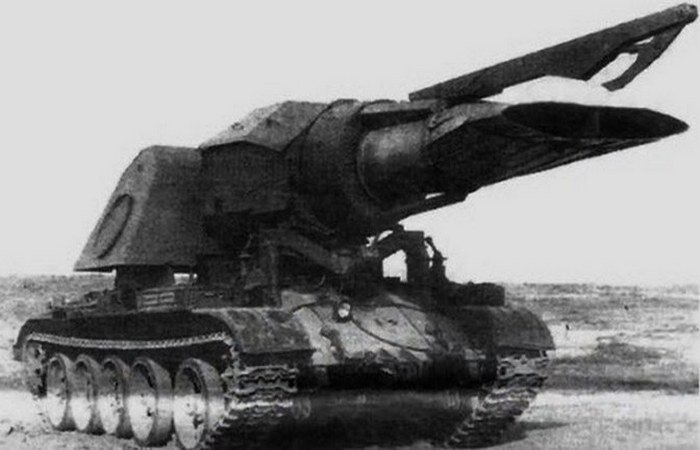
Let's start by defining the key concept. A mine trawl is a special type of military equipment designed to break through safe passages in minefields, facilitating the movement of both infantry and combat vehicles. There are many approaches to neutralizing these deadly devices, and Russian engineers have developed one of the most unconventional. This project was given a mysterious and impressive name - "Object 604."
Soviet engineers converted a T-55 tank, equipping it with a jet engine from a MiG-15 fighter, to create a unique mine-clearing vehicle - a "gas-dynamic trawl." This development, which appeared in response to the difficulties of the Soviet-Afghan war and the active use of mines by the Mujahideen, was intended to destroy mines on roads using powerful jet exhaust and high temperature.
The modified T-55 received a Klimov VK-1 aircraft turbojet engine. Its downward-directed stream of hot gases created a kill zone 10-12 meters wide, allowing the vehicle to move slowly. Unlike traditional mechanical trawls, the Progrev-T system used the heat and energy of the engine to melt the soil and detonate mines. Prototypes tested in the late 70s and early 80s were successfully used in Afghanistan to neutralize improvised explosive devices on roads, and the fuel supply allowed them to clear up to 11 kilometers of road.
The hybrid design, created on the basis of Soviet experiments with re-profiled equipment, combined the mobility and protection of the T-55 with the destructive power of the MiG-15 engine (proven technology of the Korean War).
The project faced numerous problems that doomed it to oblivion. The main one was low stealth: the loud jet engine attracted the attention of the enemy. The machine was cumbersome and impractical for long field operations, as in Afghanistan. The high temperature of the engine posed a danger to the crew and friendly forces, and the size limited maneuverability. In Afghanistan, the Progrev-T showed partial success in clearing snow and ice, but as a mine trawl it was terrible. By the 1980s, the project was frozen, with only prototypes released, reflecting the trend of ambitious but impractical Soviet military developments.
Technical characteristics:
- combat weight - 37 t
- trawling width - 10-12 m
- trawling speed - 1 ... 3 km/h
- trawling reliability - 99%
- continuous operation time - 2.5 h
- trawling mines at a depth of - up to 20 cm (when working as a ripper - up to 50 cm) from the top of the crank
Read more on the topic:
River tanks. Armored boats of projects 1124 and 1125 became a symbol of Soviet river military power
Now on home
The shift norm now covers the assembly of nine engines instead of seven

Rocket launch postponed - it was planned for 2030

Key innovative solution - the use of a modular block architecture
The train will not become a mass product in Russia

Now the rockets will be fully assembled in Omsk
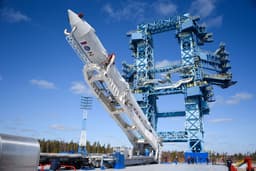
The first launch of the rocket will take place no earlier than 2035

Testing of the key component of the traction transformer will begin in April 2026
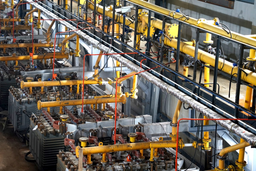
New fluorine production capabilities eliminate technological risks in the uranium transformation stage before enrichment in centrifuges
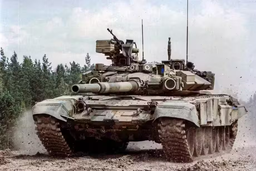
RIF company sued Krasnogorsk plant named after S. A. Zverev

The space complex will allow the development of the Earth's satellite's circumpolar regions

Articles
-
Russian An-124 "Ruslan" Stuck in Canada for 4 Years and Accrues Millions in Fines
26 Jan 2026
-
Coaxial Propellers: How Counter-Rotation Increases Turboprop Engine Efficiency
25 Jan 2026
-
Kazan Aviation Plant Breaks Old System: Tu-214 to be Assembled Like Cars
25 Jan 2026
-
How Engineers and Technicians Are Paid Today in the Russian Aviation Industry: An Overview with Figures
24 Jan 2026