Translated with AI from the Russian original.
Have you ever wondered why a helicopter is slower than an airplane, even though its rotor looks much larger? Aircraft engine designer Pavel Chupinin from UEC explained all the intricacies of this issue and how exactly the design and aerodynamics of a helicopter affect its speed and the role of the engine.
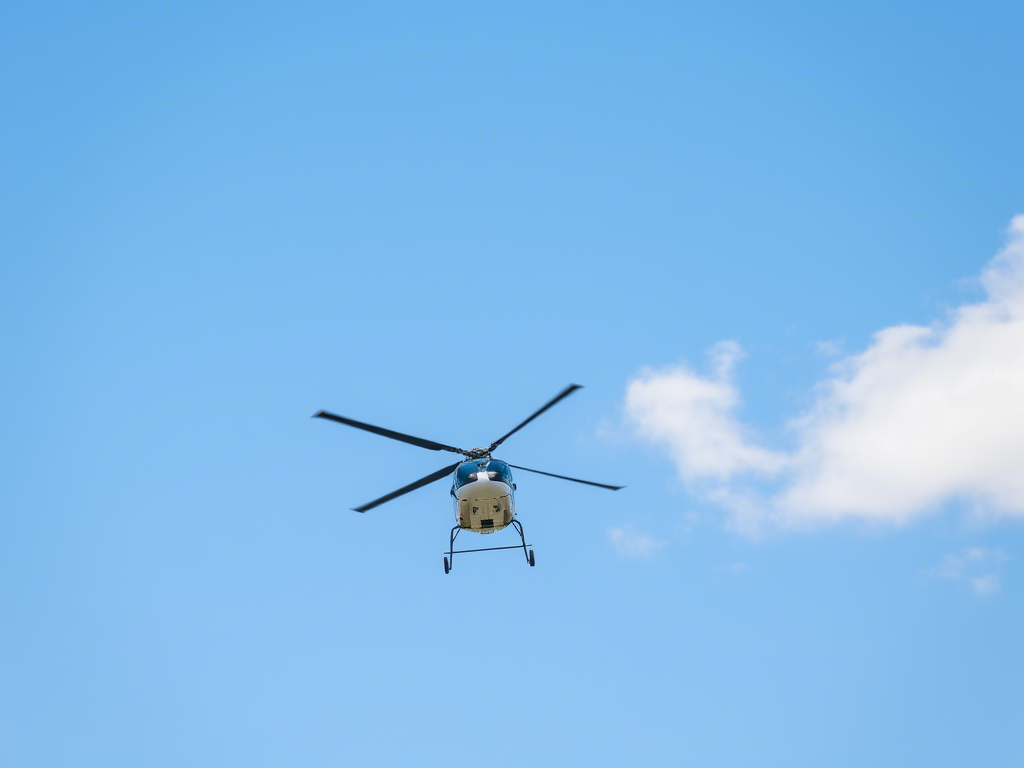
Firstly, a helicopter flies at different altitudes. The principle of movement is different. All helicopters are set in motion not by jet propulsion, but by mechanical thrust, which is transmitted from the power turbine of the gas turbine engine to the rotor via a gearbox.
Engines for airplanes come in two types. The first is jet engines, which operate on the principle of direct jet thrust. In them, energy is converted into a jet stream through a nozzle, and mechanical energy is not transmitted to the rotor.
The second is turboprop engines. They have a rotor installed at the inlet, which rotates through a gearbox.
In principle, this is a direct analogy to a helicopter. But, once again, the turboprop engine's rotor is located "in the direction of the airplane's flight", perpendicular to the plane of the wing. This means that on a helicopter, the rotor is located above the helicopter's cabin. That is, essentially, these rotors are positioned vertically for an airplane and horizontally for a helicopter.
The main thrust in gas turbine engines of airplanes and helicopters is created by the rotor. The design of such engines is the same, the only difference is how power is extracted. In an airplane, it is converted into jet thrust through a nozzle, while in a helicopter, it is transmitted from the turbine to the rotor to create mechanical energy.
Previously, scientists from Tomsk Polytechnic University and the Institute of Thermophysics of the Siberian Branch of the Russian Academy of Sciences developed an algorithm that predicts the sliding length of water droplets on inclined hydrophobic surfaces. This discovery will help improve anti-icing coatings for airplanes, wind generators, and high-speed trains.
Read more related materials:
A compact wind tunnel for studying aircraft icing was created at the ITAM SB RAS
The MC-21 aircraft with new Russian systems flew from Irkutsk to the Moscow region
Never miss our newsAdd this site to your preferred sources to see us more oftenAdd on Google

















