Translated with AI from the Russian original.
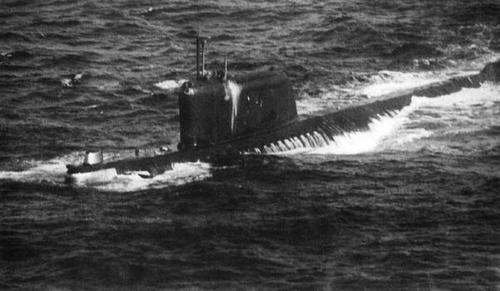
The history of the Russian submarine fleet is inextricably linked to the construction of the first Soviet nuclear-powered missile submarine K-19 (Project 658). The submarine was launched from the stocks of Plant No. 402 (now Sevmash) in Severodvinsk on October 11, 1959.
Arms Race
In June 1959, the first nuclear-powered missile submarine, the George Washington, was launched in the United States. The Soviet leadership tasked the shipbuilders with putting the K-19 into operation as quickly as possible. This was a kind of "answer to the imperialists." As a result, both submarines went on combat duty almost simultaneously.
K-19 joined the Northern Fleet on July 12, 1960. The missile carrier's crew performed combat missions for almost two decades. From 1979, the submarine served as a communications boat. In 1990, the K-19 was decommissioned.
K-19 Characteristics
The submarine received three R-13 ballistic missiles. Each of them was equipped with a nuclear warhead with a capacity of one megaton. K-19 became part of the USSR's nuclear triad.
- Length - 114 m
- Width - 9.2 m
- Underwater speed - 26 knots
- Maximum immersion depth - 300 m
- VM-A type nuclear reactor
- Crew - 104 people
The construction of the K-19 gave Soviet engineers invaluable experience, which they later used to develop improved and powerful nuclear weapons carriers.
Read also on the topic:
Le Figaro: Russian military intercepted Atlantique 2 aircraft of the French Navy over the Baltic Sea
Techbreak portal named the most powerful air-to-air missiles
Trump is ours: tests of a promising transport UAV have begun in Russia
Military Review: Will the Su-75 stealth fighter be mass-produced or is it a dead end?
Never miss our newsAdd this site to your preferred sources to see us more oftenAdd on Google

















