The Russian InnoSat16 satellite successfully recorded a solar eclipse on August 12. The test was conducted by the Geoscan group of companies: specialists checked how accurately the 16U CubeSat spacecraft can maintain its orientation towards the Sun.
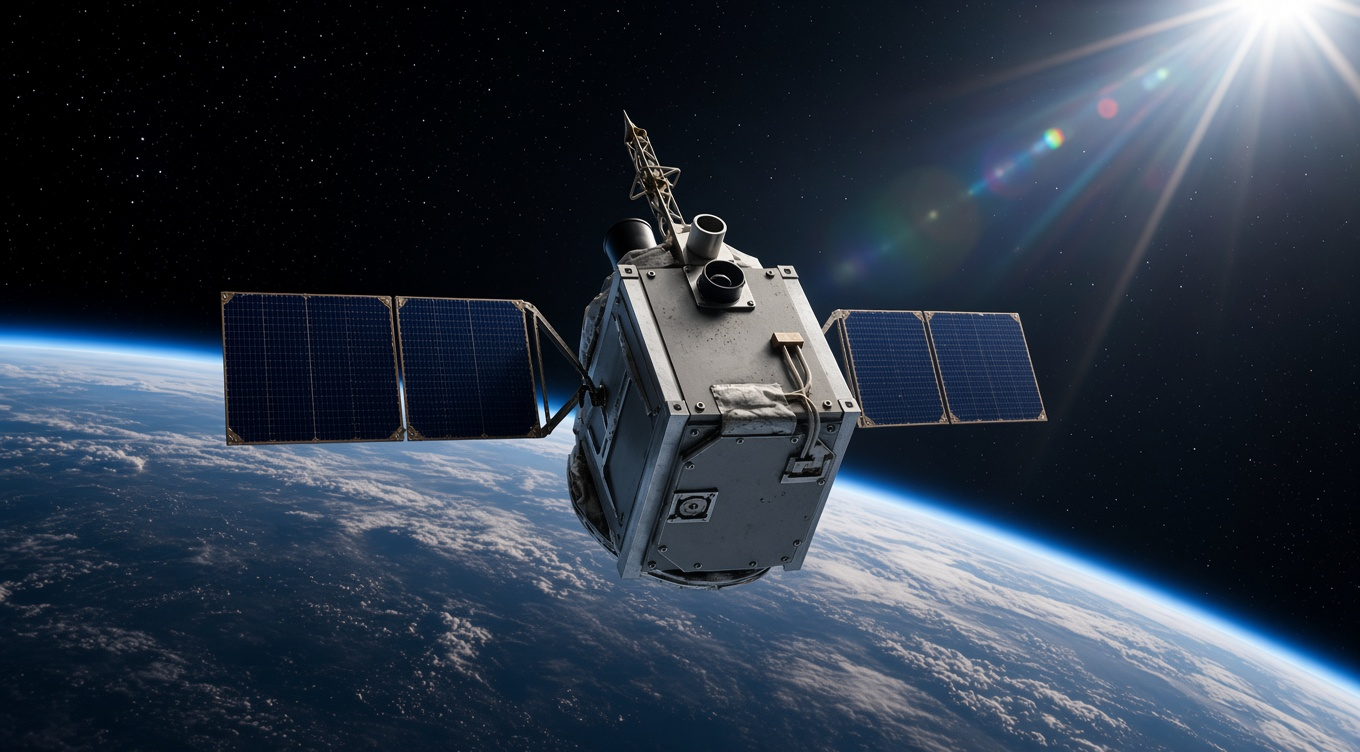
The Cyclops onboard camera was used for observation. It is not equipped with special filters for solar imaging, so the experiment did not aim to obtain full-fledged scientific images of the solar surface. The main goal was to test the spacecraft's orientation and stabilization system.
InnoSat16 was able to maintain its orientation towards the Sun throughout the eclipse. According to Geoscan, the satellite is equipped with one of the most accurate orientation and stabilization systems among CubeSat-class spacecraft.
The result obtained is considered an important stage of the Aurora project – a joint development of Geoscan and the Space Research Institute of the Russian Academy of Sciences. Based on it, they plan to create a solar observatory in CubeSat format, which the developers call the world's first specialized solar observatory of this type. The launch is scheduled for 2027.
Orbital observation should make it possible to study the solar corona and changes in solar activity without the limitations that arise during ground-based imaging due to the atmosphere and weather.
Read more on the topic:
- The company "Geoscan" presented the most accurate satellite platform with the "CubeSat 16U" stabilization system
- "Soyuz-2.1b" Successfully Launched "Ionosphere-M" Satellites and 18 Small Spacecraft into Orbit
- Russia is preparing a mini-observatory to study the Sun: previously, only large satellites solved such tasks
Never miss our newsAdd this site to your preferred sources to see us more oftenAdd on Google