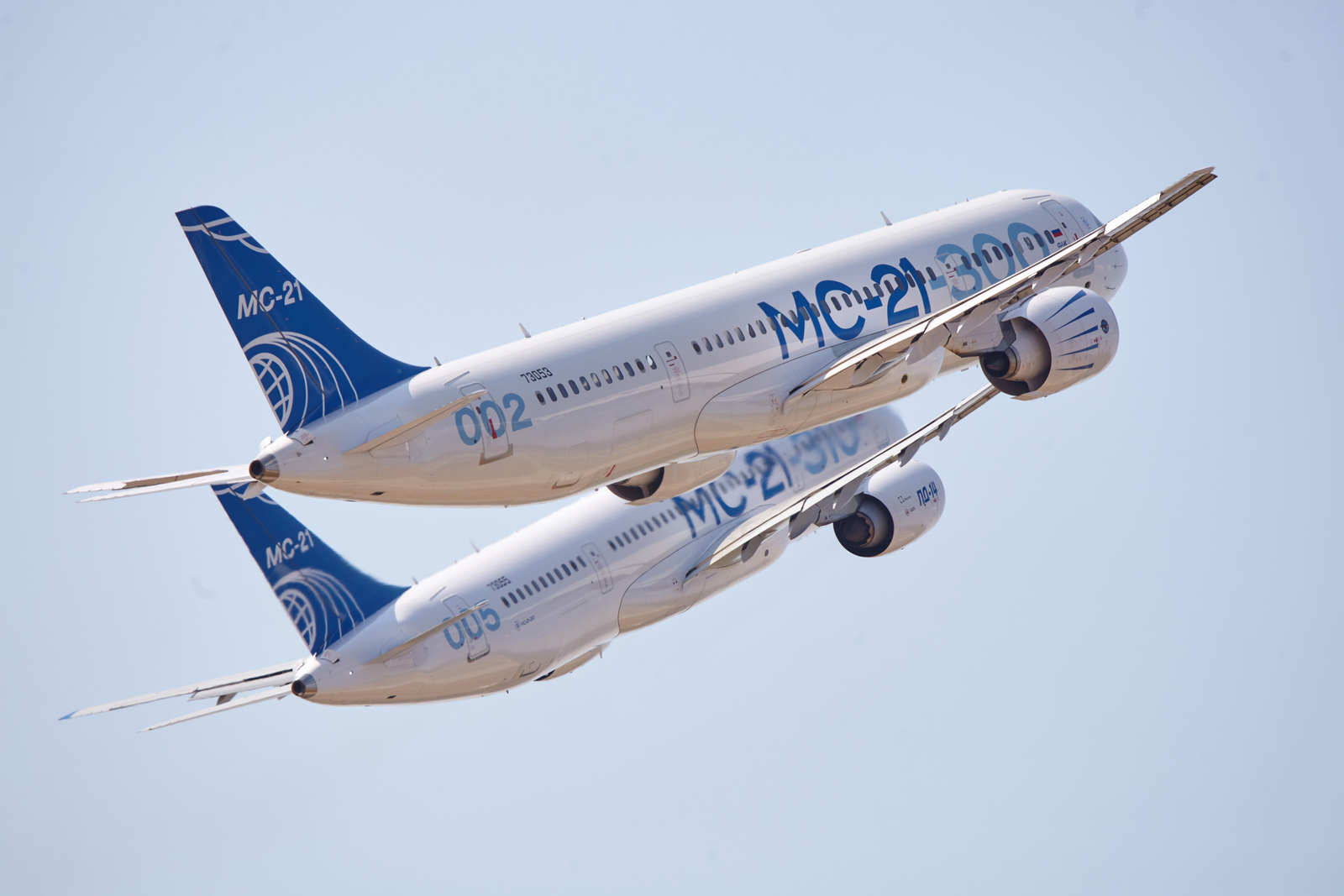
The MC-21 aircraft costs about 9 billion rubles, but Aeroflot receives it for approximately 3.6 billion. The difference is covered by state support. An independent audit considers a price of about 7.4 billion rubles to be fair, but even that is currently unattainable for the project. The reason is not a discount for a specific carrier, but the very logic of introducing a new type to the market.
The first customer takes on everything
An airline that is the first to operate a new aircraft has to train pilots and engineers in advance, prepare a technical base, purchase maintenance equipment, and create a stock of components. All of these are expenses that do not arise when working with an already mastered aircraft.
Additional costs also appear after flights begin. It takes time for personnel to gain experience, so even a small malfunction in the initial stages is eliminated longer than with a long-proven aircraft. That is why the preferential price for the launch operator is not a gift, but compensation for risk.
What experts say
As Roman Gusarov, editor-in-chief of Avia.ru, explained to “Pervy Tekhnichesky”, after an airline masters new equipment, it becomes easier to work with it. Subsequent carriers will no longer have to create the same infrastructure from scratch and go through the entire process of accumulating experience.
The launch customer bears the entire burden of bringing the aircraft to market and to normal economics. The first years are very large losses. Therefore, they receive aircraft on preferential terms. This is not a gift, but a kind of compensation.
Oleg Panteleev, executive director of Aviaport agency, drew attention to another nuance: comparing 3.6 billion and 9 billion directly is incorrect, because Aeroflot pays not the full cost, but a leasing payment.
For the first contract, NWF funds are used; for the second, subsidies from the Ministry of Industry and Trade. The cost price, however, needs to be separated by contracts: in the second, it should dynamically decrease as production grows.
Assessing the cost of the aircraft in this case makes no sense, as Aeroflot will pay a monthly leasing payment, not the entire purchase price at once. The amount of the leasing payment should be 'market-based'. For this, in the case of the first contract, NWF funds will be used; for the second contract, subsidies from the Russian Ministry of Industry and Trade will be applied.
Separately, the expert emphasizes: selling the first aircraft below cost is not a Russian feature, but a global practice. It relies on two key factors.
The first is that the cost of the first samples is very high; it decreases as production is mastered. The second is that the first buyers receive a significant discount, as they bear all the risks associated with mastering new equipment in operation.
Why the price cannot be low for everyone
According to Panteleev, a fair price will only be formed under three conditions: the aircraft's characteristics stabilize, production reaches the planned rhythm, and a secondary sector appears on the market.
Only then will airlines and financial institutions be able to assess the real operating cost, earnings, and residual value of the liner.
The main thing, Panteleev emphasizes, is that Russian carriers should receive new aircraft under conditions where the costs of operating the MC-21-310 fleet, even at the start, do not affect the affordability of flights.
Read more on the topic:
Never miss our newsAdd this site to your preferred sources to see us more oftenAdd on Google