Moscow State University will build an observatory with an area of 100 square kilometers to study ultra-high energy cosmic rays. This information was presented by the director of the Skobeltsyn Research Institute of Nuclear Physics of Moscow State University, Eduard Boos, during a meeting of the university council on space activities.
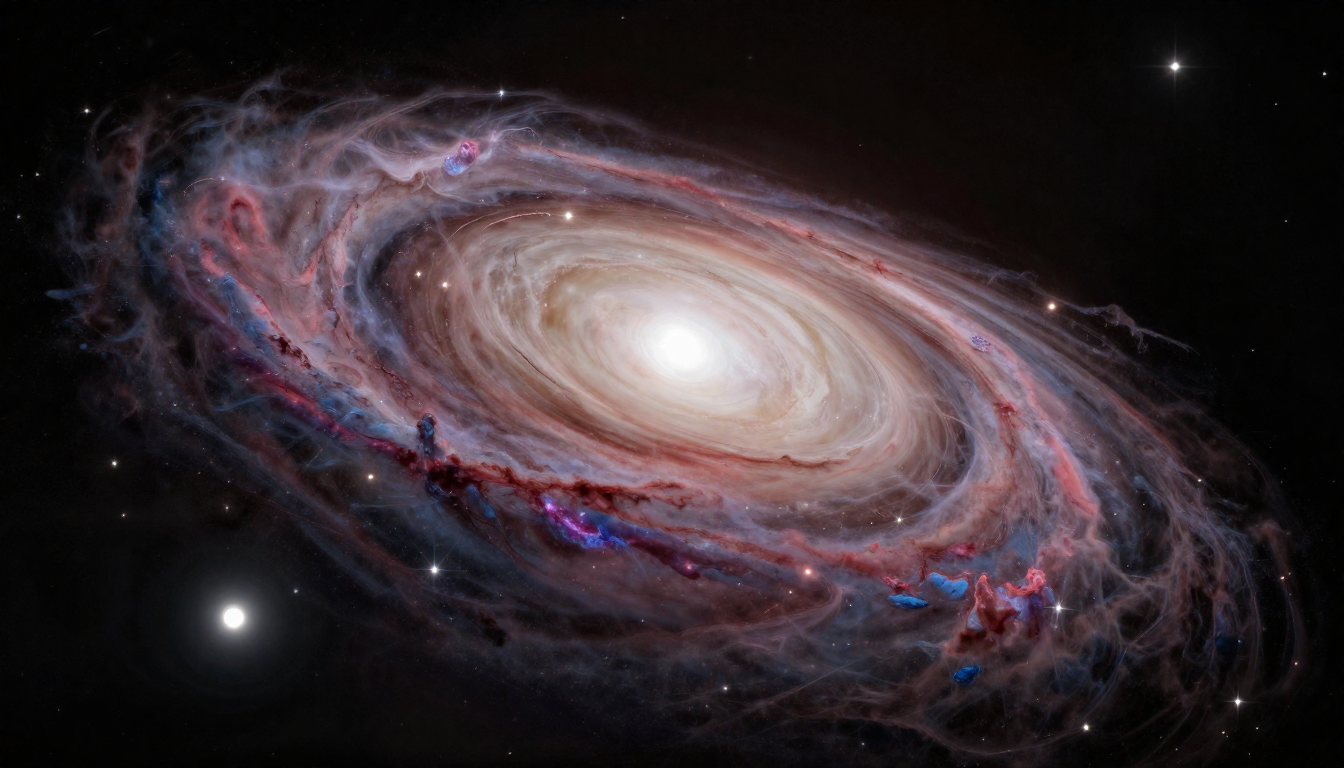
The project is called "Astrophysical Complex TAIGA-100". According to the developers, the installation will register gamma radiation and particles with record energies arriving on Earth from deep space. The large area of the detectors will ensure the detection of rare events and will allow collecting statistics that are not available to modern compact telescopes.
Construction work will be carried out based on the TAIGA complex operating in Southern Siberia. Researchers have previously discovered on its basis a non-standard kink in the energy spectrum of cosmic rays with specified parameters. The results obtained confirmed the effectiveness of the chosen methodology, therefore, scaling the system is recognized as appropriate.
The expansion of the observatory will help physicists more accurately determine the nature of particles accelerating in cosmic accelerators to speeds close to the speed of light. Scientists expect that the installation will reveal new mechanisms of activity of distant galaxies and supernovae, and will also provide an opportunity to test theoretical models of matter interaction at extreme energies.
Read more on the topic:
- Astronomers at Moscow State University recorded the "posthumous light" of a dead star in space
- Stability of perovskite solar cells increased 4 times by MSU scientists
- At an altitude of about 36 thousand km from Earth: a space observatory in geostationary orbit is being created at Moscow State University
Never miss our newsAdd this site to your preferred sources to see us more oftenAdd on Google