Servicemen of the cynological group of the "Ermak" special forces detachment of the National Guard (Novosibirsk) have developed a unique helmet for service dogs. The device is equipped with a video camera, speaker, and protective glasses that protect the animal's eyes from small fragments, mechanical impacts, and damage. The image from the camera is transmitted in real time to the dog handler on a portable receiving device. The dog is controlled by radio communication — the range of reliable reception is up to 70 meters. According to the press service of the National Guard in the region, mine detection dogs are now honing their skills in daily training to search for explosive devices and conditional terrorists. In the future, the development is planned to be used in combat missions.
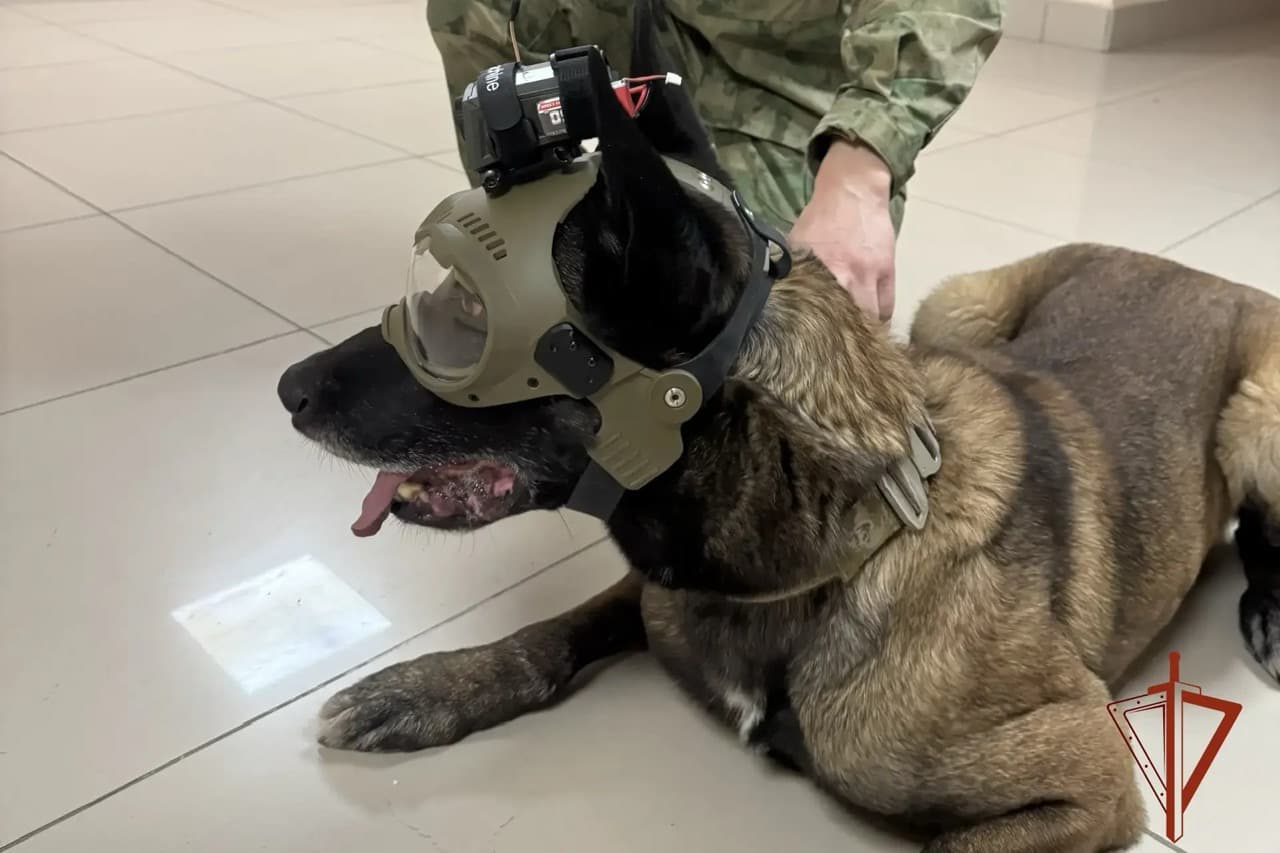
How the Dog Helmet Works: Protection and FPV Channel
The helmet is a rigid structure with protective glasses covering the dog's eyes. A miniature video camera is mounted on top — in fact, an FPV (First Person View) system, similar to those used on drones.
The image from the camera is transmitted via radio channel to the dog handler's monitor, allowing them to see the situation through the animal's eyes. The built-in speaker allows commands or signals to be given to the dog at a distance. The range of the complex is up to 70 meters.
Dogs, when performing service tasks, cannot inform the dog handler about the situation for objective reasons. The gadget allows information to be transmitted in online mode to the receiving device, which is located at the instructor
Application of the FPV Helmet for Dogs
Currently, the helmet is being tested in daily training. Dogs have already become accustomed to it and work in equipment when searching for explosive devices and patrolling. Protective glasses prevent dust, chips, and small fragments from entering the eyes — especially important when working in destroyed buildings or forest belts. In the future, the "Ermak" special forces plan to use the technology in combat conditions.
For the cynological service, the appearance of the FPV helmet means a qualitative leap in situational awareness. Previously, the dog handler could only navigate by the dog's behavior (barking, stance, leash jerk). Now he sees the same thing as the animal, can assess the location of an explosive device or an enemy around the corner, and also adjust actions by voice through the speaker. A range of 70 meters allows the dog to work at a distance without risking the instructor himself. The development of Novosibirsk cynologists is an example of a low-budget tactical innovation created from improvised components (FPV camera, radio transmitter, protective glasses), which can be replicated in other units.
Read materials on the topic:
- Service dogs of the Russian Ministry of Emergency Situations will acquire FPV devices for effective interaction
- Instead of a guide dog: An AI navigator for visually impaired people was created at NSTU
- They will hear from 700 meters: service dogs were taught to detect enemy UAVs in the air
Never miss our newsAdd this site to your preferred sources to see us more oftenAdd on Google

















