Cancer is increasingly being treated not only with drugs and radiation, but also with technologies that work literally at the particle level. Russian scientists, as part of a research team, have created a material for more precise targeting of tumors, which can be used in photothermal therapy and simultaneously enhance the effect of radiotherapy.
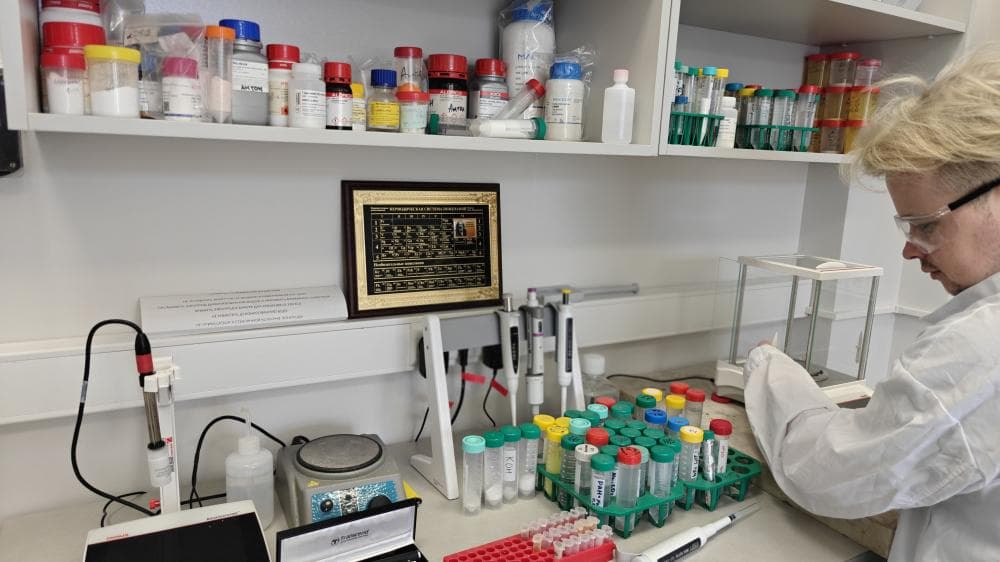
We are talking about hafnium nitride nanoparticles (HfN). They were developed by researchers from the Institute of Theoretical and Experimental Biophysics of the Russian Academy of Sciences, together with colleagues from France and Sweden. These particles are used in two treatment methods: photothermal and radiotherapeutic. This allows you to effectively fight the tumor, using two different approaches simultaneously.
The meaning of the technology is that nanoparticles are able to accumulate in tumor tissue. When exposed to a laser, they absorb light and convert it into heat. This leads to a local increase in temperature and "burning" of cancer cells. Even with a relatively low concentration of particles, heating sufficient for a therapeutic effect is achieved.
In order for the particles to be used in the body, they are additionally coated with a biocompatible polymer. This increases their stability under physiological conditions and reduces the risk of unwanted reactions. In experiments, they showed low toxicity and did not show significant long-term side effects after administration.
The results of the study are published in the scientific journal Advanced Functional Materials.
Read more on the topic:
Never miss our newsAdd this site to your preferred sources to see us more oftenAdd on Google


![Growth Point: After 5G Launch, Mobile Internet in Russia Accelerated by 20%","subtitle":"TelecomDaily recorded an upload speed increase of 19.7%, and download speed of almost 14%","announce":""}[]}],](https://media.ixbt.site/fit-in/320x/ixbt-data/1727896/ai-image-nvgq0a0v5cjnyxwoc8xpelva.webp)