Translated with AI from the Russian original.
Scientists from the Kola Science Centre (KSC) of the Siberian Branch of the Russian Academy of Sciences, together with colleagues from the Institute of Microbiology of the Russian Academy of Sciences and RUDN University, have discovered previously unknown bacteria capable of decomposing petroleum products and tolerating high concentrations of heavy metals in the Arctic climate. The results were published in the journal Microorganisms, according to the press service of the Ministry of Education and Science.
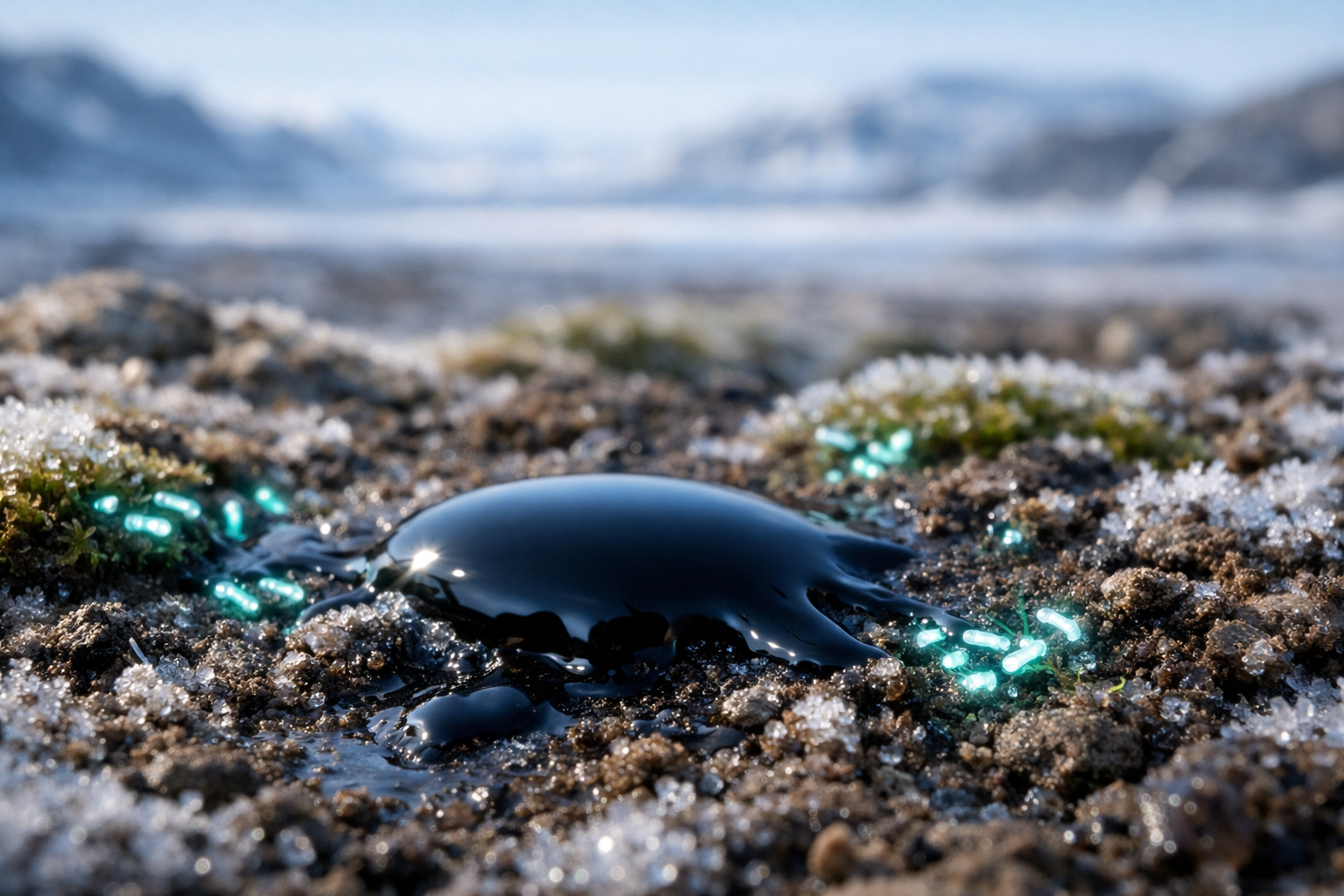
Microorganisms were isolated from the soil on the slope of Mount Kaskama in the Murmansk region. The ten most active strains are able to grow at a temperature of about +5°C, use components of diesel fuel and crude oil as a source of carbon, and also tolerate ions of copper, nickel and lead. The bacteria belong to the genera Acidiphilum, Acidisoma, Acidocella, Bradyrhizobium, Paenibacillus and Pseudomonas. Anaerobic pseudomonads can process pollutants at different depths - both in oxygen and oxygen-free environments.
Traditional methods of cleaning Arctic soils from long-term pollution are either ineffective or too expensive: low temperatures dramatically slow down natural decomposition processes. The use of local bacteria, according to the authors, will allow restoring the soil faster and with less damage to the local microbial environment than the import of microorganisms atypical for the region. The practical application of the find will have to be tested in further studies.
Read also on the topic:
- Russian scientists have developed bacteria to eliminate man-made disasters
- Environmentally friendly and economically viable: bacteria have been developed to clean soil from rocket fuel
- Magnetic material for detecting tularemia bacteria created by scientists from SNIPCHI
Never miss our newsAdd this site to your preferred sources to see us more oftenAdd on Google

















