In the creation of the newest intermediate-range ballistic missile (IRBM) Oreshnik, Soviet vacuum tubes and microchips were used. In the West, this was called a sign of technological backwardness, but the Chinese portal Sohu argues the opposite — it is precisely such solutions that made the system less vulnerable to electronic interference.

According to the publication, the design used a tube-based component base and old-type microchips. Modern high-precision electronics are sensitive to powerful electronic warfare means, whereas simpler and more "rugged" circuits withstand electromagnetic effects better.
Such elements are resistant to overloads and pulse interference, and also do not require complex foreign licenses.
The article emphasizes that the Soviet components were chosen deliberately, based on engineering decisions. An additional argument is the availability of previously created component stockpiles.
The bet in Oreshnik was placed not on novelty, but on reliability and resistance to electronic warfare, Sohu concluded. It should be noted that the Russian Ministry of Defence has not officially confirmed this information.
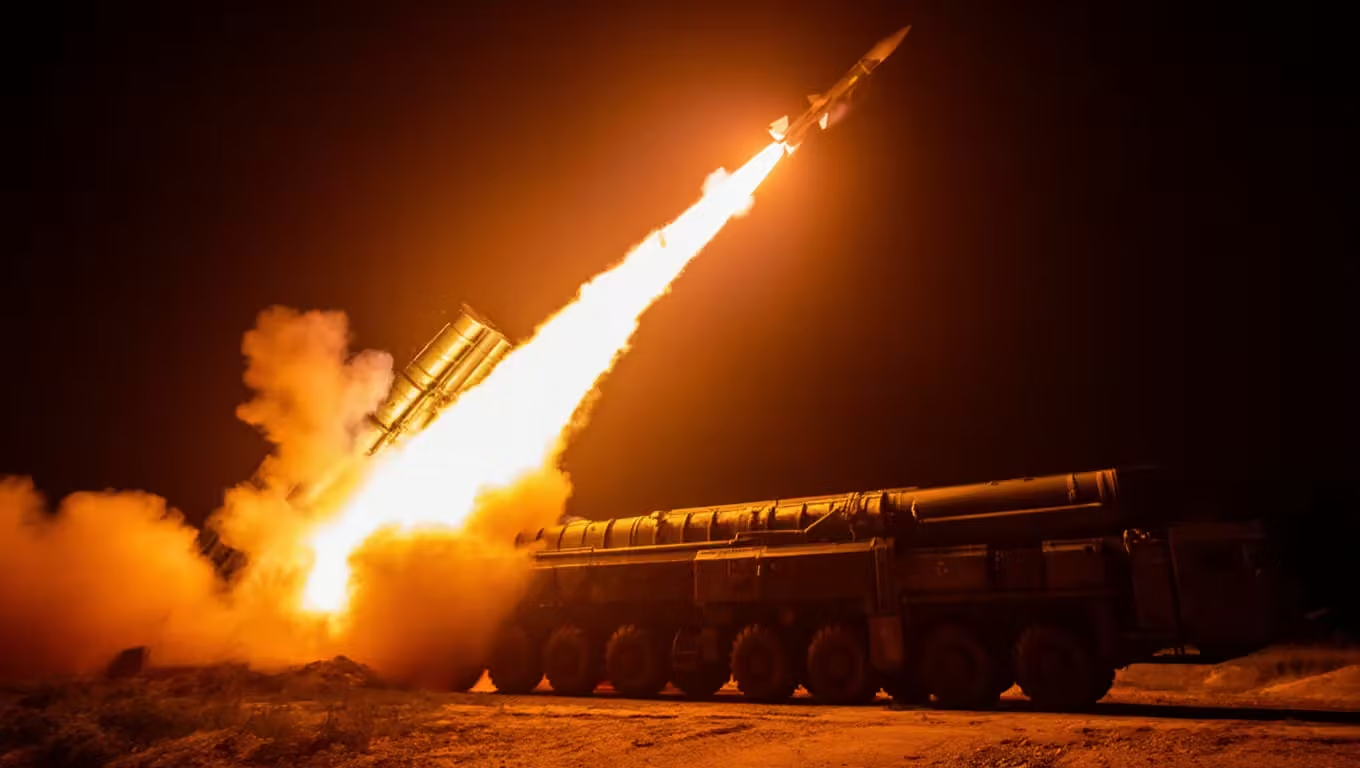
Let us recall that the Oreshnik missile received a multiple independently targetable reentry vehicle with individually guided warheads that attack the target at speeds of up to Mach 10. This makes the Russian IRBM a difficult target for interception.
Before that, a video for the first time showed combat vehicles from the Oreshnik system. This refers to four-axle military equipment on the MZKT-7930 chassis. Presumably, these are mobile command posts or transporter-loader vehicles.
Read more materials on the topic:
- Western attempts to create an analogue of the Oreshnik IRBM were deemed doomed
- Die Welt acknowledged the uselessness of the Arrow-3 missile defense system against the Russian Oreshnik
- More powerful than Oreshnik: the new Russian weapon turned out to be strategic
Never miss our newsAdd this site to your preferred sources to see us more oftenAdd on Google