The constant modifications to the design of the Russian MC-21-310 airliner are becoming one of the key factors delaying the date of the machine's final certification. The editor-in-chief of the AVIA.RU portal, aviation industry expert Roman Gusarov, spoke about the current state of affairs and technological nuances.
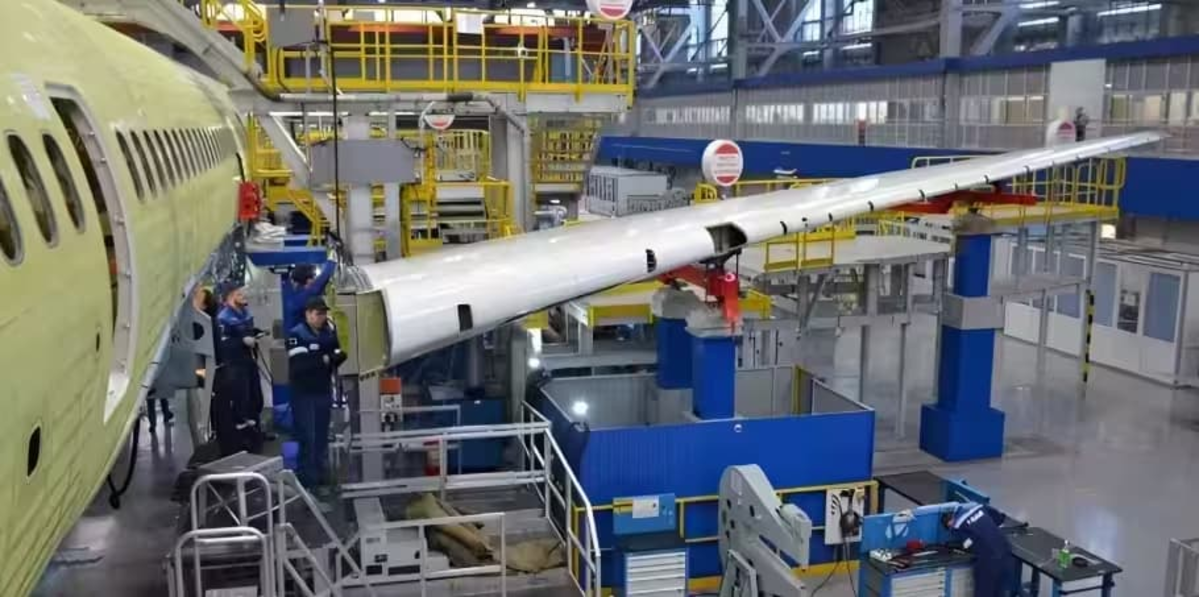
According to the specialist, domestic aviation is facing certain difficulties in the field of composite materials. The main question that now worries the industry is whether there will be enough production capacity to launch the serial production of the "most composite of aircraft."
We had problems with composites related to suppliers. When they started developing the MC-21 airframe elements: wings and deflecting tail elements, they decided to use a technology that no one else in the world has.
The specialist emphasized that a unique methodology was chosen that has no analogues in world practice. In parallel with this, the certification of all materials used for the manufacture of each part, including rivets, began. Production lines are being certified at new enterprises where aircraft components are assembled. This led to significant time delays. Certification of the entire production cycle and all suppliers is also being carried out, and their number is about 15 thousand throughout Russia.
To produce the wing using this technology, a new plant was built in Ulyanovsk — "Aerocomposite" with its own furnaces, molds and robots that lay out the composite in layers and work with a laser with an accuracy of up to a micron.
The [wing] structure is baked whole in the oven, and not "glued" from separate parts, as in Boeing
Manufacturing composite wings using the technology used by Boeing would be too expensive. At the same time, the solution chosen by Russian engineers made it possible to reduce the cost of the production process many times over. However, economic benefits brought with them engineering complexities.
The wing is a complex power structure subject to bending and experiencing significant dynamic loads in flight.
The expert emphasized that the product must be guaranteed to withstand a huge number of takeoffs and landings over 25−30 years of operation.
Read more materials on the topic:
- Aviation expert urged not to rush to conclusions regarding the Il-100 "Elephant"
- MC-21 tests have slowed down a bit
- The cost of the first batches of MC-21, Tu-214 and Il-114-300 will be significantly reduced — Ministry of Industry and Trade
Never miss our newsAdd this site to your preferred sources to see us more oftenAdd on Google

















