On the night of February 2, a powerful X8.11-class X-ray flare was recorded on the surface of the Sun, specialists from the Laboratory of Solar Astronomy at the Space Research Institute of the Russian Academy of Sciences (IKI RAN) reported. The epicenter of the phenomenon was active region No. 4386; however, according to the scientists, our planet is currently not in the zone of direct impact from the coronal mass ejection (CME) accompanying the flare.
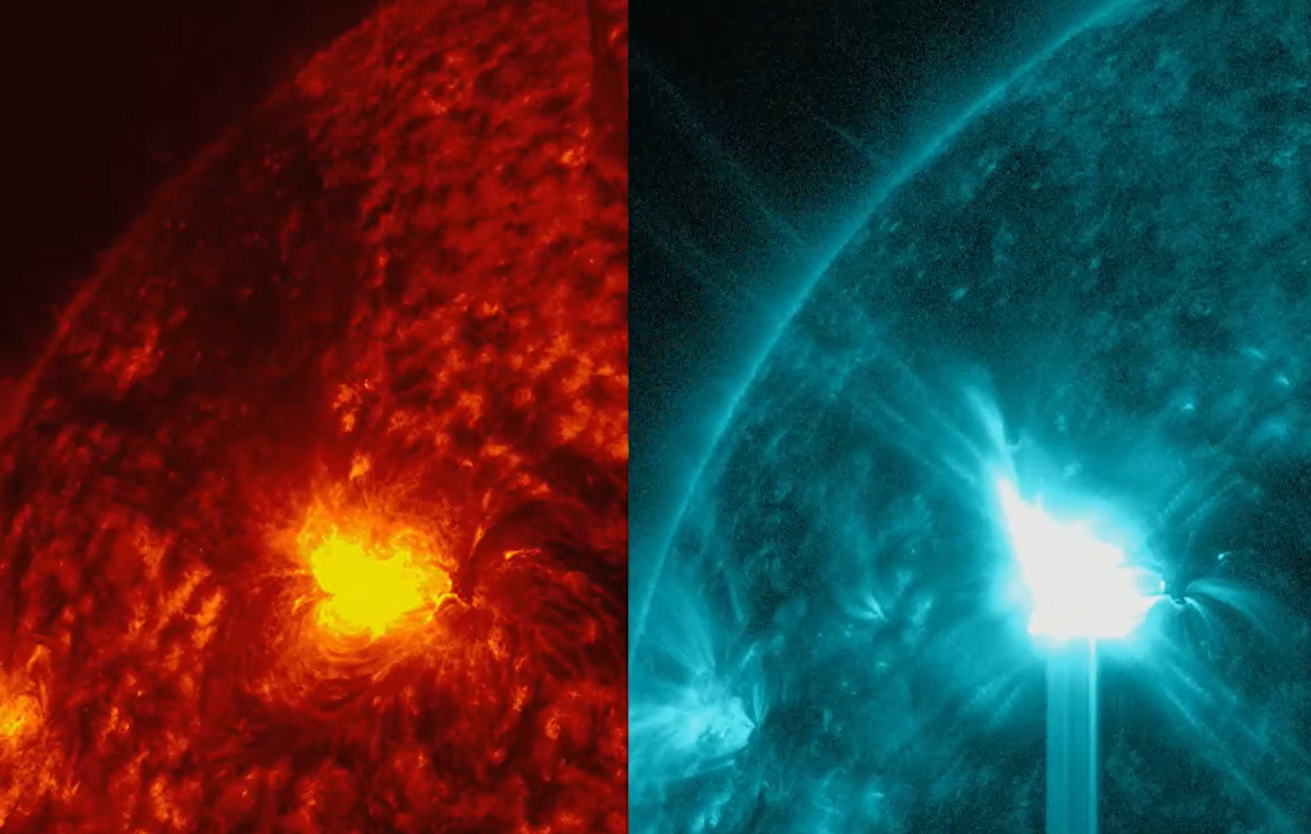
The day before, on February 1, solar activity reached extreme levels: 17 M-class and stronger flares were recorded in 24 hours. As researchers note, such a level of excitation of the daytime luminary has been observed only once in the past decade — on December 29, 2024. Interestingly, according to assessments by IKI RAN specialists, a series of less powerful flares in the preceding days likely prevented the accumulation of energy capable of triggering an even larger-scale event.
According to forecasts, the first signs of the ejection's impact on Earth's magnetosphere may appear approximately 24 hours after the moment of the flare. An increase in geomagnetic activity is expected; however, the scale of the consequences will depend on the orientation of the interplanetary magnetic field in the solar wind stream.
Read more articles:
- An instrument created at FIAN to forecast solar flares will be installed on the Russian segment of the ISS
- Cosmonauts study orientation in weightlessness: the "Virtual" experiment has been launched on the ISS
- Russia will deploy nuclear power infrastructure on the Moon by the mid-2030s
Never miss our newsAdd this site to your preferred sources to see us more oftenAdd on Google

















