Translated with AI from the Russian original.
Solar activity reaches its peak in the mid-2020s, which increases the likelihood of M-class flares and individual X-class flares. This was announced by Maxim Filippov, Senior Researcher at the FIAN Laboratory of Solar Physics and Cosmic Rays and Chief Designer of the "Sun-THz" project.
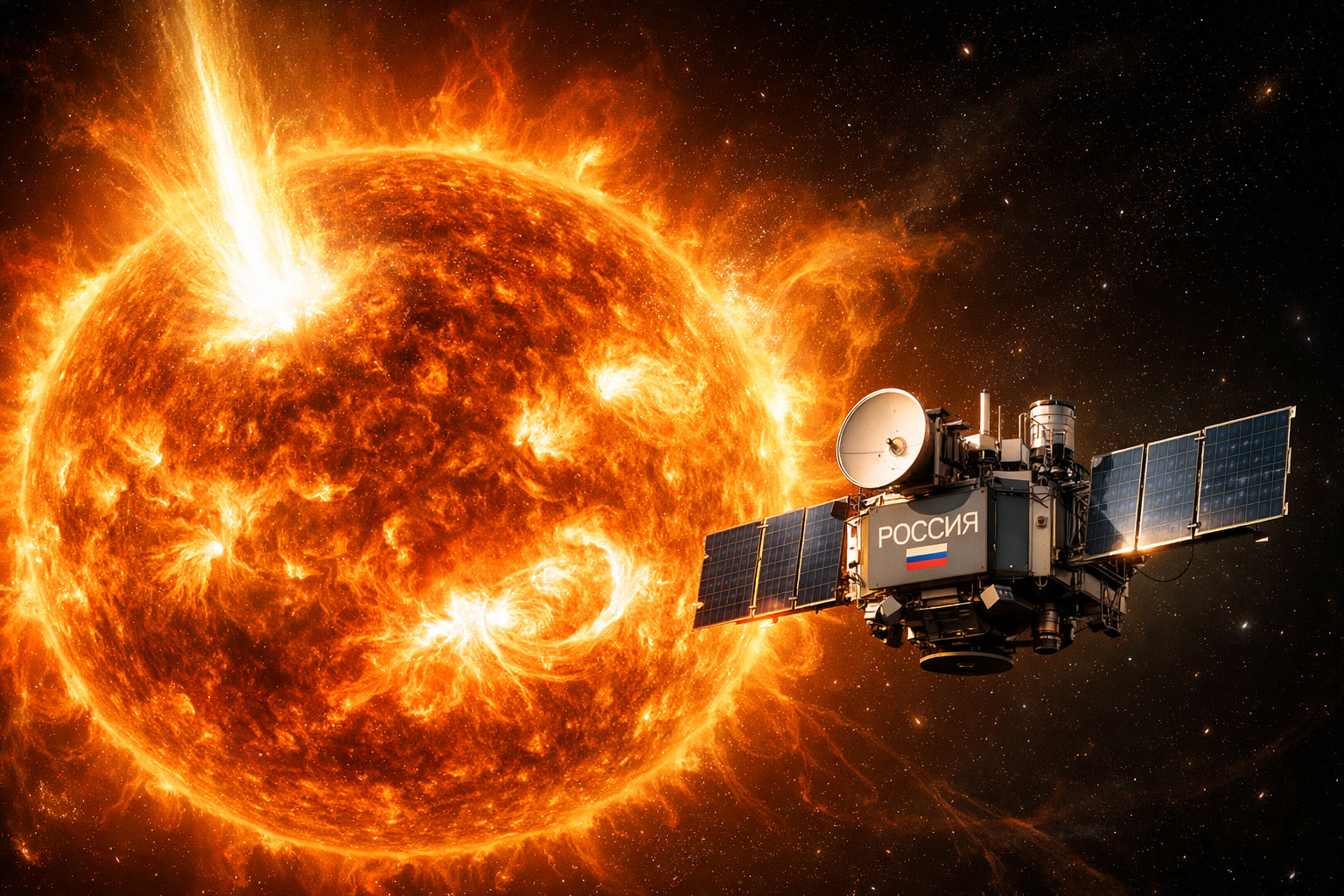
According to him, the 25th solar cycle, which began in 2019 and will last until 2030, is accompanied by a periodic increase and decrease in activity approximately every 11 years. Solar flares are classified by the power of X-ray radiation: from the weakest A to the most powerful X. More intense flares can be accompanied by emissions of solar plasma, which, when reaching Earth, can cause magnetic storms.
The "Sun-THz" project is designed to study the sub-THz and THz components of solar radiation, which will allow a better understanding of the causes of flares and predicting their occurrence. The 47 kg instrument includes eight channel detectors with a range from 0.4 to 12 THz and will be installed on a biaxial rotary platform that automatically tracks the Sun.
The project's scientific equipment is planned to be placed on the Russian segment of the ISS in the spring of 2026 as part of the first extravehicular activity of the ISS-74 crew. This will allow obtaining unique data on solar processes directly from space, bypassing atmospheric absorption of radiation.
Read more on the topic:
- Rare "parade" of planets: Mercury, Venus and Mars will line up in a rhombus
- FIAN-developed device for predicting solar flares to be installed on the Russian segment of the ISS
- New "Sun-THz" device on the ISS will improve the prediction of solar flares — FIAN
Never miss our newsAdd this site to your preferred sources to see us more oftenAdd on Google

















