Translated with AI from the Russian original.
Specialists from South Ural State University (SUSU) have created a new technology for welding dissimilar steels, which will allow the production of durable and heat-resistant elements for power plants. The development has already been hailed as a breakthrough in materials science, according to the university's press service.
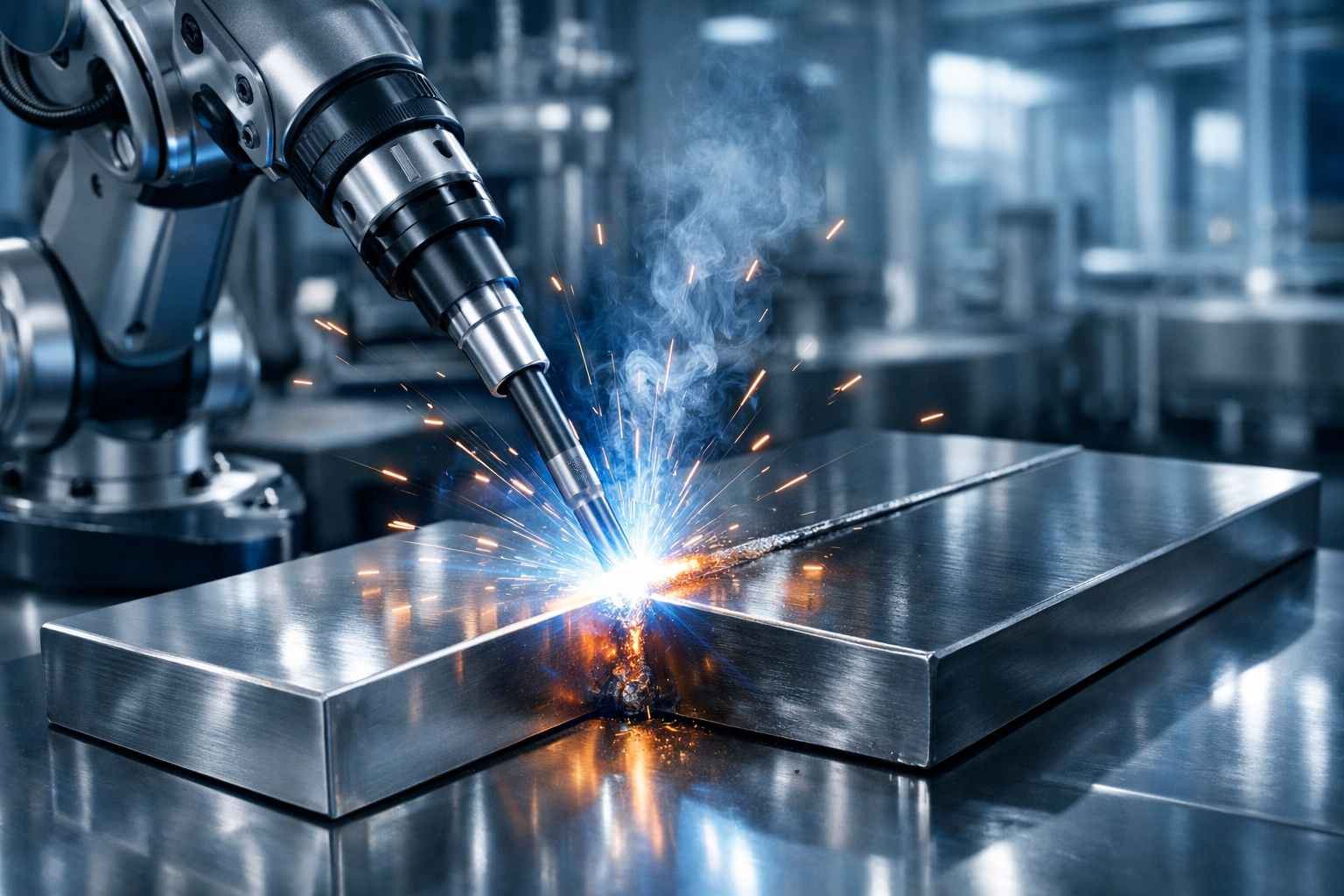
Unlike traditional methods, SUSU's technology offers a solution at the level of the materials themselves. It allows connecting heat-resistant martensitic steel on one side and corrosion-resistant austenitic steel on the other. This approach significantly increases the service life of equipment, increasing its reliability and safety in operation.
Scientists have achieved this through the use of a eutectic high-entropy alloy as an intermediate layer. It allows precise control of the composition and properties of the weld. The process is carried out using robotic gas tungsten arc welding with activated flux (A-GTAW).
According to researchers, the new technology will become a key tool in the creation and modernization of critical components of power units - boilers, steam pipelines, and heat exchange systems, where resistance to high temperatures and corrosion is necessary.
Read more materials on the topic:
- The first robotic hybrid laser-arc welding complex in Russia was launched at a machine-building plant in Bryansk
- NSTU scientists have developed magnetic pulse welding for joining aluminum and steel
- Will allow welding aircraft parts "tightly": the technology for joining components made of aluminum and titanium has been improved at BelSU
Never miss our newsAdd this site to your preferred sources to see us more oftenAdd on Google

















