Translated with AI from the Russian original.
Russia plans to enter the top 25 countries in the world in terms of robotization by 2030, which will require the installation of up to 200,000 robots in manufacturing and the service sector. According to Alexander Smekalin, Director of the Association of Innovative Regions of Russia (AIRR), achieving this goal will require accelerated technology implementation and retraining of specialists.
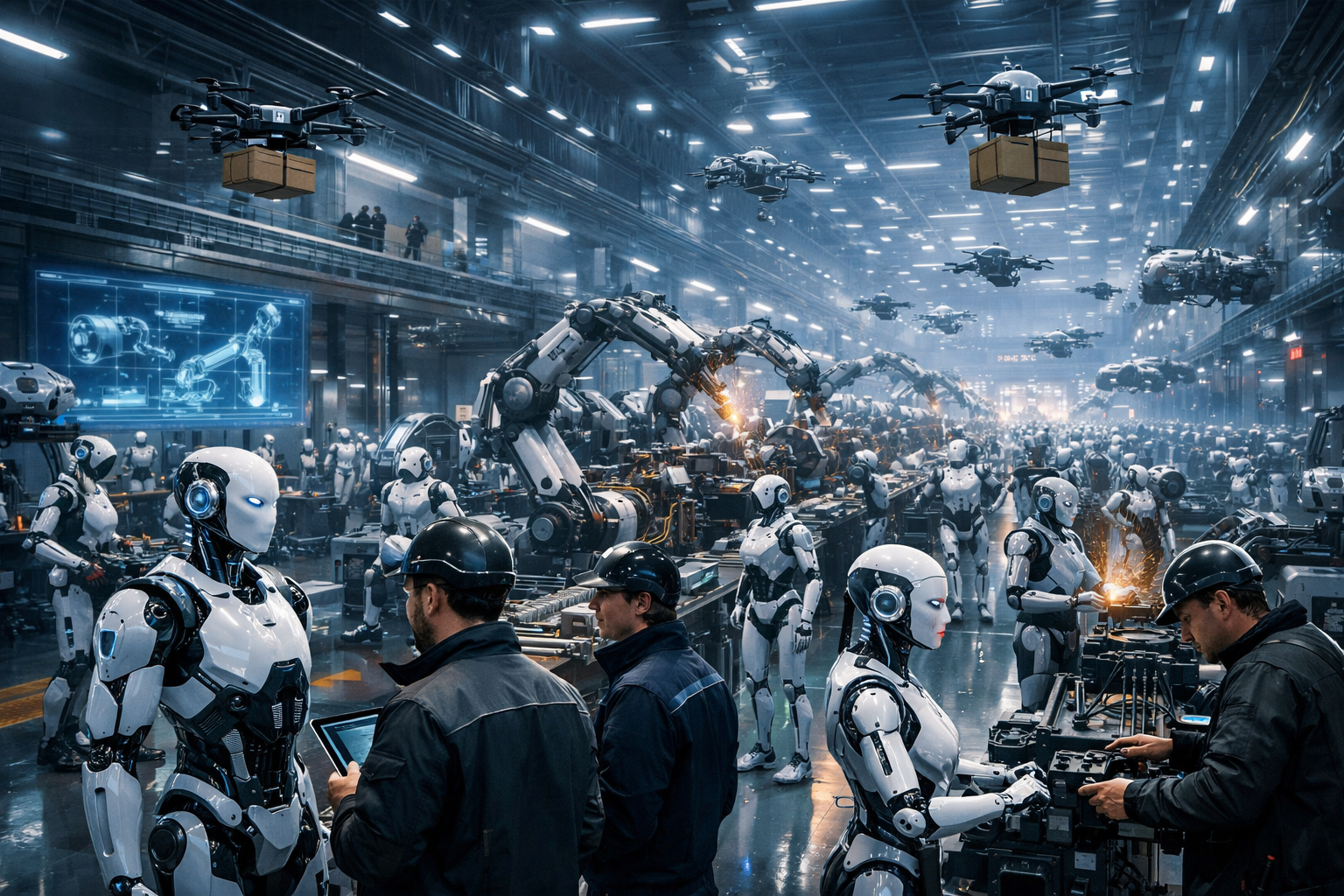
President of the Russian Federation Vladimir Putin previously outlined a strategic task: by 2030, the country should increase the density of robots to 145-200 units per 10,000 people. In terms of the total population, this is more than 100,000 industrial and service robots. Smekalin noted that Russia needs to dramatically increase the pace of robotization in order not to lag behind other countries.
Currently, the global market shows an annual growth in the number of service robots of approximately 15%, and production robots of about 7%. Smekalin emphasized that reaching the mark of 200 robots per 10,000 people is a "very large volume in a short time", but the task is feasible.
The expert also noted that robotization and artificial intelligence will not lead to a mass replacement of engineers and IT specialists. Modern technologies require new competencies: if earlier specialists wrote code manually, now those who know how to work with artificial intelligence and manage its capabilities are in demand. Thus, personnel who are ready to adapt and master new technologies remain in demand in the market.
Read more materials on the topic:
- Standards for the introduction of robots in Russia: what is changing in enterprises
- The rate of replacement of workers with robots in Russia significantly exceeds the world average
- Almost 100 thousand robots will work in factories in Russia by 2030
Never miss our newsAdd this site to your preferred sources to see us more oftenAdd on Google

















