Translated with AI from the Russian original.
The Russian startup Space Energy intends to conduct a suborbital flight of the "KAMCHATKA-1" rocket in 2026, which should reach a height of 100 km and cross the Kármán line. This was reported in the company's press service.
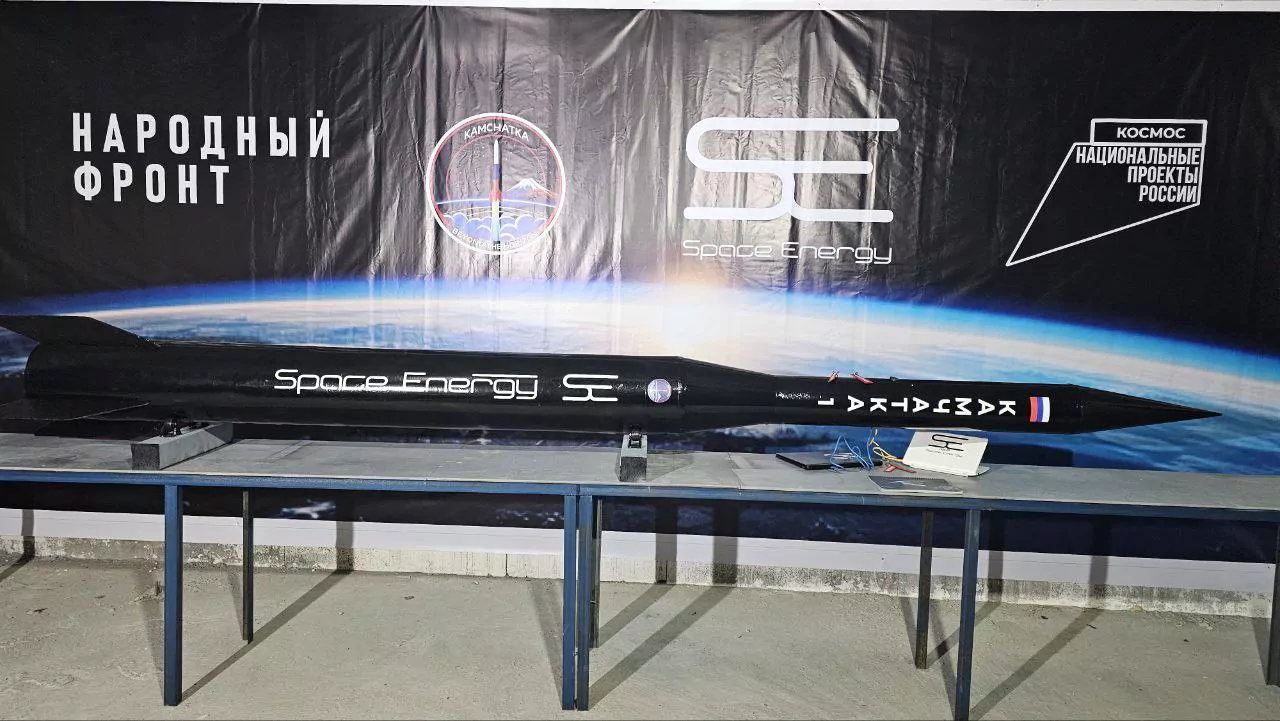
The Space Energy project will be the first private space launch in the history of the country, and it will be carried out not from traditional cosmodromes, but from the territory of the Far East.
"KAMCHATKA-1" is a single-stage solid-propellant rocket with a length of 5.05 m and a mass of 297 kg. It is capable of reaching speeds of up to Mach 4. The body is made entirely of carbon fiber, and the volumetric fuel loading reaches 94%. The design uses composite elements and parts made using 3D printing.
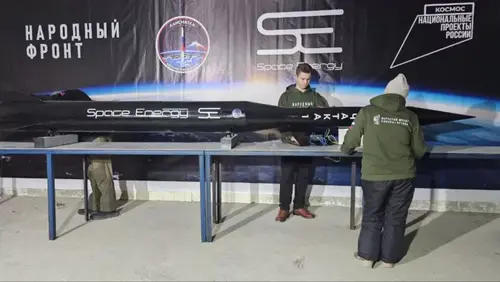
Almost all systems are of domestic design, with the exception of individual sensors. During the flight, it is planned to test the operation of communication systems, telemetry, GPS navigation, data collection and power plant.
Since 2022, Space Energy has remained the only private company in Russia that has already conducted two successful suborbital prototype launches. In the last test, the rocket reached a height of 10 km, and itsspeed exceeded 600 m/s.
Read more materials:
- For the First Time in History, a Private Rocket Will Be Launched into Space in Russia. It Will Go Beyond the Kármán Line
- The Russian Soyuz-2.1v Carrier Rocket Will Put a Secret Satellite into Orbit
- A Cruise Engine Has Been Developed for the Russian Korona Carrier Rocket - Roscosmos
Never miss our newsAdd this site to your preferred sources to see us more oftenAdd on Google

















