Translated with AI from the Russian original.
Scientists from the Moscow Aviation Institute (MAI) have developed a pulsed plasma engine specifically adapted for miniature CubeSat satellites. The innovation is capable not only of significantly increasing the maneuverability and duration of small spacecraft missions, but also of solving one of the pressing problems of orbital infrastructure - the disposal of satellites after their operational life.
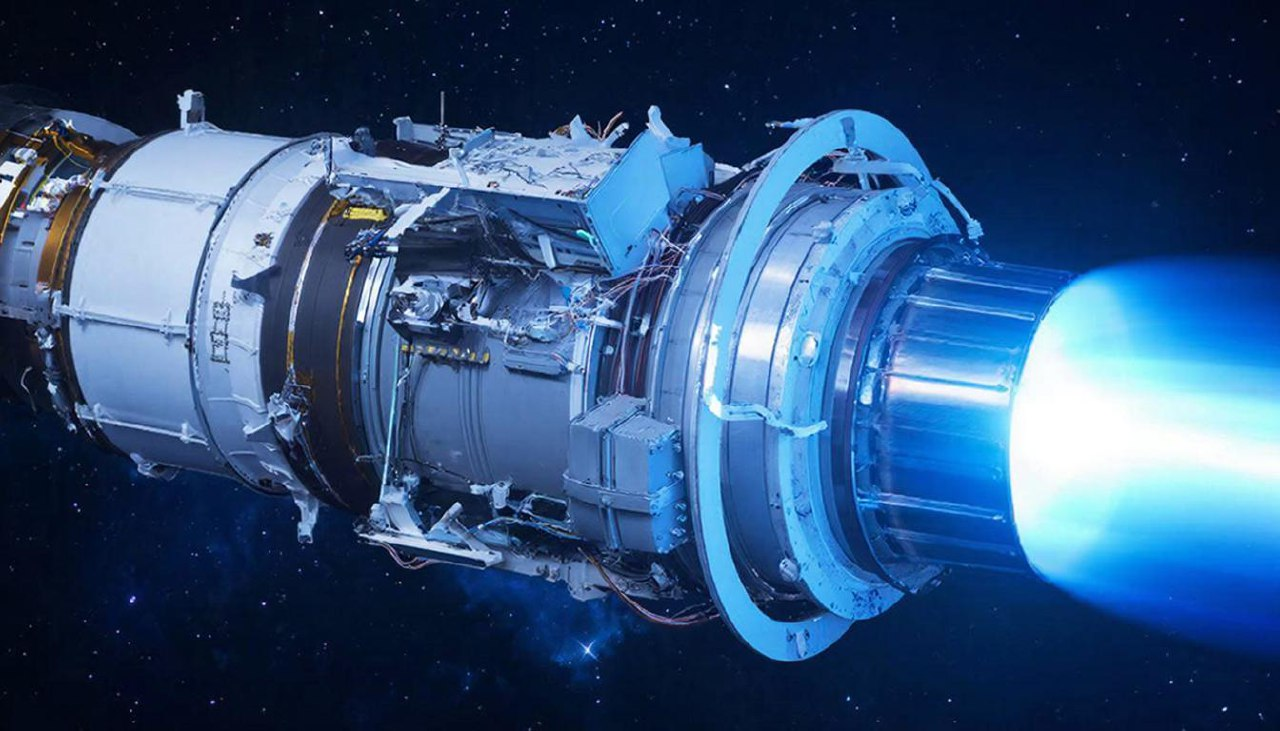
The principle of the engine's operation can be compared to a very fast and powerful "shot": energy is accumulated in a capacitor, after which it is transferred to the discharge channel. There, solid fluoroplastic evaporates, turns into charged particles, which are then accelerated by a powerful electromagnetic field and ejected. This short but intense process of plasma ejection creates the necessary thrust for the satellite to move.
The key advantage of the development is the high plasma exhaust velocity, which directly increases the specific impulse and thrust efficiency. At the same time, the engine is characterized by a simple design, low cost and the absence of expensive or complex components characteristic of most analogues. This makes it particularly attractive for mass application in the context of the rapid growth of interest in small satellites.
Currently, the engine is undergoing ground tests and is preparing for its first flight tests. In the future, the development will form the basis of a whole line of low-power electric rocket engines designed for a wide range of tasks in near-Earth space - from orbit correction to controlled deorbiting at the end of the spacecraft's life cycle.
Read more materials:
- A Russian Observatory to Be Sent to the Moon - FIAN Receives Patent for a New System
- Russia is Creating an Alternative to the ISS - An Orbital Station with an Emphasis on Science and Safety
- Russia Will Have Four New Communication Satellites: The Government Will Allocate 16.7 Billion Rubles for Their Creation
Never miss our newsAdd this site to your preferred sources to see us more oftenAdd on Google

















