Engineers from BSTU "VOENMEH" named after D.F. Ustinov, the Space Research Institute of the Russian Academy of Sciences, and the "STC" company have developed a dual-frequency radio beacon in the 150/400 MHz band for CubeSat 3U nanosatellites. This was reported by the university's press service.
The new generation radio station is already being prepared for orbital testing. The device will allow testing domestic communication technologies and conducting research in near-Earth space.
We are creating a compact and reliable device capable of operating in space conditions, while providing scientific data collection and stable communication with signal receiving stations.
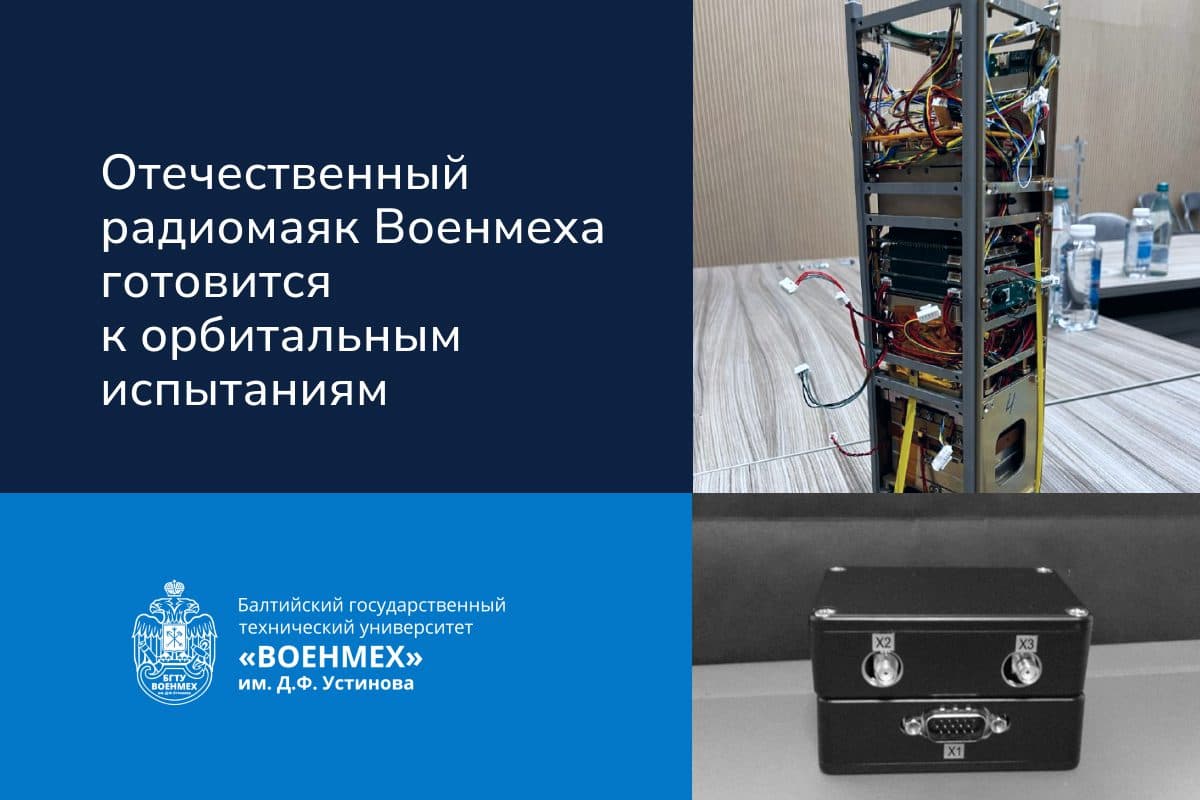
Currently, specialists are integrating the radio station into the CubeSat "Voenmeh" spacecraft. Then, together with the satellite, it will undergo a series of vibration and thermal vacuum tests. The launch of the spacecraft with the payload is scheduled for 2026. It will be delivered to orbit by the Soyuz launch vehicle.
About CubeSat Satellites
Small-format space satellites (10×10×10 cm, weight up to 1.3 kg) are designed for research missions, testing new technological solutions in real space conditions. CubeSat is an aluminum frame with a central processor, radio channel, antenna, batteries, solar panels, and a system for determining and correcting position in space.











