Translated with AI from the Russian original.
A Russian research group has developed a technology that triples the strength of wooden elements of wings, frames and mounts of drones. This was reported in the press service of the University 2035.
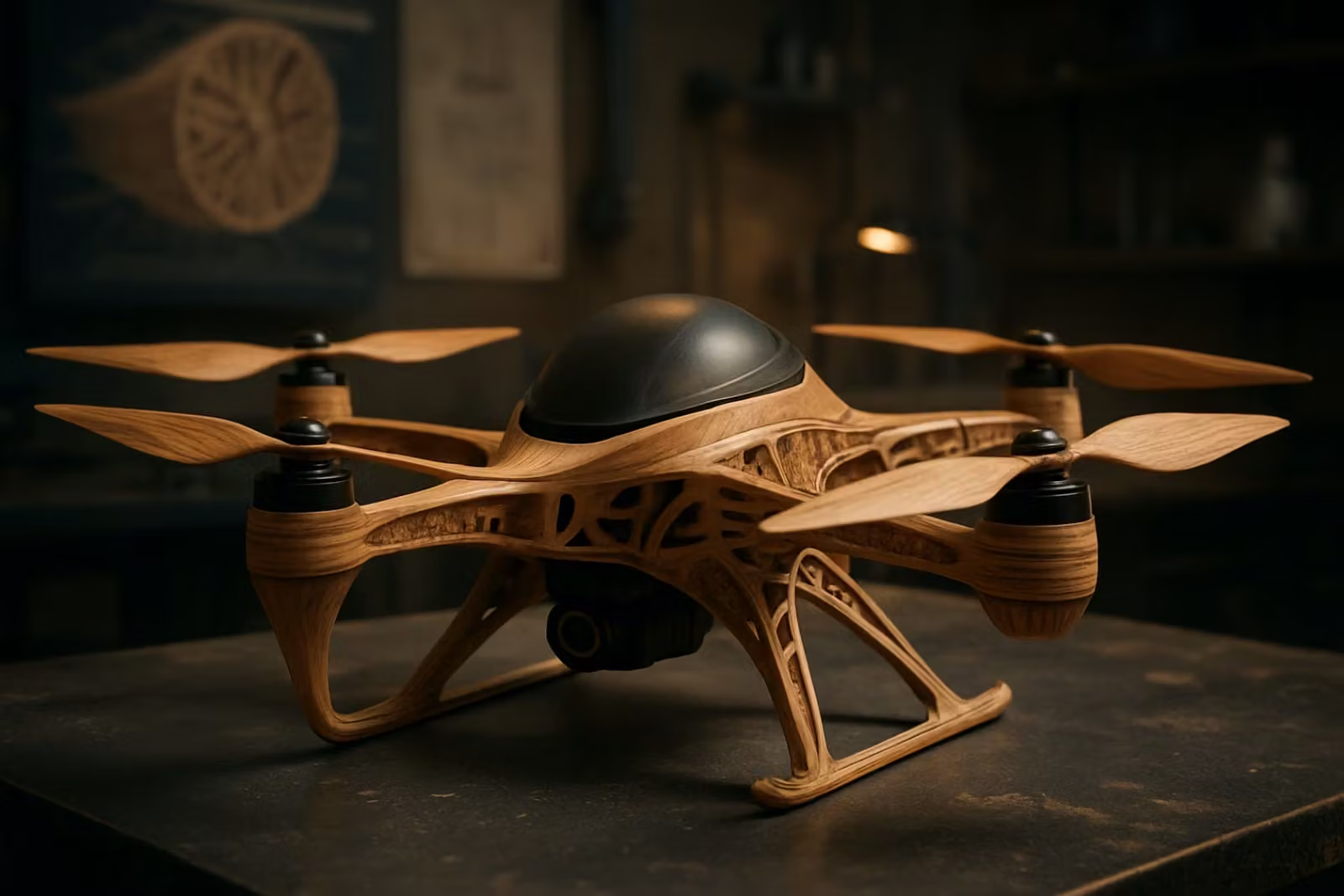
The development was carried out by the "New Wings of Udmurtia" team, which was trained at the Synergy University as part of the federal project "Personnel for Unmanned Aircraft Systems". To strengthen the wood, the method of alkaline delignification was used: the raw material was treated with solutions of hydroxide and sodium sulfite at high temperature, removing lignin, which makes the wood brittle. After that, the material was pressed under high pressure, which made it possible to obtain a strong and moisture-resistant base.
Wood is traditionally used in the design of UAVs: plywood is used to make wing elements, frames and motors. The new material can take any shape thanks to pressing, unlike standard plywood, where the layers are glued and cut. The technology also allows the use of wood processing waste, which reduces production costs by about 30%.
Experiments have shown excellent results: a plate made of spruce wood waste turned out to be 10% lighter than plywood, and a hemp-based material - almost a third. A sample made of pressed spruce withstood a load many times greater than the breaking load of standard birch plywood. According to the developers, there are no analogues to such material yet.
Read more materials:
- Plywood and foam: the newest Gerber drone simulators were shown up close
- Five-axis machine VMB 800 for processing cast parts of airplanes and helicopters was developed in Russia
- Unique micro-UAV "Karakurt-R" from the Kalashnikov concern was shown at the Innoprom exhibition. Belarus"
Never miss our newsAdd this site to your preferred sources to see us more oftenAdd on Google

















