An Indian company has introduced a new twin 30-mm anti-aircraft platform. It uses two 2A42 automatic cannons mounted on a modified carriage as a means of destruction.

At the heart of this innovation is the EG-100 lifting gearbox - a mechanical marvel designed for seamless operation in both automatic and manual modes, along with an advanced ammunition stowage and feeding system.
The widespread use of unmanned aerial vehicles (UAVs) has significantly complicated the operation of the Indian air defense system (air defense). Traditional weapons systems, such as the 40-mm L-70 anti-aircraft gun, developed in the 1950s, despite upgrades, are not able to effectively counter modern threats that require a higher rate of fire and density of fire.
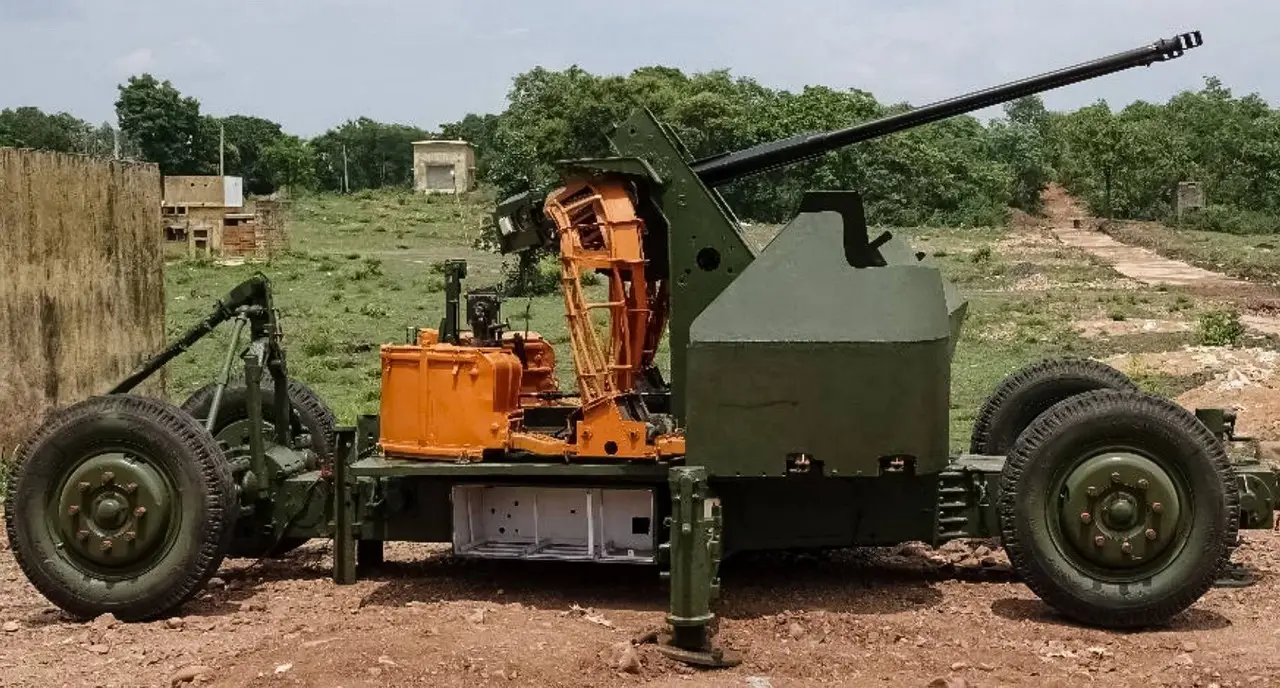
Against this background, AVNL came up with a proposal to install two 30-mm domestic 2A42 cannons, which are usually mounted on BMP-2 infantry fighting vehicles, on the L-70 carriage. An interesting aspect is that one of these guns is installed on the platform in an inverted position. This solution made it possible to balance the recoil and ensured the possibility of firing in a checkerboard pattern.
The system supports a wide range of elevation angles: +85° for targets from above and -5° for targets going at low altitude or hugging the terrain. Horizontal firing is carried out at 360°.
Earlier www1 reported that BRK "Bal" hit enemy ships with the Uran missile.
Read more on the topic:
The new BTR-22 of the Russian Armed Forces took part in the West-2025 exercises
Now on home

Start of deliveries scheduled for 2027

Over 51,000 new motorcycles were sold in Russia in 2025

The car will take at least a year to assemble

The application's audience has reached 20 million users

The model will be included in the list of cars for taxis, price - from 2.25 million rubles

All parking lots of the "Administrator of the Moscow Parking Space" are connected to the service

The cars will be supplied to the Moscow Transport Service Directorate
Deliveries to India may begin in 2028

The technology provides automated search for all types of defects in power units
The plane flew 500 km, accelerating to 425 km/h

The plant stated that the information about the termination of purchases for models 6 and 8 is not true

Scientists are using the "Ekran-M" installation
Articles
-
Russian An-124 "Ruslan" Stuck in Canada for 4 Years and Accrues Millions in Fines
26 Jan 2026
-
Coaxial Propellers: How Counter-Rotation Increases Turboprop Engine Efficiency
25 Jan 2026
-
Kazan Aviation Plant Breaks Old System: Tu-214 to be Assembled Like Cars
25 Jan 2026
-
How Engineers and Technicians Are Paid Today in the Russian Aviation Industry: An Overview with Figures
24 Jan 2026