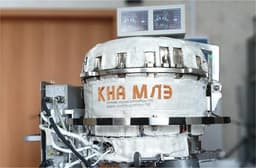
The Russian Space Systems (RKS) holding has completed the modernization of the multispectral scanning unit (MSU-MR) for Meteor-M satellites. The improved device is installed on the Meteor-M No. 2-5 satellite, which is scheduled to launch in 2027-2028. The device will improve the quality of Earth imagery for meteorology and environmental monitoring.
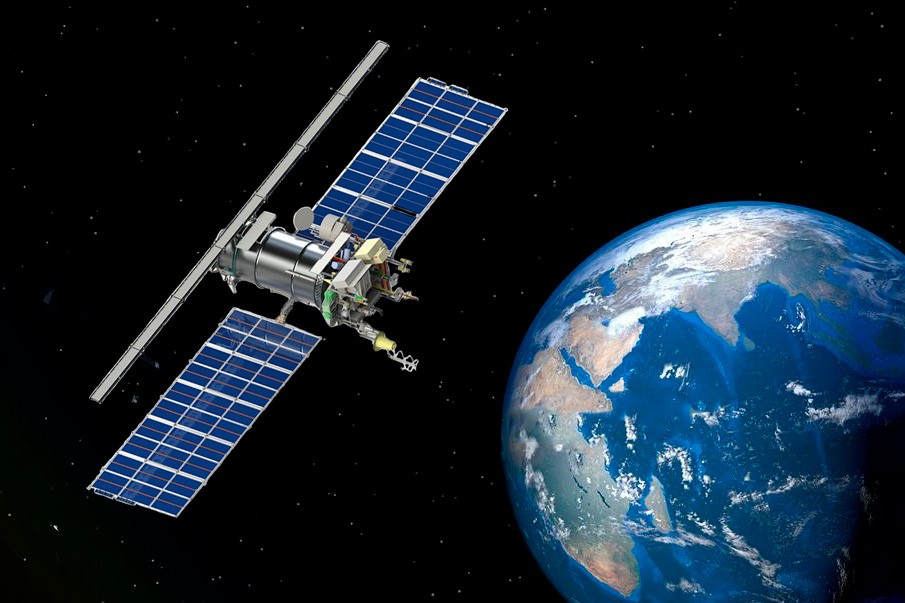
The updated MSU-MR allows for clearer images of the planet's surface due to improved characteristics and automated focusing. The device operates in six channels, capturing the visible and thermal spectrum, which helps track weather phenomena, natural and man-made processes. The new circular view mode simplifies equipment status monitoring. The modernization was based on the experience of operating Meteor-M satellites No. 2-2, No. 2-3, and No. 2-4.
The Meteor-M No. 2-5 satellite will be the sixth spacecraft in the Meteor-3M complex. It will collect data for weather forecasting, climate monitoring, disaster monitoring, and atmospheric research. Information from the device is sent to ground stations, where it is processed and transmitted to meteorologists, scientists, and other specialists.
Primary radiometric and geometric processing of images is carried out directly in the MSU-MR using its own computing resources and algorithms, laid down by our specialists on Earth. On board the spacecraft, the digital stream received from the MSU-MR is combined with the target information of the atmospheric temperature and humidity sounding module, the helio-geophysical instrumentation complex, and sent to ground receiving stations, where the information is processed and then transmitted to consumers - representatives of various sectors of the economy. The new MSU-MR is a significantly improved "traditional" hydrometeorological instrument that has successfully proven itself for solving a wide range of tasks.
The satellites are developed by the Corporation "VNIIEM", and the system operator is the Scientific Center for Operational Monitoring of the Earth.
Read more materials on the topic:
New anti-corrosion coating developed by scientists from SUSU
Progress MS-30 Completes Mission and Leaves International Space Station
Space freighter Progress MS-32 docked with the transfer compartment of the Soyuz-2.1a rocket
Now on home

Start of deliveries scheduled for 2027

Over 51,000 new motorcycles were sold in Russia in 2025

The car will take at least a year to assemble

The application's audience has reached 20 million users

The model will be included in the list of cars for taxis, price - from 2.25 million rubles

All parking lots of the "Administrator of the Moscow Parking Space" are connected to the service

The cars will be supplied to the Moscow Transport Service Directorate
Deliveries to India may begin in 2028
The technology provides automated search for all types of defects in power units
The plane flew 500 km, accelerating to 425 km/h

The plant stated that the information about the termination of purchases for models 6 and 8 is not true
Scientists are using the "Ekran-M" installation