The Soyuz-5 medium-class carrier rocket is in the final stage of assembly. This was reported by the Russian government following a visit by Deputy Prime Minister Denis Manturov and Head of Roscosmos Dmitry Bakanov to the Progress Rocket Space Centre in Samara.
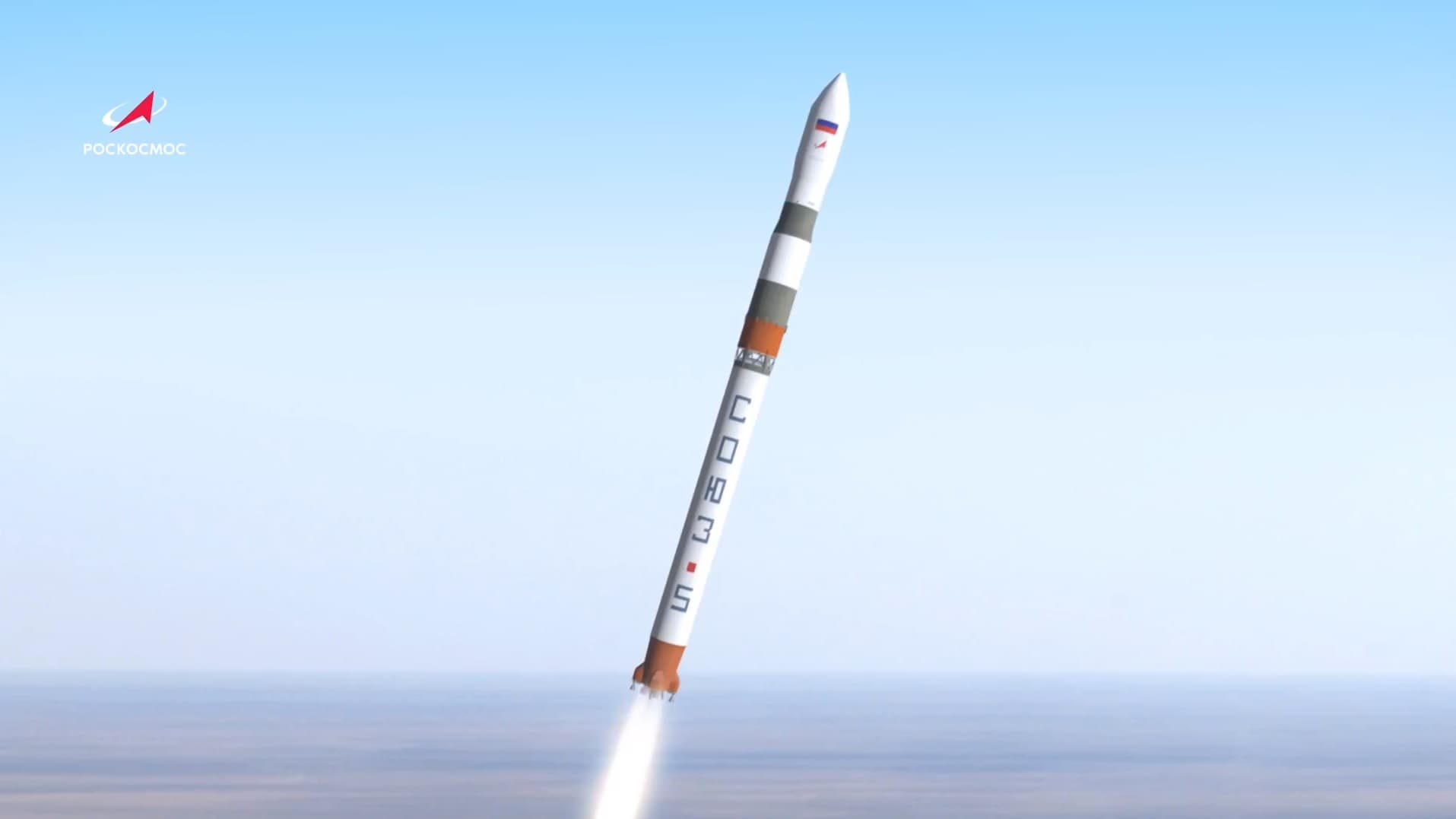
The new rocket is designed to launch automatic spacecraft into various orbits, including geostationary. It will be able to deliver up to 17 tons of payload to low Earth orbit. The design incorporates the latest NPO Energomash engines.
Development of the Soyuz-5 began in 2017 as a replacement for the Ukrainian Zenit. In the future, its elements are planned to be used in the first stage of the Russian super-heavy rocket.
The new carrier rocket is being created to ensure the launch of automatic spacecraft into sun-synchronous, highly elliptical, geostationary transfer, and geostationary orbits
The Soyuz-5 will become a key element of the Russian space program and will expand the country's capabilities for launching heavy spacecraft. This is a step towards creating a super-heavy rocket, which is necessary for future interplanetary missions.
Read more on this topic:
Getting closer to the launch: Soyuz-5 is being prepared for delivery to Baikonur
The newest Russian rocket Soyuz-5 was criticized in the USA
"Everything is in force": The Soyuz-5 rocket will be launched in December 2025
Now on home

Start of deliveries scheduled for 2027

Over 51,000 new motorcycles were sold in Russia in 2025

The car will take at least a year to assemble

The application's audience has reached 20 million users

The model will be included in the list of cars for taxis, price - from 2.25 million rubles

All parking lots of the "Administrator of the Moscow Parking Space" are connected to the service

The cars will be supplied to the Moscow Transport Service Directorate

Deliveries to India may begin in 2028

The technology provides automated search for all types of defects in power units

The plane flew 500 km, accelerating to 425 km/h

The plant stated that the information about the termination of purchases for models 6 and 8 is not true

Scientists are using the "Ekran-M" installation