The Bion-M No. 2 spacecraft has successfully reached its orbit with an inclination of 96.92 degrees and an altitude ranging from 367 to 386 km (average 380 km).

According to the Institute of Biomedical Problems of the Russian Academy of Sciences, all 75 mice sent into space on August 20 on the Bion-M No. 2 biological satellite are feeling well. Video surveillance confirms that the animals are adhering to the established schedule of eating and drinking, and the conditions in the descent vehicle are stable.
The satellite itself is stably oriented in space, and all scientific equipment is operating normally. Telemetry and operational control data confirm that the environmental parameters inside the vehicle are within the normal range.
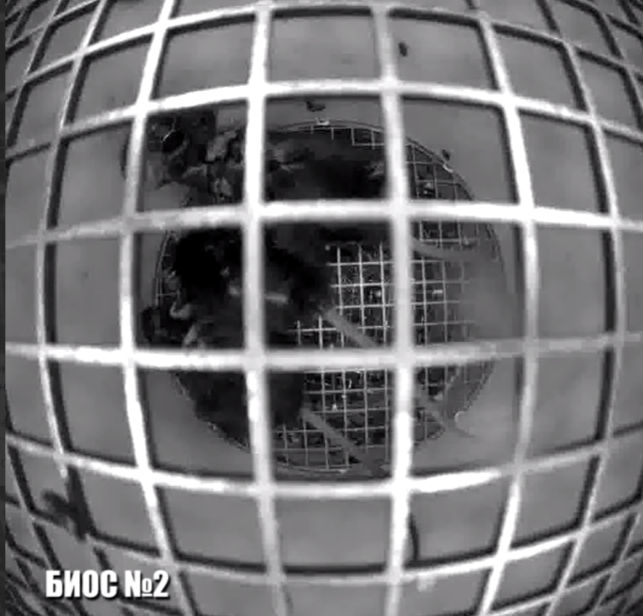
The scientific mission of the Bion-M No. 2 satellite started on August 20 from the Baikonur Cosmodrome. Not only mice were sent into orbit, but also an extensive set of biological objects for research: about 1,500 drosophila, various cell cultures, plants such as calendula and echinacea, as well as samples of cereals, legumes, and industrial crops. In addition, the payload included fungi, lichens, and plant seeds that already have experience in space.
The mission aims to study the effect of a high-latitude orbit with an increased level of cosmic radiation (approximately one-third higher than on the ISS) on living organisms. The results will allow the creation of effective protection methods and increase the safety of manned space flights, including those beyond Earth's orbit.
Read more on the topic:
«Байкал» на взлёте: разработчик рассказал об испытаниях нового самолёта ЛМС-901
Новейшую российскую ракету «Союз-5» раскритиковали в США
Будущее космоса: Россия обсуждает с другими странами космическое взаимодействие после МКС
Now on home

Start of deliveries scheduled for 2027

Over 51,000 new motorcycles were sold in Russia in 2025

The car will take at least a year to assemble

The application's audience has reached 20 million users

The model will be included in the list of cars for taxis, price - from 2.25 million rubles

All parking lots of the "Administrator of the Moscow Parking Space" are connected to the service

The cars will be supplied to the Moscow Transport Service Directorate

Deliveries to India may begin in 2028

The technology provides automated search for all types of defects in power units

The plane flew 500 km, accelerating to 425 km/h

The plant stated that the information about the termination of purchases for models 6 and 8 is not true

Scientists are using the "Ekran-M" installation
Articles
-
Russian An-124 "Ruslan" Stuck in Canada for 4 Years and Accrues Millions in Fines
26 Jan 2026
-
Coaxial Propellers: How Counter-Rotation Increases Turboprop Engine Efficiency
25 Jan 2026
-
Kazan Aviation Plant Breaks Old System: Tu-214 to be Assembled Like Cars
25 Jan 2026
-
How Engineers and Technicians Are Paid Today in the Russian Aviation Industry: An Overview with Figures
24 Jan 2026