Trials of an innovative agricultural unmanned complex developed on the basis of the domestic BAS ID-100A drone have started in Kazan. Specialists from the Kazan State Agrarian University have begun testing the device on the university's experimental fields.
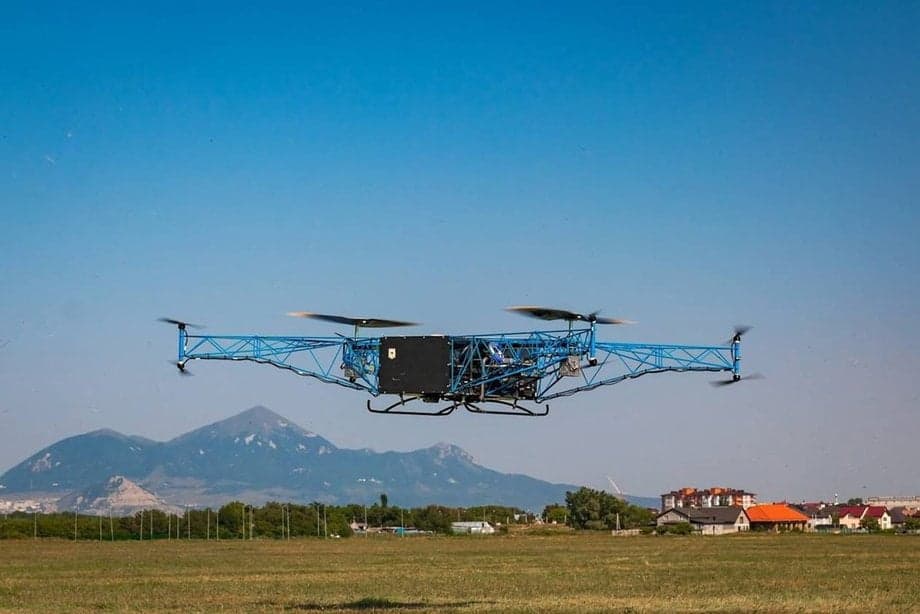
In one working day, the aircraft is capable of processing up to 600 hectares of cultivated area. The carrying capacity is 150 kg, which allows delivering significant volumes of plant protection products and fertilizers.
The developers said that the performance of the drone is 8–10 times higher than the capabilities of traditional ground equipment, including in areas with difficult terrain. This is the first domestic device with such characteristics.
The main advantage of drones is their independence from soil conditions and application accuracy. You can work immediately after rain, when ground equipment gets bogged down. But the technology requires expensive maintenance and highly qualified operators.
According to the developers' calculations, the use of the drone will reduce the cost of processing large fields of regular shape by up to 25–30%.
Earlier www1.ru reported that «Ростсельмаш» created the most powerful tractor in Russia with a 580 hp engine.
Read more on the topic:
Now on home

Start of deliveries scheduled for 2027

Over 51,000 new motorcycles were sold in Russia in 2025

The car will take at least a year to assemble

The application's audience has reached 20 million users

The model will be included in the list of cars for taxis, price - from 2.25 million rubles

All parking lots of the "Administrator of the Moscow Parking Space" are connected to the service

The cars will be supplied to the Moscow Transport Service Directorate
Deliveries to India may begin in 2028
The technology provides automated search for all types of defects in power units
The plane flew 500 km, accelerating to 425 km/h

The plant stated that the information about the termination of purchases for models 6 and 8 is not true
Scientists are using the "Ekran-M" installation