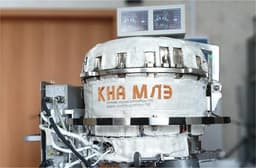
The Russian 50-qubit quantum computer has passed testing. This was reported in a press release from the Lebedev Physical Institute of the Russian Academy of Sciences (FIAN).
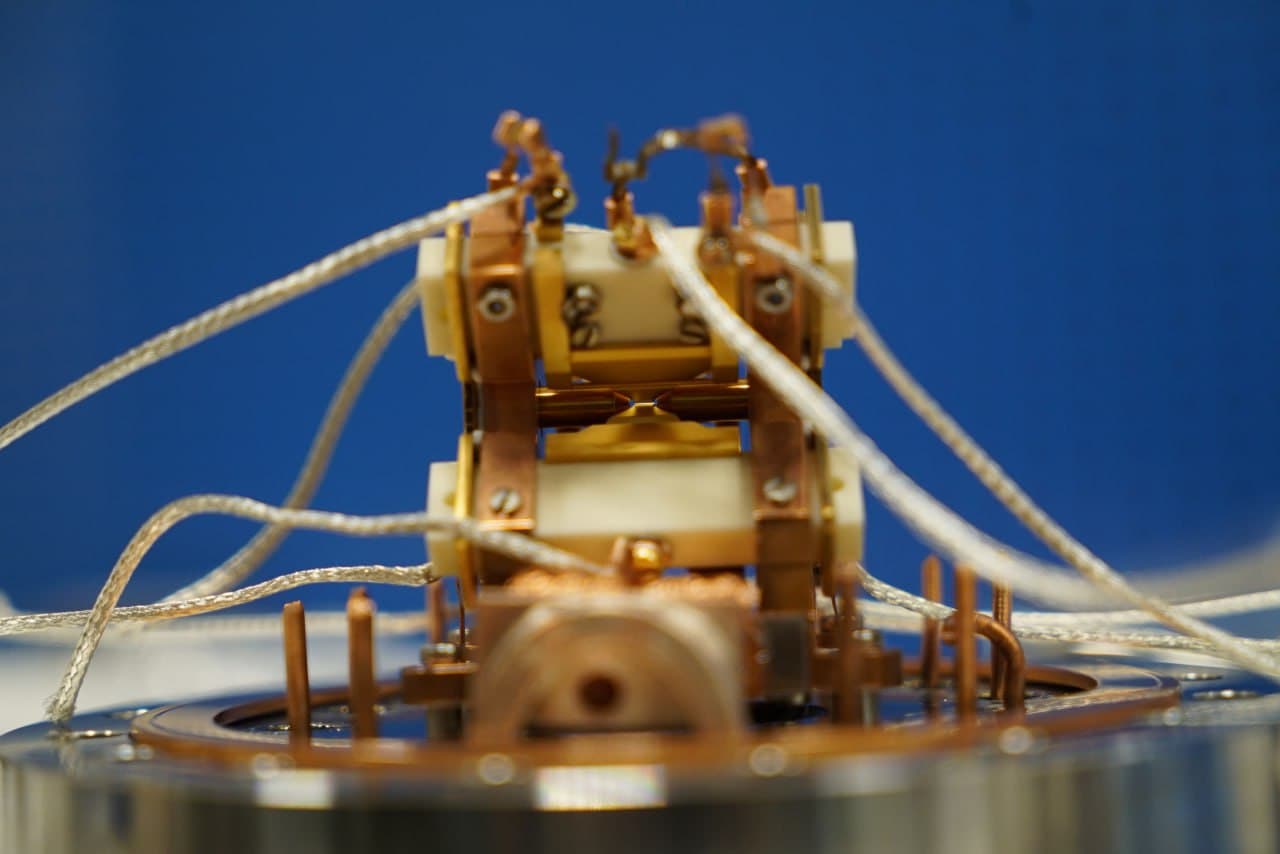
FIAN scientists have assessed the key characteristics of the first Russian 50-qubit computer, built using cold ion technology.
During testing, the key characteristics of the computer were investigated - the reliability of single-qubit and two-qubit operations, as well as the coherence time - the coordinated operation of qudits before their quantum state is destroyed.
The tests used tasks that will allow real quantum calculations to be carried out in the future. In particular, they performed "Grover's algorithms" (designed for searching an unordered database), calculated the structures of several molecules, and conducted simulations of dynamic systems.
According to the director of FIAN, Academician of the Russian Academy of Sciences Nikolai Kolachevsky, the developed quantum computer is not just an experimental prototype, but a full-fledged platform for conducting research and solving problems.
The next stage of system development is related to improving the accuracy of operations and coherence time. In addition, we continue to study new approaches to the use of qudits, where we are one of the leaders in the world. We are also mastering approaches to scaling devices and their mass production.
The creation of commercial quantum computers should be the result of the next stage of the roadmap, which will require compaction and automation of systems. Serial computers should be more reliable and not require constant maintenance.
Earlier,www1.ru reported that three quantum computers with a capacity of up to 50 qubits could becreated in Russia by the end of the year.
Read related materials:
Supercomputer for scientists to be developed in "Roselectronika"
A new Russian method for fast three-qubit operation on fluxoniums has been developed