Scientists from the V.S. Sobolev Institute of Geology and Mineralogy have established that the composition of the unique Katuginsky rare-earth metal deposit underwent dramatic changes about 1.92 billion years ago. The study showed that the initially formed granites were affected by a high-temperature fluid system, which led to the redistribution of valuable elements.
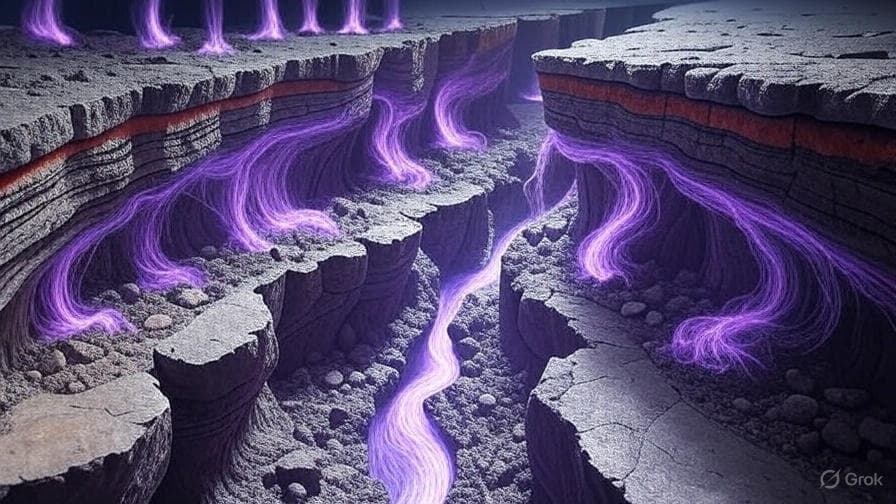
Russian geologists analyzed the mineral zircon, which preserved traces of geological processes. Zircon crystals contain inclusions that record the composition of their formation environment. Isotopic analysis revealed several generations of the mineral, corresponding to different stages of the deposit's evolution. Previously, it was believed that the ore body formed 2.06 billion years ago during the crystallization of a fluorine-containing alkaline melt. New data prove a later metasomatic stage.
Hot fluids, enriched with carbon dioxide and fluorine, "steamed" the ancient granites. The dominant component was CO₂ and fluorine. They formed the basis of the fluid that transformed the rocks. The source of heat and substance could have been deep tectonic processes or mantle flows.
The non-standard mechanism of ore formation opens up new guidelines for the exploration of rare-earth deposits in Siberia and other regions. Understanding the role of fluid impact makes it possible to more accurately predict the distribution of ore zones.
The Katuginsky deposit is a strategic object: rare-earth metals are critical for electronics, the military-industrial complex, and green technologies. The discovery of scientists from the Siberian Branch of the Russian Academy of Sciences not only explains its complex structure, but also provides a tool for detecting similar deposits, reducing Russia's dependence on imports of these resources.
Read more materials on the topic:
Russia is increasing uranium exports: Rosatom has concluded seven new deals in 2024
Now on home

Start of deliveries scheduled for 2027

Over 51,000 new motorcycles were sold in Russia in 2025

The car will take at least a year to assemble

The application's audience has reached 20 million users

The model will be included in the list of cars for taxis, price - from 2.25 million rubles

All parking lots of the "Administrator of the Moscow Parking Space" are connected to the service

The cars will be supplied to the Moscow Transport Service Directorate
Deliveries to India may begin in 2028
The technology provides automated search for all types of defects in power units

The plane flew 500 km, accelerating to 425 km/h

The plant stated that the information about the termination of purchases for models 6 and 8 is not true
Scientists are using the "Ekran-M" installation