Chemists from Novosibirsk, with the support of the Russian Science Foundation, have developed a new energy-efficient technology for processing ammonia, which is formed in large volumes at treatment facilities.
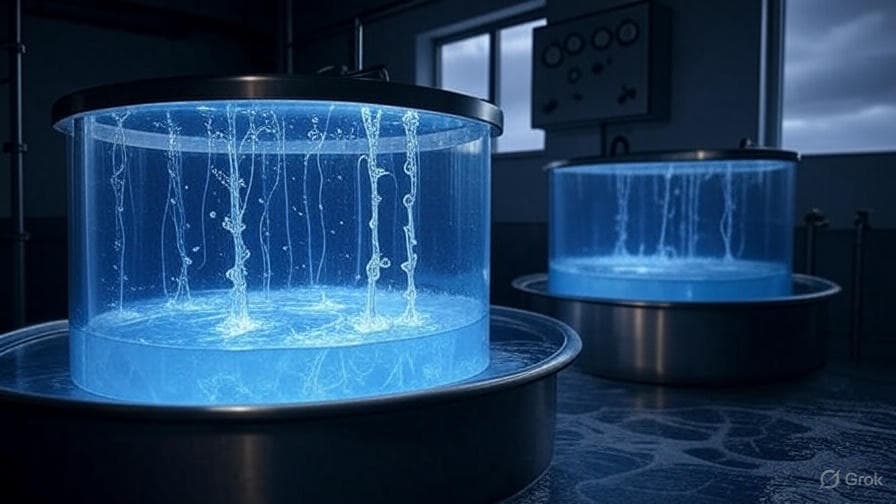
Traditionally, the decomposition of ammonia requires temperatures above 600°C and catalysts with a high platinum content. The researchers proposed using photosensitive catalysts with a significantly smaller amount of platinum, which allows the reaction to be carried out at room temperature and atmospheric pressure.
The development is based on the use of semiconductors with a deposited metal. This system allows the processing process to be divided into two stages: ammonia reduction occurs on metal particles, and oxidation occurs on the surface of the semiconductor. This spatial separation of charges increases the energy efficiency of the process.
In addition to reducing costs, the technology has environmental potential and can be used for wastewater treatment at industrial facilities. As one of the authors, Dina Markovskaya, notes, photocatalytic reactors operating on solar energy can not only purify water from ammonia, but also produce hydrogen in parallel, forming a closed resource cycle.
Studies have shown that reducing the platinum content almost does not reduce the efficiency of the reaction, and in the future it may be possible to use cheaper and more accessible replacements.
Read materials on the topic:
Вихревой сатуратор для очистки сточных вод создали в ПГУ
Способ очистки воды от тяжёлых металлов с помощью кофейной гущи придумали в ПНИПУ
Now on home

Start of deliveries scheduled for 2027

Over 51,000 new motorcycles were sold in Russia in 2025

The car will take at least a year to assemble

The application's audience has reached 20 million users

The model will be included in the list of cars for taxis, price - from 2.25 million rubles

All parking lots of the "Administrator of the Moscow Parking Space" are connected to the service

The cars will be supplied to the Moscow Transport Service Directorate

Deliveries to India may begin in 2028

The technology provides automated search for all types of defects in power units

The plane flew 500 km, accelerating to 425 km/h

The plant stated that the information about the termination of purchases for models 6 and 8 is not true
Scientists are using the "Ekran-M" installation