The Russian government is expanding its digitalization program, adding 70 new settlements to the list of territories where high-speed internet will be deployed. The project will be financed by the universal service reserve, which is formed by contributions from telecom operators.

According to order No. 1618-r dated June 23, 2025, fiber-optic communication lines will appear in hard-to-reach areas. This decision became possible after amendments to the federal law "On Communications" adopted in late May 2025.
The list of regions where high-speed internet is planned to be deployed using reserve funds includes settlements in the Republic of Tyva, the Chukotka Autonomous Okrug, and the Republic of Sakha (Yakutia).
The project will allow local residents to access modern telecom services, and businesses to use digital services for development.
Read more on this topic:
"Rosseti" to Invest 1.6 Billion Rubles in Modernizing Power Grids of Omsk Oblast in 2025
High-Speed Mobile Internet May Now Be Available in Regions Remote from Cell Towers
Now on home

Start of deliveries scheduled for 2027

Over 51,000 new motorcycles were sold in Russia in 2025

The car will take at least a year to assemble

The application's audience has reached 20 million users

The model will be included in the list of cars for taxis, price - from 2.25 million rubles

All parking lots of the "Administrator of the Moscow Parking Space" are connected to the service

The cars will be supplied to the Moscow Transport Service Directorate
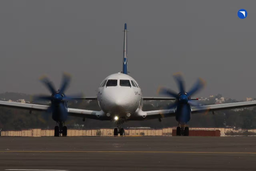
Deliveries to India may begin in 2028

The technology provides automated search for all types of defects in power units
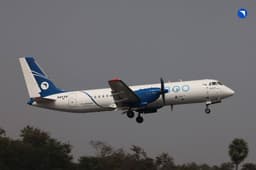
The plane flew 500 km, accelerating to 425 km/h

The plant stated that the information about the termination of purchases for models 6 and 8 is not true

Scientists are using the "Ekran-M" installation