Drivers should be wary of several of the most common types of staged accidents that attackers use to stage accidents in order to receive compensation or extort money. Staged accidents can be singled out into a separate article of the Criminal Code of the Russian Federation. Such amendments to this law have been submitted to the State Duma.
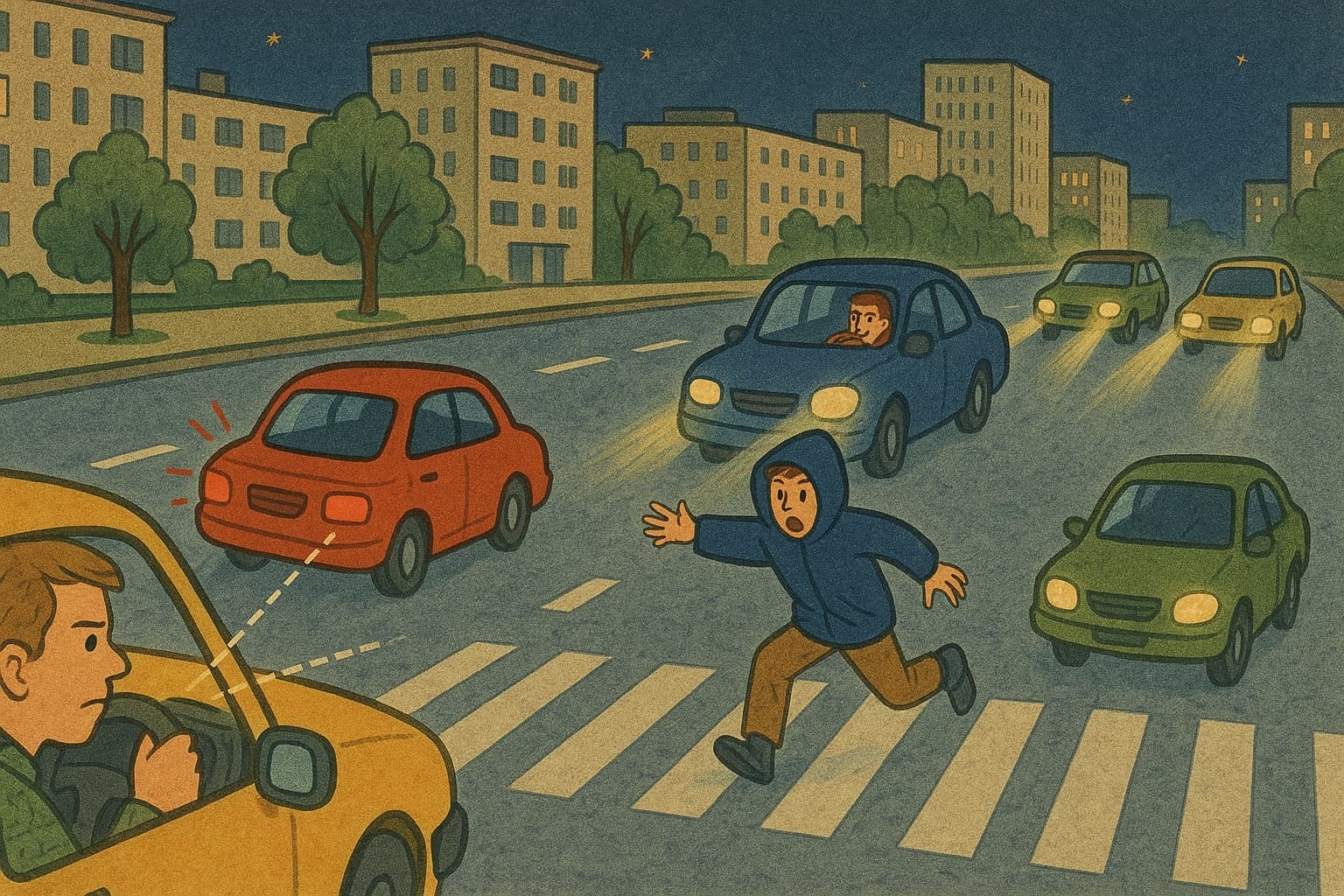
One such technique is the sudden braking of the car in front - this method occurs in 76% of staged accidents. Another popular method is a staged collision from a "blind spot" at roundabouts, which account for about 48% of such incidents. Another scheme is a fake accident involving a pedestrian who deliberately throws himself under the wheels - such cases account for approximately 47%.
Previously, in the 90s, a technique was popular with "blinding" the driver with high beams at night: a car was driving in the left lane, next to it was a car with its headlights off, and behind it was a racer with high beams demanding to give way. The driver illuminated by the high beam did not notice the car next to him and began to change lanes, resulting in an accident.
Now, attackers often use maneuvers at roundabouts when the driver tries to change lanes and gets into a staged situation. Cases are also popular when the driver reverses and another car is staged against him.
Deputies proposed introducing a new article 163.1 into the Criminal Code, which would provide for punishment for intentionally creating an accident for the purpose of extortion - up to four years of imprisonment, and under aggravating circumstances - up to seven. Now such "staged accident scammers" are usually tried under Article 159 of the Criminal Code ("Fraud"), where the punishment is less severe - a maximum of two years.
The main problem is to prove that the accident was organized intentionally, and not accidental. This requires video recordings, data from cameras, active participation of law enforcement agencies and insurers. If it is possible to collect evidence, then the incident can be qualified as extortion, otherwise - as fraud.
Experts note that the new amendments will help to combat crime on the roads more effectively, but the bill needs to be finalized, in particular, in the correct distribution of articles in the Criminal Code - the crime is better to be attributed to the section "Crimes against traffic safety and operation of transport", and not to the chapter on extortion.
Read materials on the topic:
Not even experienced drivers know: 10 of the most frequent fines for violations in the yard
What has changed for drivers since June 1: three important innovations