A group of Russian scientists from the P.N. Lebedev Physical Institute of the Russian Academy of Sciences, HSE University, and Lomonosov Moscow State University have proposed a new method for producing europium compounds that can form the basis for advanced sensors, medical diagnostic materials, and anti-counterfeiting systems.
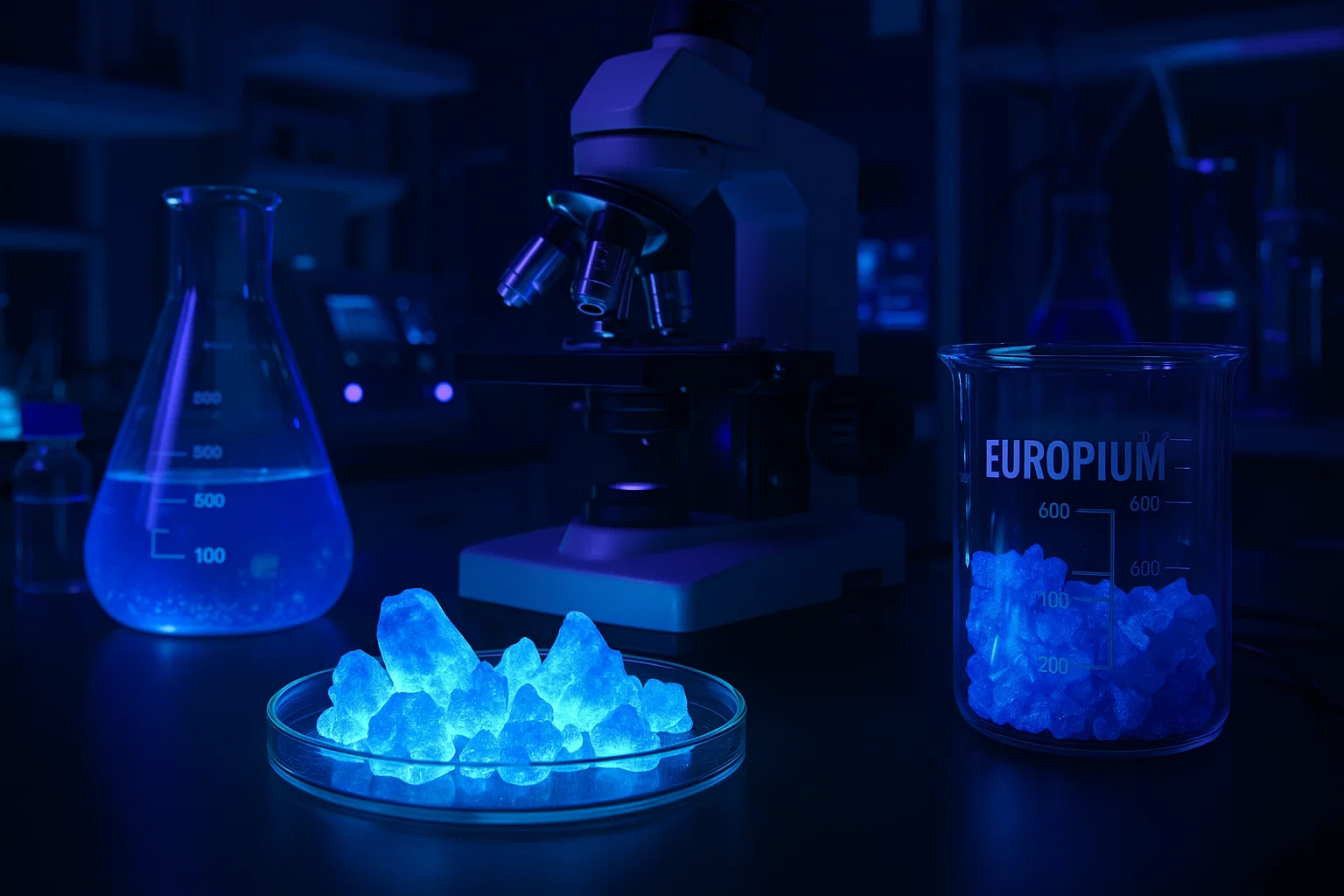
The researchers synthesized experimental samples by dissolving europium chloride with an "antenna" ligand in various alcohols. This resulted in crystals of different shapes and sizes. Initially, the compounds were unstable, but after the alcohol evaporated (naturally or with heating), they acquired a stable polymer structure.
The study helped to understand how to form such structures. In the next stage, we plan to apply this knowledge to synthesize rare-earth element compounds with other antenna ligands with a similar chemical structure, and also study their properties.
The resulting materials can be used to protect banknotes and documents due to their unique luminescent properties. In addition, the technology opens up opportunities for creating medical diagnostic systems and industrial sensors capable of detecting hazardous substances.
Read more on the topic:
Highly accurate method for early diagnosis of Alzheimer's disease developed by scientists at PNRPU
Compact optical filters made of quartz and silver created by Krasnoyarsk scientists











