Researchers from Kazan (Volga Region) Federal University (KFU), together with colleagues, have discovered an unexpected property of the antimalarial drug mefloquine: in combination with certain antibiotics, it can restore protein biosynthesis in cells with genetic mutations.
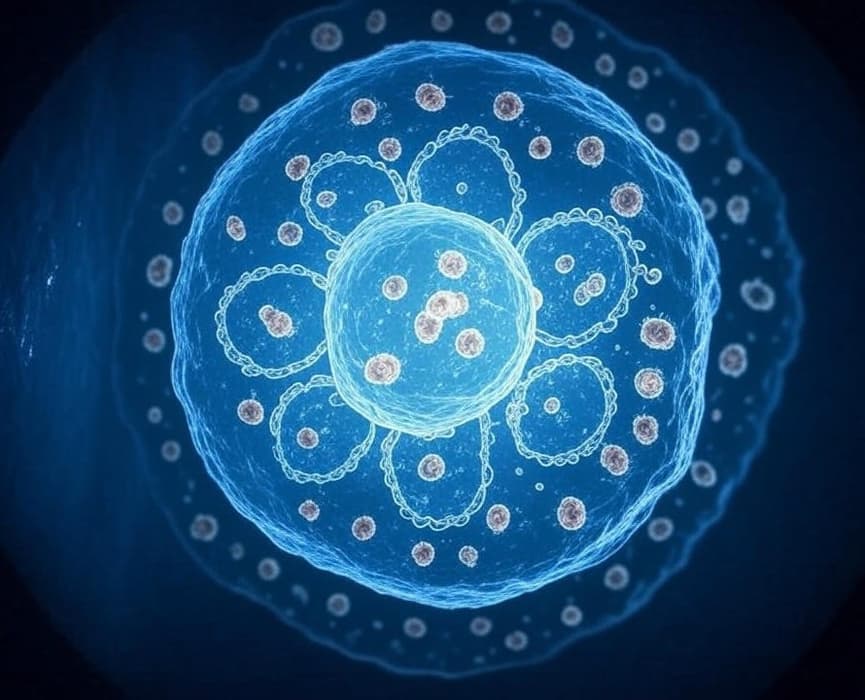
Experiments were conducted on Candida albicans fungi, but if a similar effect is confirmed on human cells, this could lead to a breakthrough in the treatment of hereditary diseases, such as Duchenne muscular dystrophy (DMD).
Normally, ribosomes - cellular "protein factories" - read the genetic code and synthesize proteins. However, in some mutations in DNA, premature stop codons appear, which stop the process, and the protein is not formed. Scientists have discovered that mefloquine changes the structure of ribosomes, enhancing the effect of aminoglycoside antibiotics. This allows the cell to "ignore" the false stop signal and continue the synthesis of a complete protein.
Stop codons
These are "stop signs" in DNA that tell the cell: "Protein assembly ends here." Normally, they are needed so that the protein does not become too long. But in genetic mutations, stop codons can appear too early, and the cell does not complete the necessary protein. This leads to diseases, such as muscular dystrophy.
Aminoglycoside antibiotics
This is a group of antibiotics (e.g., gentamicin) that usually fight bacteria. But scientists have discovered that they can also "trick" the ribosome, forcing it to ignore false stop codons and complete the protein. The problem is that high doses are harmful to the body. Mefloquine helps to enhance their effect, reducing the required dose.
We have developed a new method for crystallizing ribosomes of the yeast-like fungus Candida albicans, which allows us to see small molecules in the active centers of the ribosome, which was previously difficult to achieve by cryo-electron microscopy. By adding X-ray crystallography data to it, we were able to see in 3D with atomic resolution how the structure of the ribosome changes when binding to various molecules. My colleagues and I continue to study the structures of ribosomes from various organisms in order to more fully understand the basics of biochemical processes inside the cell.
If further studies on animals and humans confirm the effectiveness, the combination of mefloquine and aminoglycosides may become a safer alternative to genome editing.
The study opens a new path - to treat genetic diseases not by editing DNA, but by a gentler intervention, influencing how the cell "reads" the existing code. This is cheaper, simpler, and potentially safer.
According to experts, it will take 5-10 years to develop the drug. In Russia, about 1.3 thousand children suffer from DMD, and the new treatment could significantly improve their quality of life.
Read also materials on the topic:
"Gradient" magnetic material developed by Kazan physicists
Platinum and light: hybrid therapy for cancer treatment created in MIREA
Dozens of times more effective than chemotherapy: UrFU scientists defeated cancer with a new drug
Now on home

An attempt to illegally export the unit was stopped by the FSB in the Leningrad region

Most often they are used to pay for excess baggage

120-ton structure installed in 4 hours
Developed polymer biomaterials can become the basis for implants

The weight of the assembled product reaches about 25 tons, and its height is 2.5 meters

The marketplace orders domestic Kvadra Tau mini computers for testing

In 2025, the company's revenue decreased 32 times

The greatest interest was aroused by products that had been tested in combat conditions

We are talking about parked cars that advertise goods or services

The increase in emergency situations has forced airlines to look for alternatives

The X-cross 7 is almost sold out, but the X-cross 8 can still be found on sale

Method for lightweight machine learning systems will improve the efficiency of quantum key distribution