At the El Dabaa NPP in Egypt, the installation of the "dry shielding" of the reactor shaft at power unit No. 2 has been successfully completed. Specialists have carried out a key operation to install a massive cylindrical structure that surrounds the reactor core. The work lasted about four hours and was carried out using a heavy-duty crawler crane with high lifting capacity.
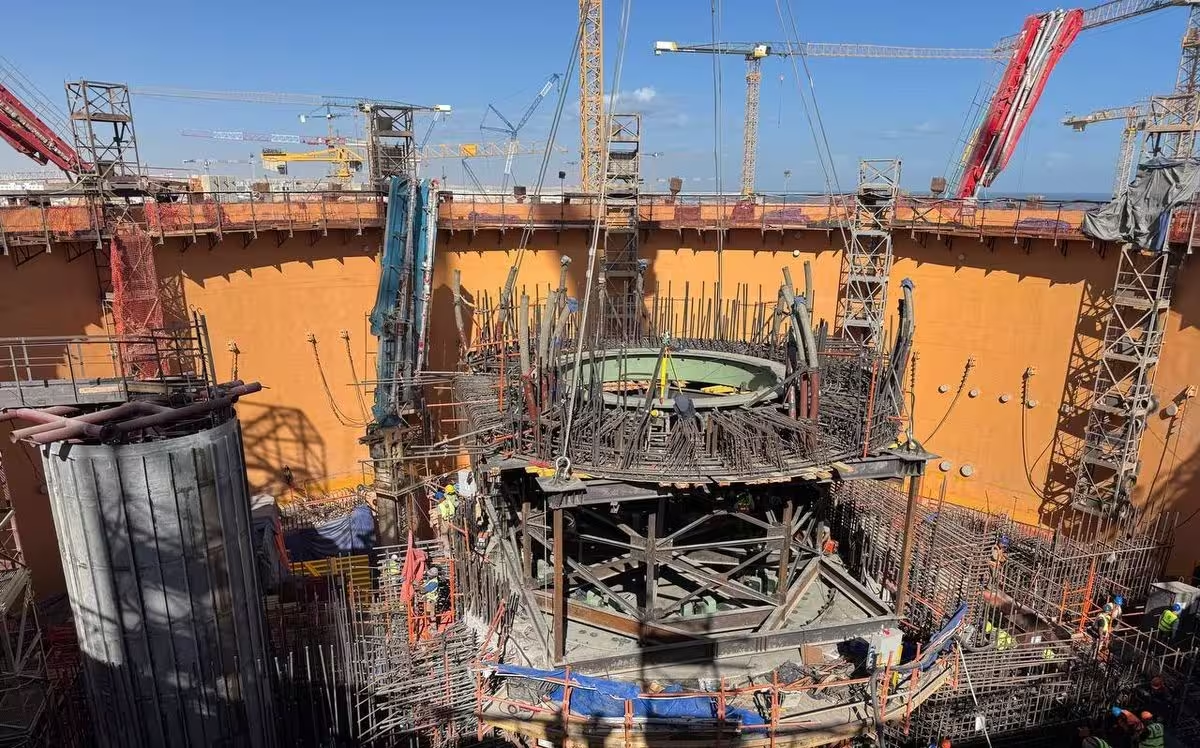
"Dry shielding" is an important element of the passive safety system of a Generation III+ reactor plant. It provides reliable biological protection for personnel, equipment, and the environment from all types of ionizing radiation, including gamma rays and neutrons. The design ensures safety even during prolonged operation of the power unit. In addition, the "dry shielding" performs the function of additional heat removal, reducing the thermal load on the concrete elements of the reactor shaft and thereby significantly increasing their service life.
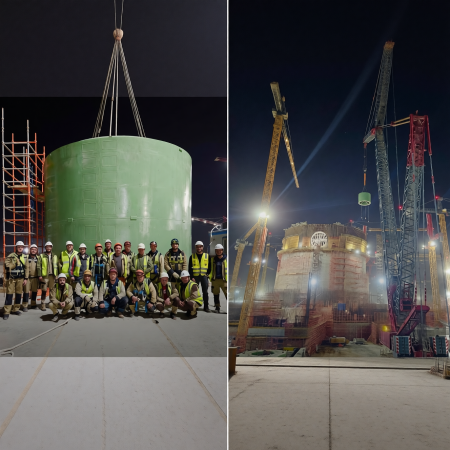
The scale of the structure is particularly noteworthy: its mass is approximately 120 tons. For comparison, this is comparable to the weight of a large passenger airliner.
The El Dabaa NPP project is being implemented using Russian VVER-1200 technologies and includes four power units with a total capacity of 4800 MW. Construction is underway according to schedule, using advanced engineering solutions that ensure the highest level of safety and reliability.
Read more materials:
- Design of the Nizhne-Zeyskaya HPP with a capacity of 400 MW will be completed in September
- First concrete pouring will take place at the Paks-2 NPP: Rosatom launches construction in Hungary
- Russian-made graphite withstood extreme temperatures for HTGR at 1300°C
Never miss our newsAdd this site to your preferred sources to see us more oftenAdd on Google

















