Researchers from Tomsk Polytechnic University (TPU), in collaboration with colleagues from China, have created a new type of nano-fertilizer based on the natural mineral halloysite. According to the authors, the development allows controlling the release of nutrients and significantly increases the efficiency of their absorption by plants. The research results are published in the journal Microporous and Mesoporous Materials.
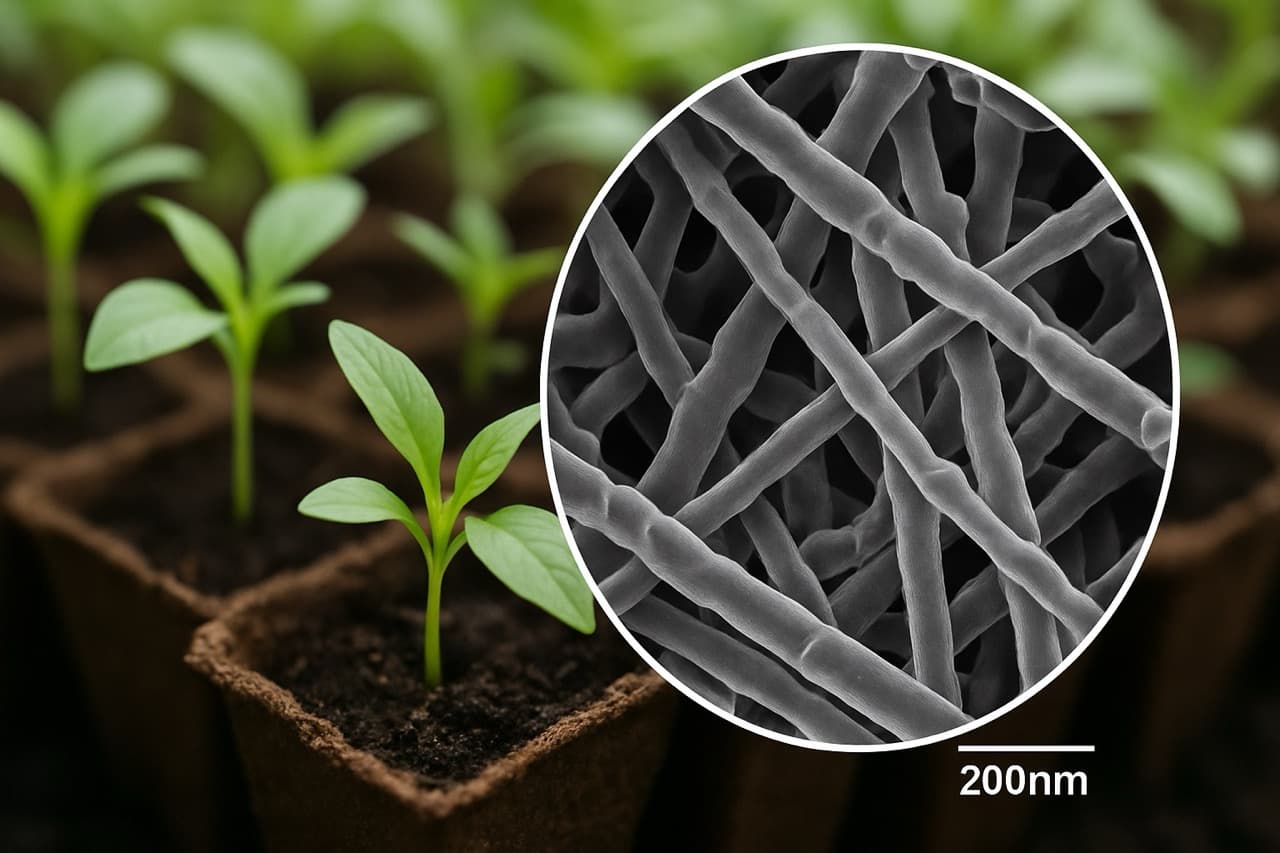
According to scientists, classic fertilizers often face the problems of low absorption and rapid leaching from the soil. This reduces their effectiveness and leads to additional costs. The new development solves these problems thanks to the unique properties of halloysite, a mineral with a natural nanotubular structure.
As active components, scientists used copper, boron, and iodine. These substances were loaded into a concentrate of halloysite nanotubes. During spraying on plants, the tubes penetrate into the tissues and release beneficial elements - according to the principle of "microinjections."
We sprayed fertilizers on arugula microgreens and recorded an increase in biomass of 34%
The analysis showed that after loading with nutrients, the diameter of the nanotubes increased from 100 to 185 nanometers. This confirms the penetration of active components into the meso- and macropores of halloysite. It was also experimentally proven that the nanotubes are evenly distributed over the leaves and remain stable even when exposed to an air flow. This makes the development promising for foliar application.
Read materials on the topic:
Russian farmers will save money on pesticides and fuel with the help of UAVs
Ultrasound in action: the production of potash fertilizers has been optimized in Perm