Yesterday'sX-class flare led to an increase in the flux of heavy charged particles (HCP) in near-Earth space, according to the Solar Astronomy Laboratory of the IKI and ISZF.
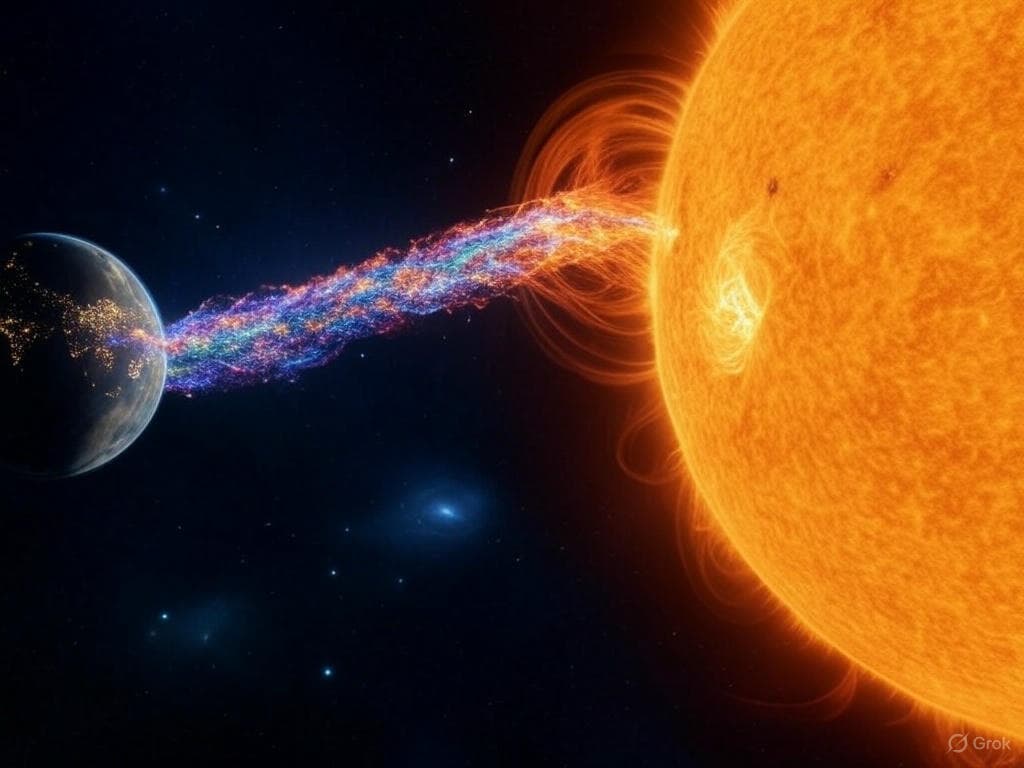
HCPs are usually understood to be protons with an energy of more than 10 MeV (megaelectronvolts - a unit of energy measurement). The speeds of such particles start from 1/10 the speed of light and higher; accordingly, they reach the Earth in about 1 hour and are thus one of the fastest components of the Sun's impact on Earth. They are only preceded by the hard radiation of the flare, which, as you can easily guess, travels at the speed of light and reaches the Earth in 500 seconds.
HCPs can affect the operation of spacecraft, for the protection of which special measures are taken, such as shielding.
The current increase in HCP fluxes has increased by approximately 50 times, is not considered critical, and does not exceed the dangerous "red threshold," so no additional protection measures are required. By the morning of May 14, proton fluxes began to decline, exceeding the background level by 10-20 times, and are expected to normalize by tomorrow.
The arrival of plasma ejections to Earth under current solar activity conditions is impossible. The probability of magnetic storms and auroras in the near future is excluded.
Earlier,www1.ru reported that a flare of the penultimate power class wasregistered on May 14.
Read more on the topic:
Several magnetic storms are expected on Earth in May 2025: forecast by Russian astronomers
Hold on to your heads: magnetic storms have increased 2.5 times compared to last year











