SOLLERS has organized the stamping of body components for Atlant and Argo light commercial vehicles in Tatarstan, using galvanized steel from Magnitogorsk Iron and Steel Works (MMK). Investments in the project amounted to 4.3 billion rubles, of which 3.4 billion were provided by the Industrial Development Fund (IDF) on preferential terms.
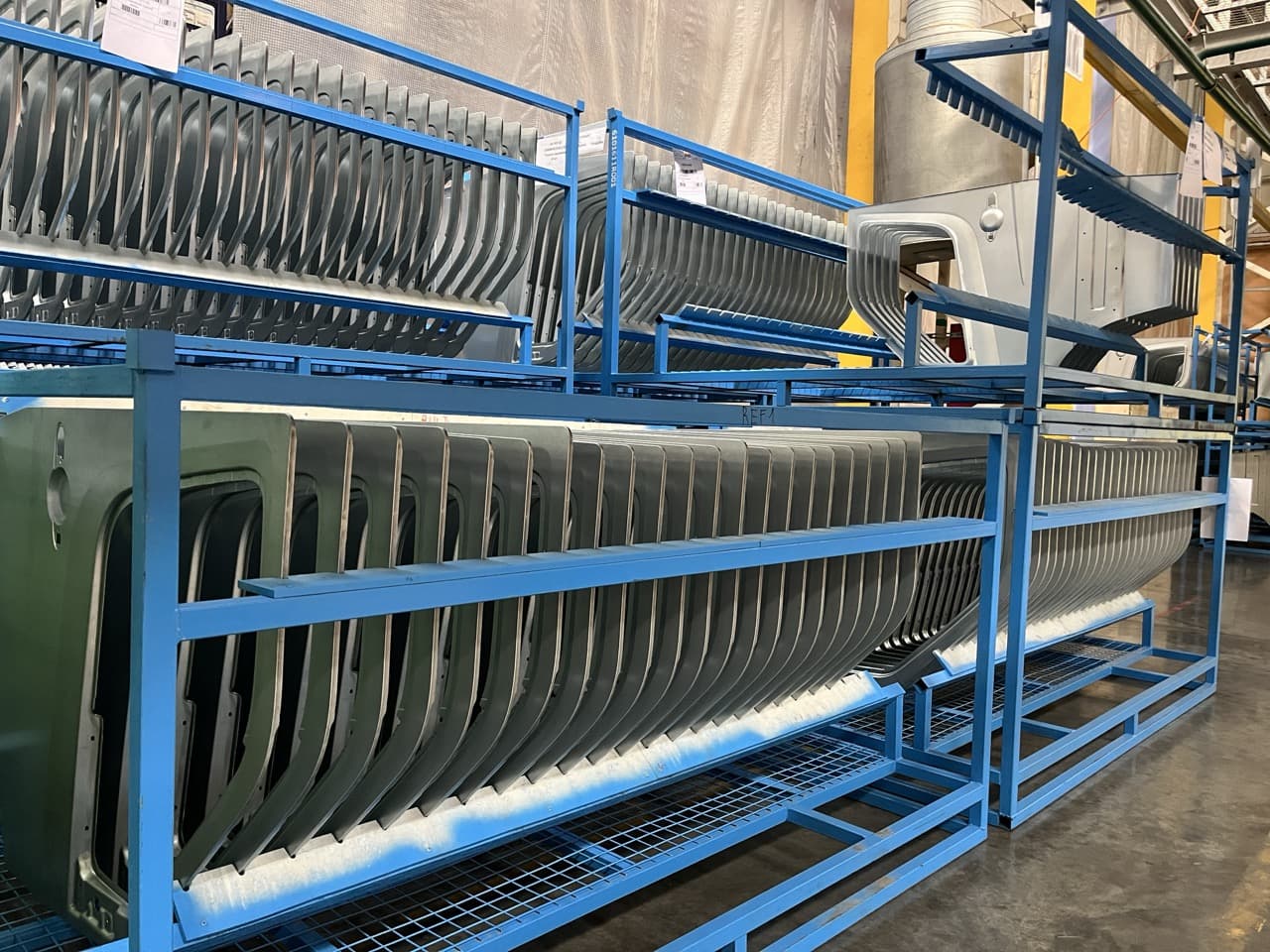
The stamping of 120 parts, including doors, hoods, roofs, and load-bearing elements, has been localized at the production site. More than 50% of the mass of bodies and cabs is now made from domestic metal. The use of galvanized steel has increased corrosion resistance and geometric accuracy of the structures.
Tooling and control systems were purchased with funds from the IDF, and the launch of production took less than a year.
According to SOLLERS CEO Nikolai Sobolev, this is the first case in the Russian automotive industry when an enterprise restarted after a shutdown has reached such a high level of localization.
In 2023, the IDF allocated 1.7 billion rubles for the organization of diesel engine production for the Atlant, Argo, and UAZ models.
Localization is critical to reducing dependence on imported components. The use of MMK steel reduces logistics costs and strengthens cooperation between industries.
Read more on the topic:
Sollers and UAZ Announce New Frame SUV Based on JAC T9: First Photo Appears
Sollers Novelties in 2025: Diesel UAZs, Atlant XL, and SF1 Compact Van
Sollers Atlant Vans Improved and Protected Against Corrosion
Now on home

Start of deliveries scheduled for 2027

Over 51,000 new motorcycles were sold in Russia in 2025

The car will take at least a year to assemble

The application's audience has reached 20 million users

The model will be included in the list of cars for taxis, price - from 2.25 million rubles

All parking lots of the "Administrator of the Moscow Parking Space" are connected to the service

The cars will be supplied to the Moscow Transport Service Directorate
Deliveries to India may begin in 2028

The technology provides automated search for all types of defects in power units
The plane flew 500 km, accelerating to 425 km/h

The plant stated that the information about the termination of purchases for models 6 and 8 is not true

Scientists are using the "Ekran-M" installation