All-terrain buses based on the GAZ "Sadko Next" chassis have appeared on the Russian car market. The Gorky Automobile Plant has begun offering 4x4 vehicles. All-terrain vehicles combine the cab and chassis of the "Sadko Next" with elements of the all-metal body from the "GAZelle Next".
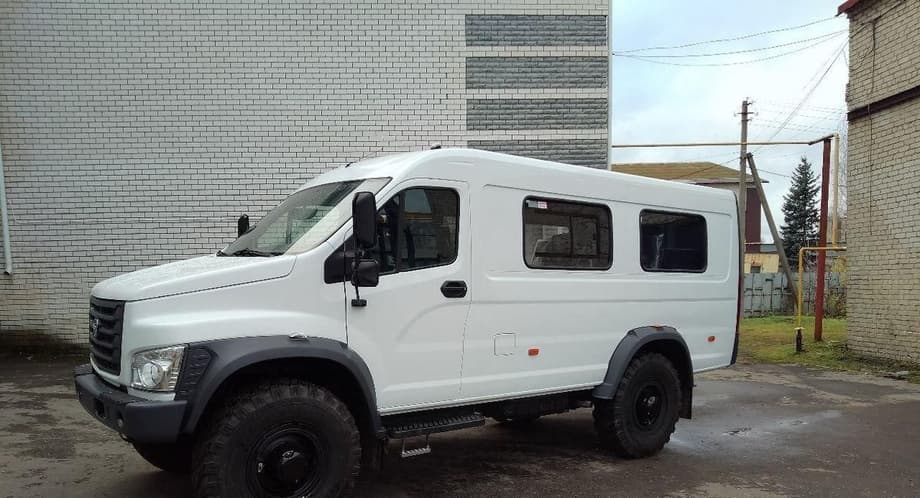
The two-volume car with a single cabin accommodates from 3 to 16 passengers (depending on the configuration). "Sadko Next" is characterized by high cross-country ability due to a ground clearance of 315 mm.
The all-terrain bus is equipped with a YaMZ-534 turbodiesel with a volume of 4.4 liters (150 hp), a 5-speed "mechanics" and all-wheel drive with a downshift. Inter-axle differential locks and a tire inflation system are also provided.
The manufacturer offers different versions - from a cargo van to a category D bus. The basic equipment includes cruise control, ABS and power windows, as well as an autonomous heater. The interior space can be supplemented with lockers or a table.
"Sadko Next" will be an affordable alternative to more expensive buses based on KamAZ.
Earlierwww1.ru reported that the all-wheel drive "Sadko 9" with an extended wheelbase and a two-row cabcame off the assembly line.
Read materials on the topic:
Several versions of the Sadko Next truck were presented at the Army-2024 forum
Now on home

Start of deliveries scheduled for 2027

Over 51,000 new motorcycles were sold in Russia in 2025

The car will take at least a year to assemble

The application's audience has reached 20 million users

The model will be included in the list of cars for taxis, price - from 2.25 million rubles

All parking lots of the "Administrator of the Moscow Parking Space" are connected to the service

The cars will be supplied to the Moscow Transport Service Directorate

Deliveries to India may begin in 2028

The technology provides automated search for all types of defects in power units

The plane flew 500 km, accelerating to 425 km/h

The plant stated that the information about the termination of purchases for models 6 and 8 is not true

Scientists are using the "Ekran-M" installation