Scientists from Skoltech, the company "Motorica" and the Far Eastern Federal University for the first time conducted a comparative analysis of sensations in a phantom limb in the same patients, using two methods of electrical stimulation - spinal and peripheral.
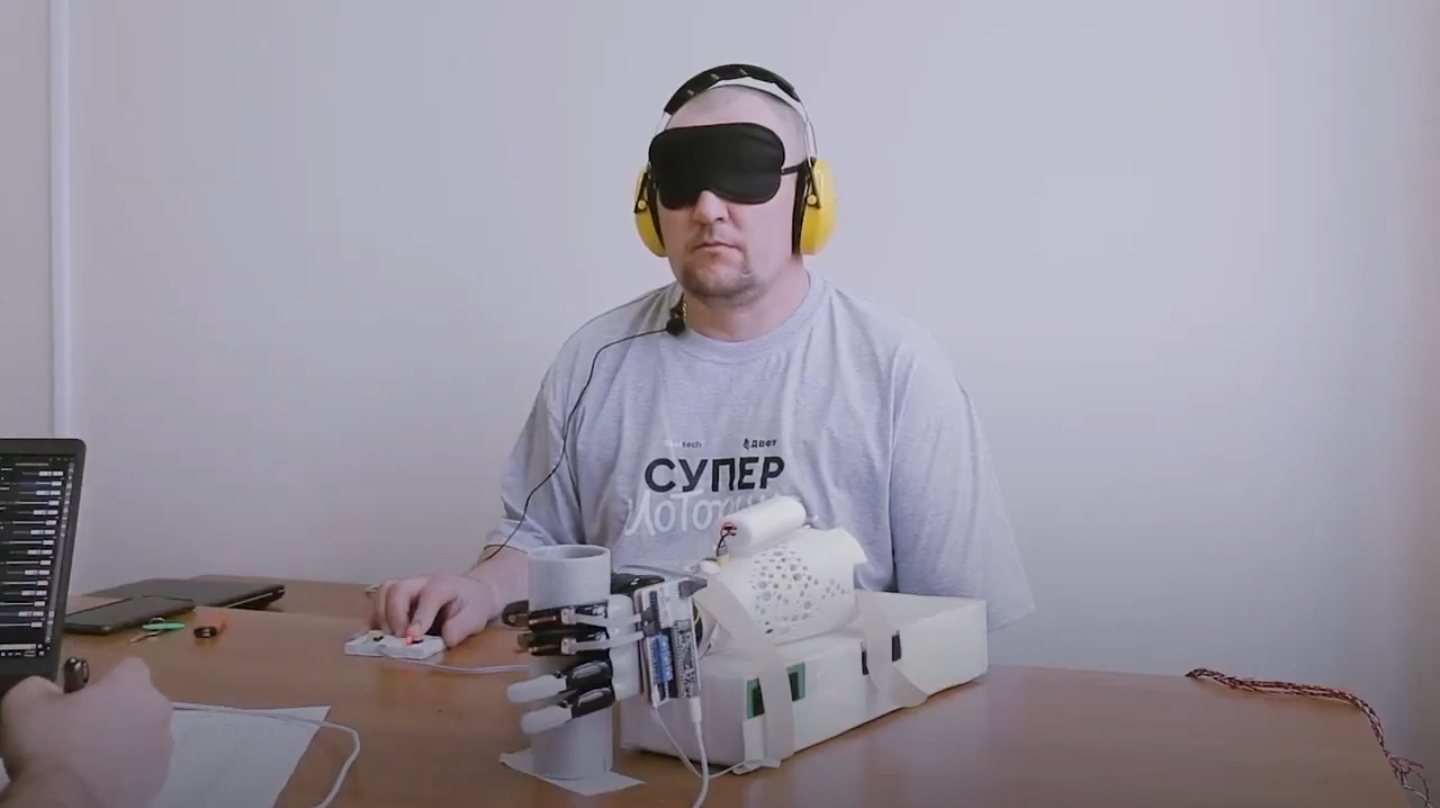
The study showed that patients with amputation of the arm at the shoulder level, receiving tactile feedback from the neuroprosthesis, were able to distinguish objects by size, as well as determine the degree of their softness or hardness.
During the experiment, electrodes were implanted in both participants near the spinal cord and in the peripheral nerve of the amputated limb. When electrical stimulation was applied, the patients described their sensations in detail, while the researchers recorded electroencephalogram data. The analysis showed that with peripheral stimulation, the sensations were more accurate and localized, and brain activity was characterized by pronounced lateralization, which corresponds to the natural perception of tactile signals from a healthy limb.
The scientists paid special attention to the dynamics of learning and getting used to new sensations. One of the participants was able to distinguish objects by touch from the first time, without prior preparation, using feedback from the prosthesis. After a series of training sessions, both patients demonstrated a decrease in the number of errors, and after a few days of break, the accuracy of sensations improved even more, which indicates the transfer of learned skills between different types of stimulation.
The technology of neuroprosthetics with double feedback not only improves the controllability of the prosthesis, but also significantly reduces phantom pain - up to 90% according to their estimates.
Scientists believe that such results are encouraging. The team's achievements open up new opportunities for creating prostheses capable of transmitting natural tactile sensations, which is crucial for improving the quality of life of people with amputated limbs.
Read materials on the topic:
A unique bracelet for controlling a bionic arm has been developed in Russia
A bionic hand implant was installed for the first time in the Irkutsk region