InnoPlasmaTech, a Skolkovo resident company, has developed a technique for isolating a carbon isotope to create nuclear batteries. Scientists have reported the successful application of ion-plasma technology for processing irradiated reactor graphite. The method developed by Skolkovo scientists allows for the removal of a layer containing an increased concentration of carbon-14 isotope. Radiocarbon can be used to create "eternal" beta-voltaic batteries, which can be used to power pacemakers and neuroimplants.
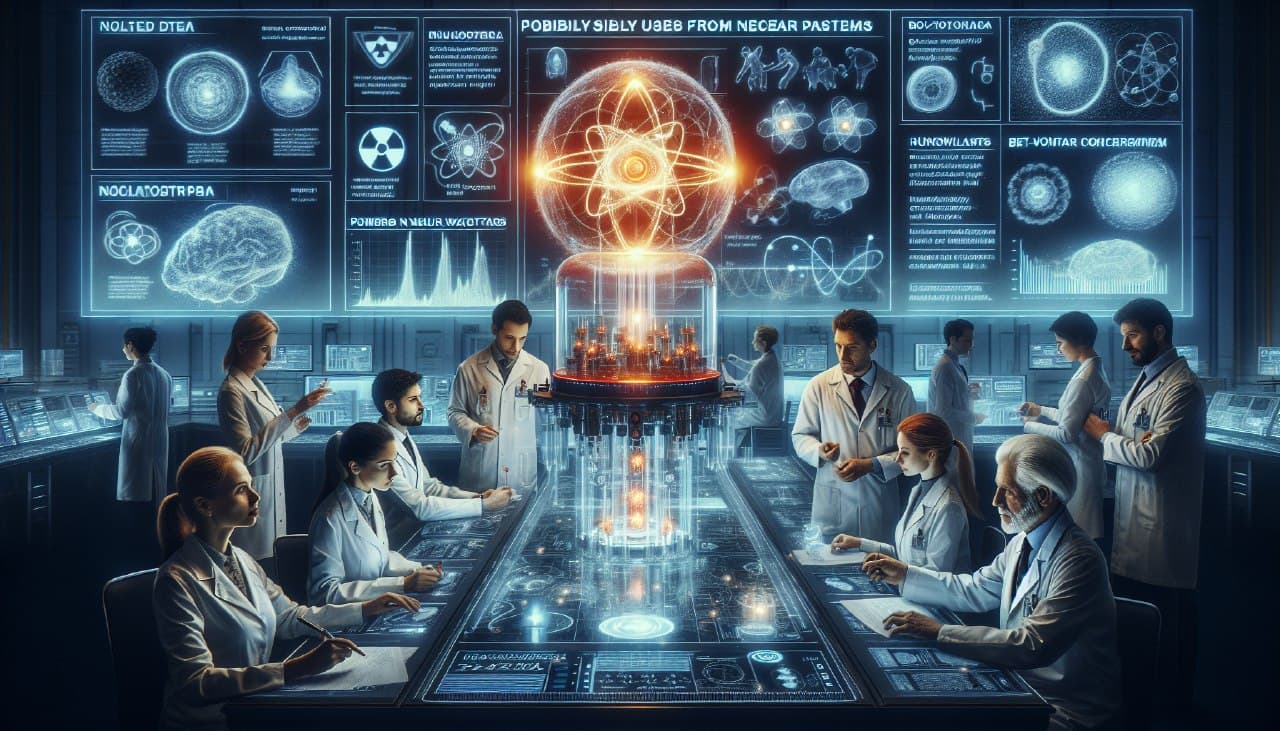
Modern science has not yet solved the problem of decommissioning uranium-graphite reactors, including RBMK (high-power channel-type reactor). It is also important to effectively manage radioactive waste, in particular, irradiated reactor graphite, which contains the beta-active carbon-14 isotope with a half-life of 5700 years.
While nuclear physicists are looking for practical solutions, the volume of irradiated graphite is growing, and its quantity is estimated at approximately 260 thousand tons.
Scientists from Skolkovo believe that the carbon-14 isotope can be used in the production of a new type of "eternal" beta-voltaic batteries. Their principle of operation is similar to the principle of a thermionic converter. Due to the enormous half-life, the battery will lose only half of its output electrical power in thousands of years.
These batteries can be used in various high-tech devices, such as pacemakers, neurostimulators, and implantable electronics.
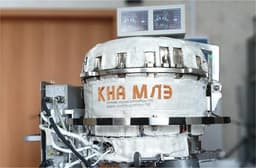
Ion-plasma technology allows carbon-14 atoms, sputtered by a short plasma discharge in an inert argon gas environment, to be deposited on a metal substrate. Laboratory tests have proven the effectiveness of this method. Tests have shown that it is possible to create a carbon-14 layer of the required thickness, which will be used as a cathode in a new beta-voltaic battery.
By adjusting the discharge parameters, it is possible to deposit a layer of carbon-14 of the required thickness on various metal substrates, which will be used to create a new type of power source - "eternal" electron-emission vacuum beta-voltaic batteries. In the process of deactivation, a new useful product is actually created free of charge for the market of high-tech bioelectronic medicine and long-term energy sources of a wide range of applications. The ion-plasma deactivation technology is patented by us jointly with the State Atomic Energy Corporation Rosatom and JSC Concern Rosenergoatom, and international patenting has also begun.
The research results were presented to the broad scientific community at the IAEA technical meeting Processing Technologies for Irradiated Graphite Waste in the summer of 2024.
The results of the work, carried out with the support of the Russian Science Foundation (RSF), were published in an article by the IEEE publishing house. During the work, the physical basis of the technology was experimentally confirmed, and Russian scientists also proposed a concept for a new electron-emission vacuum beta-voltaic battery.
Read more materials on the topic:
Rosatom is testing nuclear fuel with a burnable neutron absorber.