At the Samara State Medical University (SamSMU), together with researchers from NUST MISIS, an innovative modular attachment for a robotic arm has been developed. The modernization of the device will allow printing cartilage and soft tissues directly during surgery on a patient.
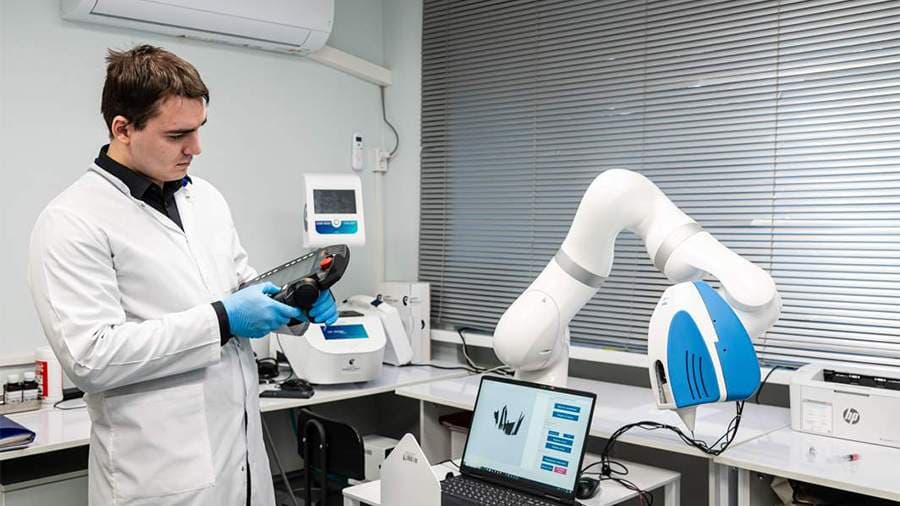
We planned to adapt the robotic arm for the creation of bioengineered structures and personalized implants using bioprinting of tissues directly on the patient. Now, thanks to the developed attachment, this will become possible.
This high-tech system can be used for bioprinting complex personalized implants according to the geometry of a given 3D model. Now printing is possible not only in laboratory conditions, but also on the operating table.
During the operation, the movements of the robotic arm are synchronized with the supply of biomaterial, taking into account the movement of the patient's body. This approach opens up new horizons in the treatment of complex and extensive burns, ulcers and other tissue damage.
Earlierwww1.ru reported that Russian software engineerstaught the robotic arm to "think" AI.
Read materials on the topic:
NUST MISIS has patented a neuroimplant to accelerate spinal cord recovery
Now on home

Start of deliveries scheduled for 2027
Over 51,000 new motorcycles were sold in Russia in 2025

The car will take at least a year to assemble

The application's audience has reached 20 million users

The model will be included in the list of cars for taxis, price - from 2.25 million rubles

All parking lots of the "Administrator of the Moscow Parking Space" are connected to the service

The cars will be supplied to the Moscow Transport Service Directorate
Deliveries to India may begin in 2028
The technology provides automated search for all types of defects in power units

The plane flew 500 km, accelerating to 425 km/h

The plant stated that the information about the termination of purchases for models 6 and 8 is not true
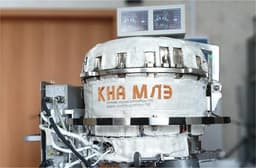
Scientists are using the "Ekran-M" installation